 The Fishing Report
Fishing seasons & conditions by region
Barred Surfperch vs Corbina
Two fish anglers routinely mix up. Here is what actually separates them — and when and where you are likely to meet each.
Side by Side
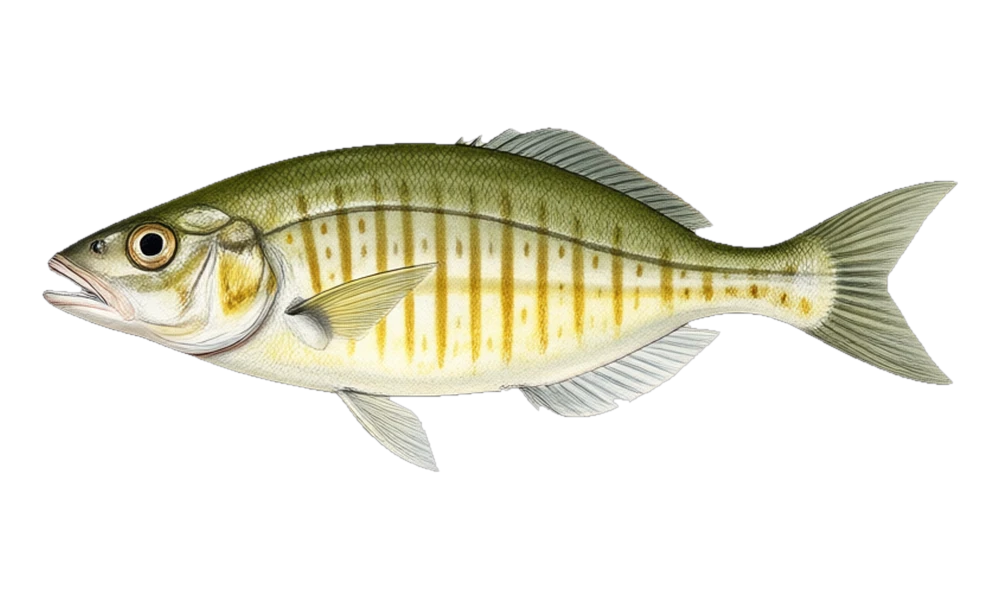
Barred Surfperch Amphistichus argenteus
Typical: 9–14 in, 0.5–1.5 lb
Quickest tell: The deep, compressed silvery body with vertical bars and a small barbel-less mouth separates it from the elongated, single-chin-barbel Corbina.
- Silvery, deep oval compressed body with olive-green back
- About 8-10 dusky vertical bars on the sides (may be faint)
- Brassy/yellow flecks scattered between the bars
- Single continuous dorsal fin, spiny front grading into soft rear
- Small terminal mouth, no chin barbel
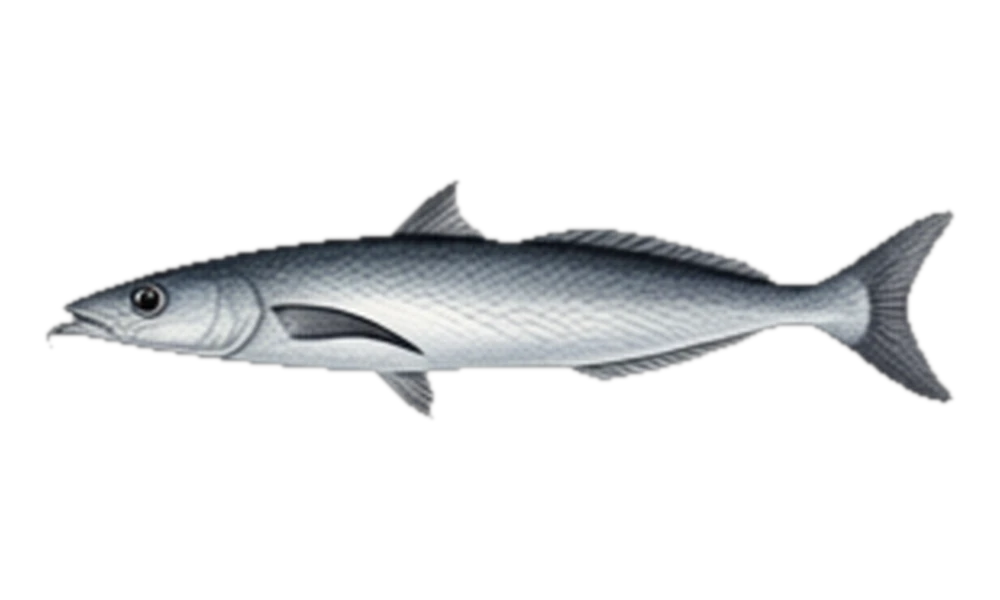
Corbina Menticirrhus undulatus
Typical: 14–22 in, 1–4 lb
Quickest tell: The single chin barbel under the lower jaw plus the elongated body separate California Corbina from the deeper-bodied, barbel-less Barred Surfperch.
- Elongated, slightly rounded silvery-gray body, darker on the back
- Single short fleshy barbel under the tip of the lower jaw
- Faint wavy/diagonal markings, no strong vertical bars
- Underslung (subterminal) mouth for bottom feeding
- Long low first dorsal and small head
When Each Is Running October — current month highlighted
| Jan | Feb | Mar | Apr | May | Jun | Jul | Aug | Sep | Oct | Nov | Dec | |
|---|---|---|---|---|---|---|---|---|---|---|---|---|
| Barred Surfperch | ||||||||||||
| Corbina |
Peak Good Fair Slow
Where Barred Surfperch and Corbina Overlap
Both run in Southern California — that is where telling them apart actually matters.