 The Fishing Report
Fishing seasons & conditions by region
Bat Ray / Thornback Myliobatis californica
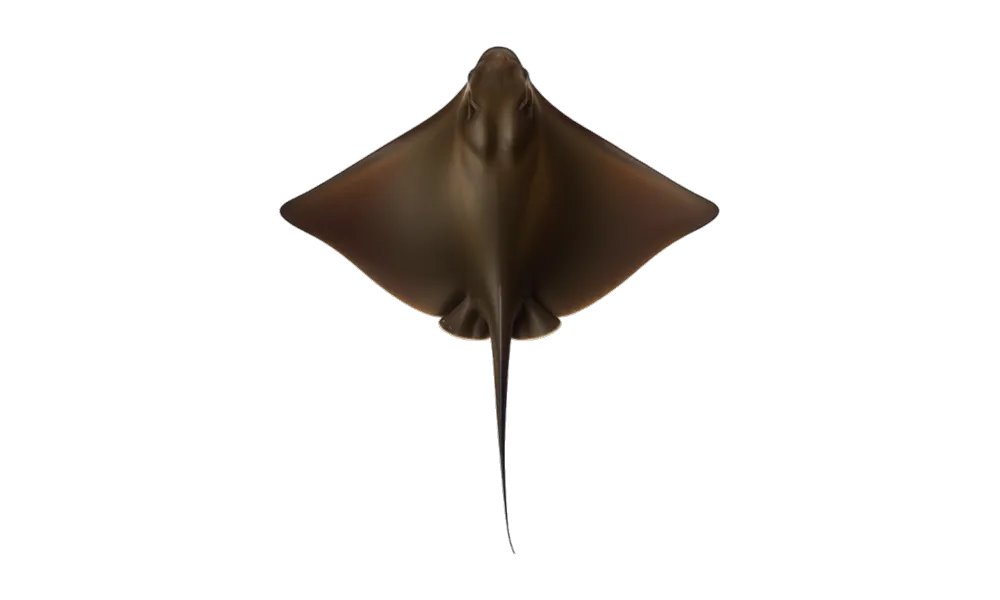
Bat Ray / Thornback Size, Range & Diet
| Typical size | Bat ray 2–3 ft across, 10–40 lb; thornback 15–24 in |
|---|---|
| Maximum | bat ray up to 6 ft across and near 200 lb; thornback about 3 ft |
| Lifespan | Bat rays at least 23 years; thornback lifespan is not well documented |
| Range | A two-species grouping, not one fish — the bat ray runs the eastern Pacific from Oregon to the Gulf of California and the thornback guitarfish from about San Francisco south into Baja, and both are common in Southern California bays, harbors and surf. |
| Habitat | Shallow sand and mud — bays, sloughs, surf line and kelp edges, mostly inside 150 ft; both often lie half-buried. |
| Diet | Clams, worms, crabs, shrimp and small fish excavated or rooted out of soft bottom. |
Sizes are typical rod-and-reel and documented maximum figures, not size limits — see the regulations links below for the rules where you fish.
How to Identify a Bat Ray / Thornback
- Bat Ray: thick raised (elevated) head distinct from the disc, broad diamond pectoral wings
- Bat Ray: smooth dark-brown to near-black disc, long whip-like tail with one or more venomous spines near the base
- Thornback: rows of large hook-like thorns down the midline of the back and tail
- Thornback: flatter, more rounded/heart-shaped disc, slender tail, NO venomous stinging spine
- Both: eyes and spiracles on top, mouth and gill slits underneath
Tell it apart: A row of big curved thorns down the back means Thornback (no sting); a smooth dark disc with a raised head and a venomous spine at the tail base means Bat Ray — handle a Bat Ray tail with care.
How to Catch Bat Ray / Thornback
Gear links open Amazon searches. As an Amazon Associate, The Fishing Report earns from qualifying purchases — at no extra cost to you. Using these links helps keep the site ad-free.
- Best May through August in warm bays — soak squid or mackerel chunks on a heavy sliding-sinker bottom rig and wait out the long fight.GearHeavy sliding-sinker rigOctopus circle hooksHeavy bay rod
When & Where Bat Ray / Thornback Are in Season
Peak Good Fair Slow
| Jan | Feb | Mar | Apr | May | Jun | Jul | Aug | Sep | Oct | Nov | Dec | |
|---|---|---|---|---|---|---|---|---|---|---|---|---|
| Southern California Inshore |
Bat Ray / Thornback Regulations
Always check local regulations — seasons, size, and bag limits vary by state and species, and change year to year. When in doubt, release.