 The Fishing Report
Fishing seasons & conditions by region
Black Drum vs Whiting (Kingfish)
Two fish anglers routinely mix up. Here is what actually separates them — and when and where you are likely to meet each.
Side by Side
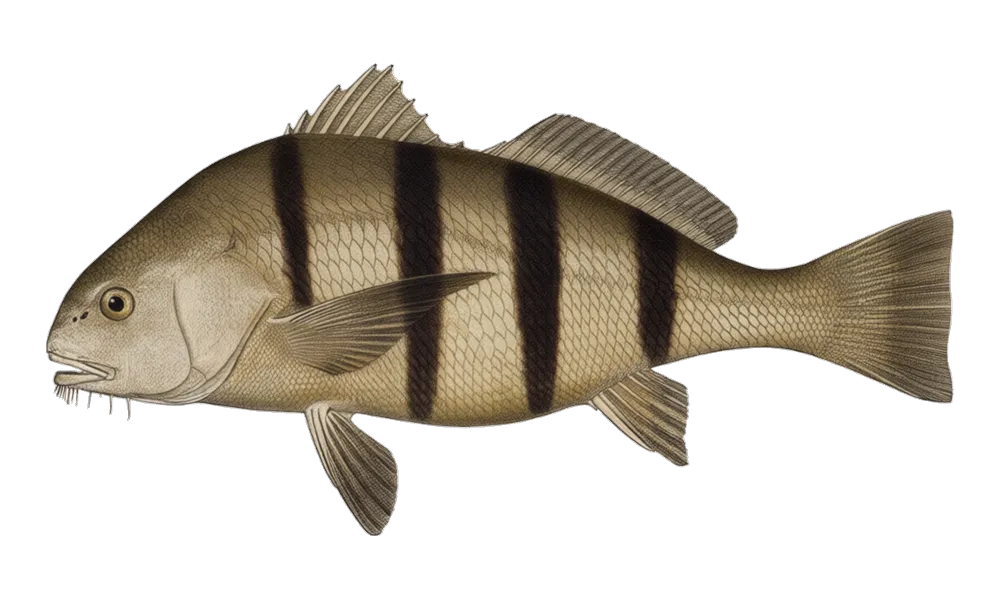
Black Drum Pogonias cromis
Typical: 14–30 in, 2–15 lb
Key field mark: Chin barbels under the lower jaw are present on black drum and absent on both redfish and sheepshead; black drum also lacks the redfish tail spot and the sheepshead's incisor teeth.
- High-backed gray to silvery body, brassy sheen
- Several chin barbels under the lower jaw
- Young show 4-5 dark vertical bars (fade with age)
- Cobblestone-like crushing pharyngeal teeth, no canines
- Subterminal mouth
- No black spot on the tail
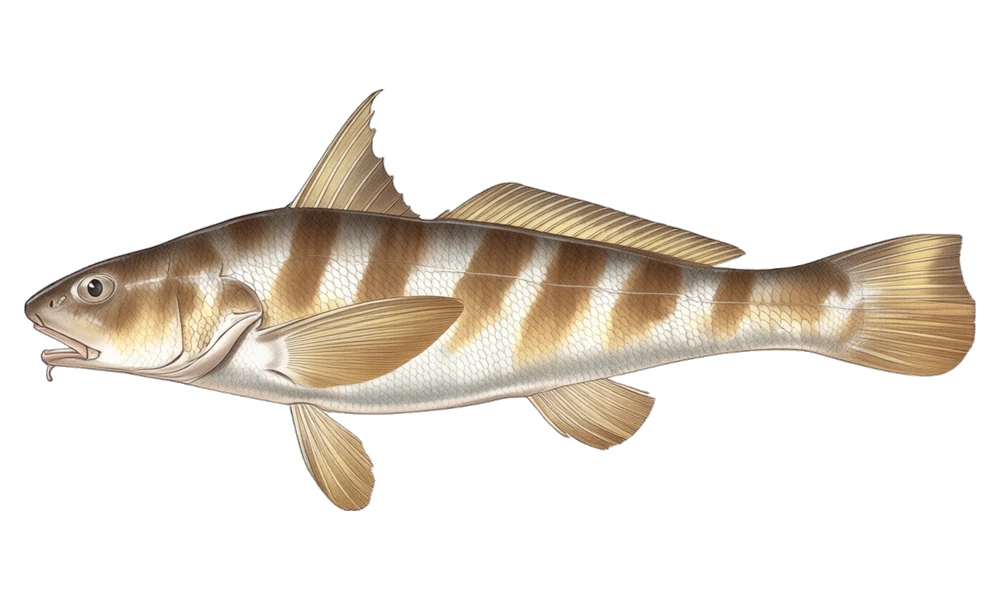
Whiting (Kingfish) Menticirrhus americanus
Typical: 10–14 in, 0.5–1.5 lb
Quickest tell: One short barbel under the tip of the lower jaw on a long, round-bodied silver fish is a whiting — a young black drum carries several barbels under a much deeper, high-backed body.
- Long, round-bodied silver fish with a flat belly and a small underslung mouth
- ONE short stiff barbel under the tip of the lower jaw
- Grayish-brown to bronze back fading to silvery sides and a white belly
- Southern kingfish: 7–8 soft-edged dark diagonal blotches along the side, parallel — never meeting in a V
- Gulf kingfish: plain silver with no bars and a blackish tip on the tail
- Northern kingfish: bold oblique bars, two of them forming a V behind the head, and a long trailing spine on the first dorsal fin
When Each Is Running September — current month highlighted
| Jan | Feb | Mar | Apr | May | Jun | Jul | Aug | Sep | Oct | Nov | Dec | |
|---|---|---|---|---|---|---|---|---|---|---|---|---|
| Black Drum | ||||||||||||
| Whiting (Kingfish) |
Peak Good Fair Slow
Where Black Drum and Whiting (Kingfish) Overlap
Both run in Gulf of Mexico, Southeast Atlantic — that is where telling them apart actually matters.