 The Fishing Report
Fishing seasons & conditions by region
Leopard Shark Triakis semifasciata
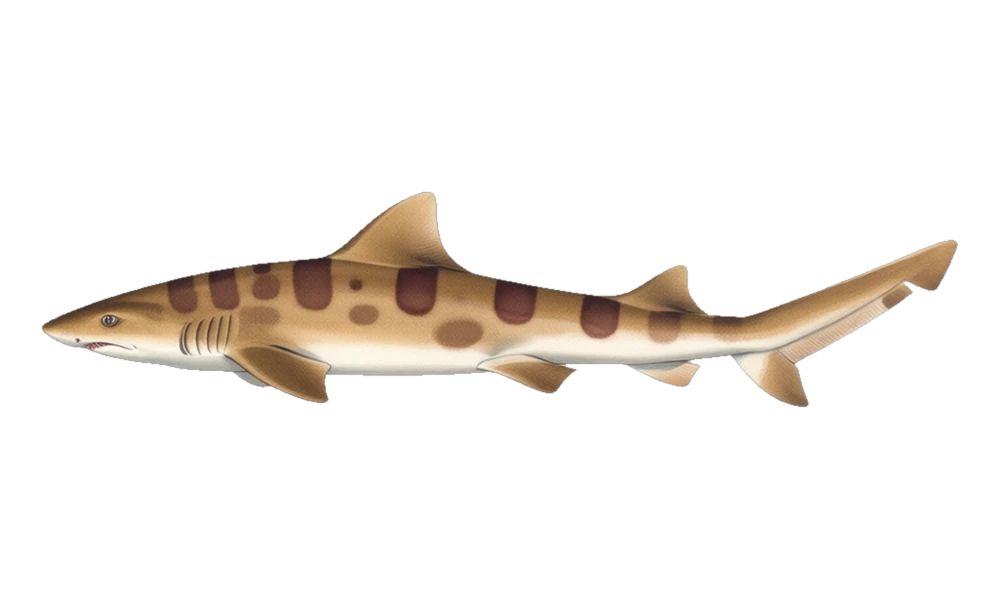
Leopard Shark Size, Range & Diet
| Typical size | 36–54 in, 6–20 lb |
|---|---|
| Maximum | about 6.5 ft; the California rod-and-reel record is 47 lb 1 oz |
| Lifespan | 20–30 years |
| Range | The Pacific coast from Oregon south through California and Baja into the Gulf of California, thickest in San Francisco, Tomales and Monterey bays. |
| Habitat | Shallow bays, estuaries, sand flats and kelp edges, usually under 60 ft and right on the bottom; slides onto the flats to feed on a flooding tide. |
| Diet | Crabs, shrimp, clam siphons, worms, fish eggs and small bottom fish — squid, midshipman or an oily fish chunk fished on the bottom. |
Sizes are typical rod-and-reel and documented maximum figures, not size limits — see the regulations links below for the rules where you fish.
How to Identify a Leopard Shark
- Gray body with bold black saddle-shaped crossbars and dark spots down the back
- Slender shark shape with two dorsal fins (first set well forward of the pelvics)
- Short, rounded snout; small mouth
- Crescent (heterocercal) tail with a notched upper lobe
- Saddles break into rows of spots toward the tail; underside plain white
Tell it apart: The bold black saddle crossbars over a gray back, breaking into rows of spots toward the tail, are diagnostic among NorCal nearshore sharks, no other local shark carries that saddle-and-spot pattern.
How to Catch Leopard Shark
Gear links open Amazon searches. As an Amazon Associate, The Fishing Report earns from qualifying purchases — at no extra cost to you. Using these links helps keep the site ad-free.
- Best May through August in warm bays — soak fresh midshipman or squid on a sliding-sinker rig over mud and eelgrass flats near channels.GearSliding-sinker bait rigCircle hooksHeavy bay rod
When & Where Leopard Shark Are in Season
Peak Good Fair Slow
| Jan | Feb | Mar | Apr | May | Jun | Jul | Aug | Sep | Oct | Nov | Dec | |
|---|---|---|---|---|---|---|---|---|---|---|---|---|
| Northern California Inshore |
Leopard Shark Regulations
Always check local regulations — seasons, size, and bag limits vary by state and species, and change year to year. When in doubt, release.