 The Fishing Report
Fishing seasons & conditions by region
Muskie vs Northern Pike
Two fish anglers routinely mix up. Here is what actually separates them — and when and where you are likely to meet each.
Side by Side
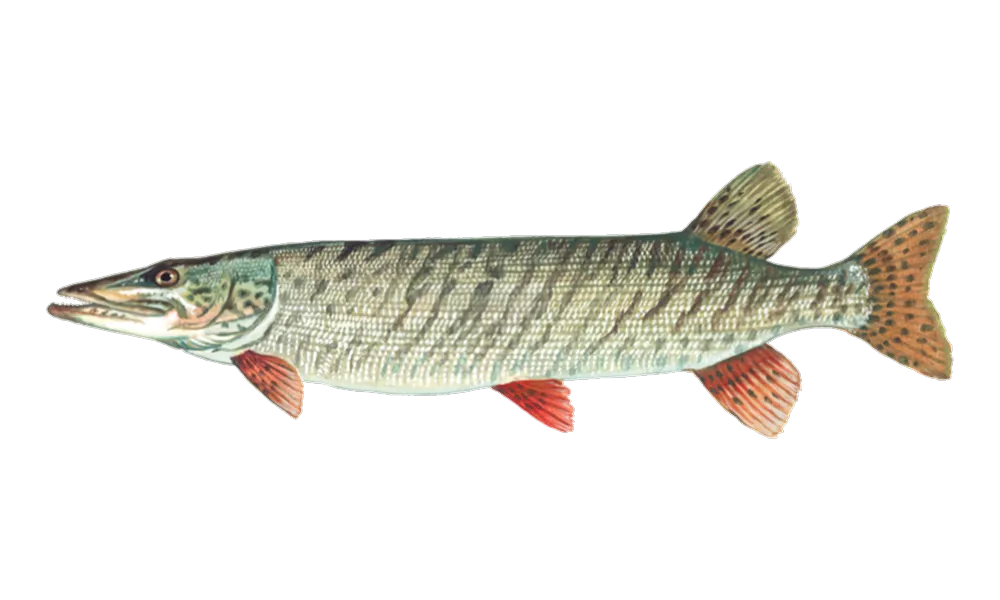
Muskie Esox masquinongy
Typical: 34–46 in, 12–30 lb
Quickest tell: Muskie show DARK markings on a LIGHT body, a scaleless lower cheek/gill cover, pointed tail tips, and 6-9 jaw pores per side, the reverse of pike (light spots on dark, scaled cheek, 5 or fewer pores, rounded tail tips).
- Long body, light silver-green to olive with dark markings
- Dark bars or spots on a LIGHT background (or nearly clear)
- Pointed, sharply tapered tail lobes
- Lower half of cheek and gill cover scaleless
- 6-9 sensory pores per side of the lower jaw
- Duck-bill snout with large teeth
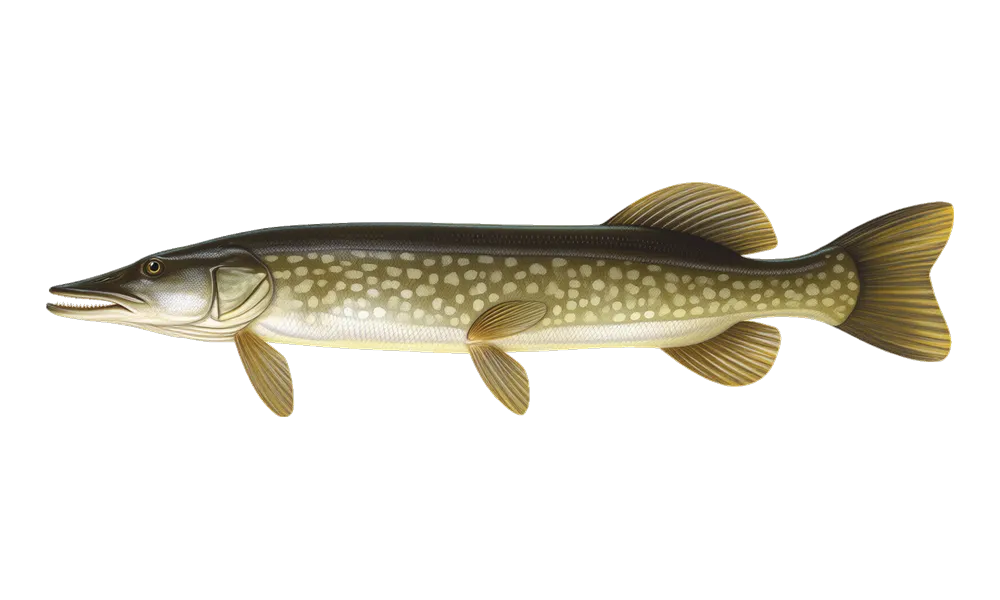
Northern Pike Esox lucius
Typical: 20–30 in, 2–8 lb
Quickest tell: Pike show LIGHT spots on a DARK background, a fully scaled cheek, and 5 or fewer jaw pores; muskie reverse it (dark marks on a light body, scaleless lower cheek) with 6-9 pores per side.
- Long torpedo body, green to olive
- Light bean-shaped spots on a darker background
- Single soft dorsal set far back near the tail
- Duck-bill snout with large teeth
- Cheek fully scaled, gill cover scaled on upper half only
- 5 or fewer sensory pores per side of the lower jaw
When Each Is Running October — current month highlighted
| Jan | Feb | Mar | Apr | May | Jun | Jul | Aug | Sep | Oct | Nov | Dec | |
|---|---|---|---|---|---|---|---|---|---|---|---|---|
| Muskie | ||||||||||||
| Northern Pike |
Peak Good Fair Slow
Where Muskie and Northern Pike Overlap
Both run in Great Lakes — that is where telling them apart actually matters.