 The Fishing Report
Fishing seasons & conditions by region
Sailfish vs Swordfish
Two fish anglers routinely mix up. Here is what actually separates them — and when and where you are likely to meet each.
Side by Side
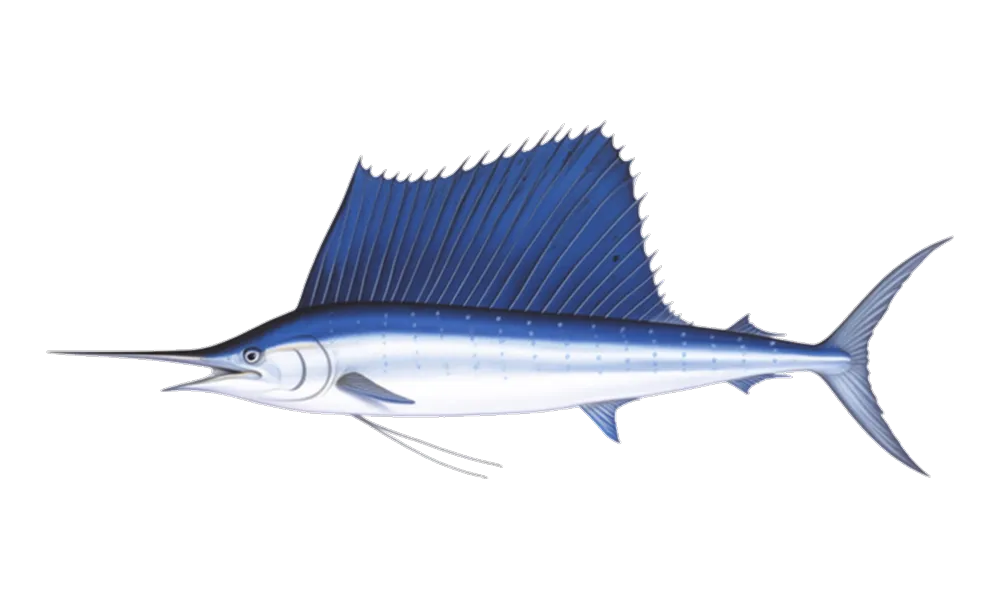
Sailfish Istiophorus albicans
Typical: 6–7 ft, 30–50 lb
Key field mark: The enormous sail-shaped dorsal fin, taller than the body's depth, instantly separates sailfish from the lower-finned marlins (keel count is shared by both, so use the fin).
- Huge sail-like first dorsal fin, far taller than the body is deep
- Long spear-like upper bill (rounded in cross-section)
- Cobalt blue back, silver sides with rows of pale blue spots/bars
- Slender body; very long, thin pelvic fins
- Two keels on each side of the tail base (billfish family)
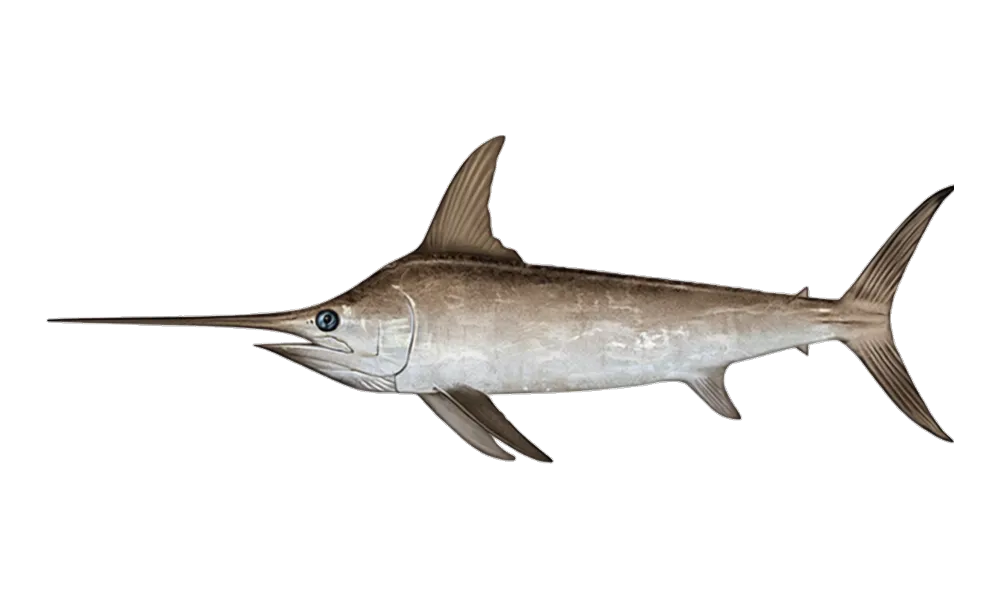
Swordfish Xiphias gladius
Typical: 50–200 lb
Quickest tell: The flat, broad sword (vs. the round spear of marlin and sailfish) plus the total absence of pelvic fins makes swordfish unmistakable among billfish.
- Long, wide, flattened (sword-like) bill — over a third of body length
- No pelvic fins; adults are scaleless
- Tall, rigid, crescent first dorsal; very large eye
- Dark brown-purple to black back; no body bars or spots
- A single large keel on each side of the tail base
When Each Is Running October — current month highlighted
Peak Good Fair Slow
Where Sailfish and Swordfish Overlap
Both run in South Florida & the Keys — that is where telling them apart actually matters.