 The Fishing Report
Fishing seasons & conditions by region
Atlantic Cod vs Pollock
Two fish anglers routinely mix up. Here is what actually separates them — and when and where you are likely to meet each.
Side by Side
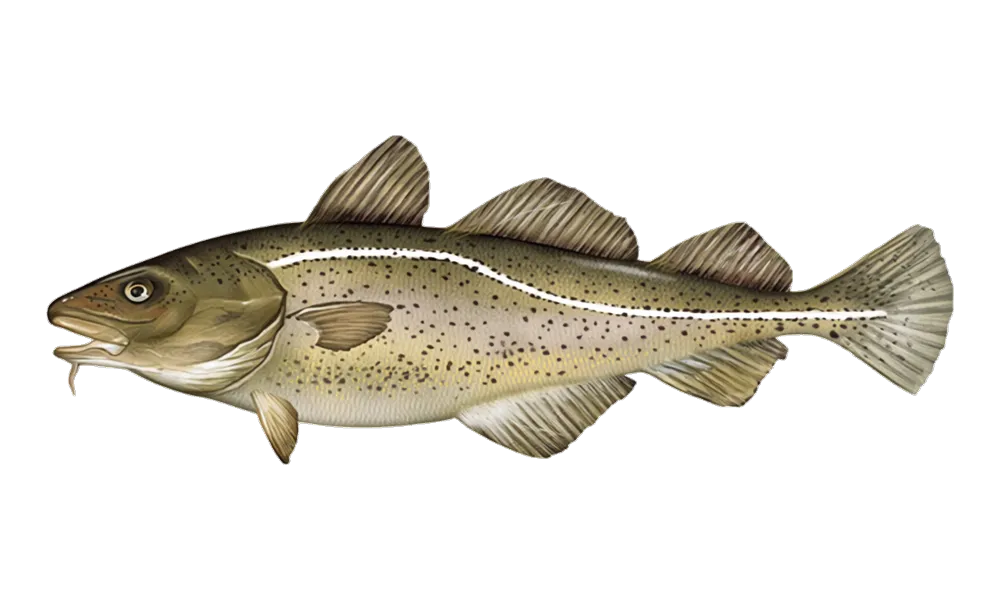
Atlantic Cod Gadus morhua
Typical: 22–34 in, 4–15 lb
Quickest tell: A pale curved white lateral line plus a clear chin barbel and overhanging upper jaw separate cod from the dark-lined, thumbprint-marked haddock and the jutting-jawed, forked-tailed pollock.
- heavy body, color variable (greenish to reddish-brown) with many small spots
- pale, gently curved (arched) white lateral line
- prominent single chin barbel
- three dorsal fins and two anal fins
- squared-off tail; upper jaw overhangs the lower
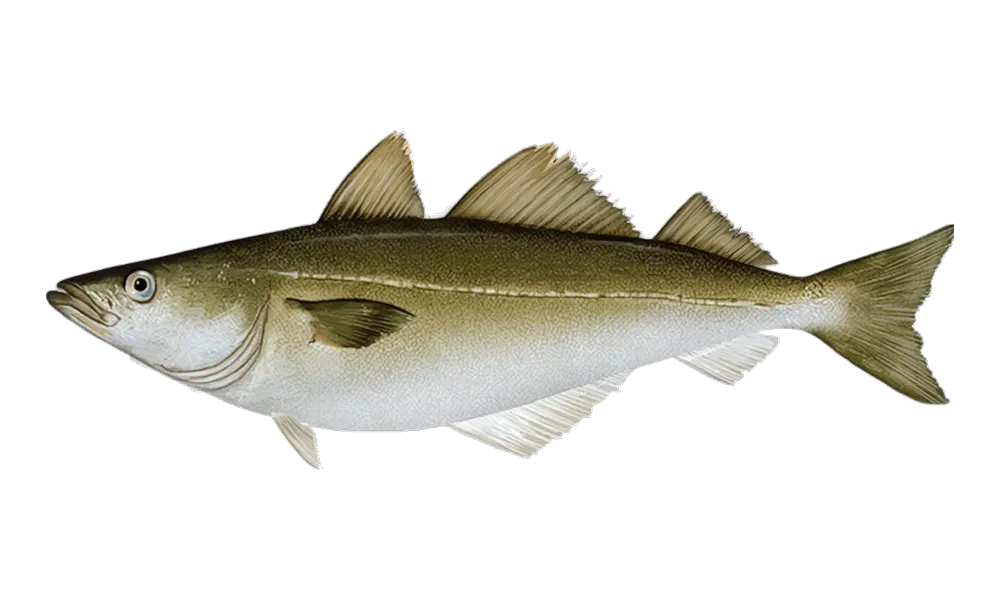
Pollock Pollachius virens
Typical: 20–32 in, 4–15 lb
Key field mark: A greenish back, jutting lower jaw, near-absent chin barbel, and a clearly forked tail separate pollock from the barbeled, square-tailed cod and haddock.
- olive-green to brownish back, silvery sides
- three dorsal fins and two anal fins
- pale, only slightly curved lateral line
- projecting lower jaw with a tiny or absent chin barbel
- distinctly forked tail (unlike cod's and haddock's squared tail)
When Each Is Running October — current month highlighted
| Jan | Feb | Mar | Apr | May | Jun | Jul | Aug | Sep | Oct | Nov | Dec | |
|---|---|---|---|---|---|---|---|---|---|---|---|---|
| Atlantic Cod | ||||||||||||
| Pollock |
Peak Good Fair Slow
Where Atlantic Cod and Pollock Overlap
Both run in Northeast — that is where telling them apart actually matters.