 The Fishing Report
Fishing seasons & conditions by region
Bonito vs Yellowtail
Two fish anglers routinely mix up. Here is what actually separates them — and when and where you are likely to meet each.
Side by Side
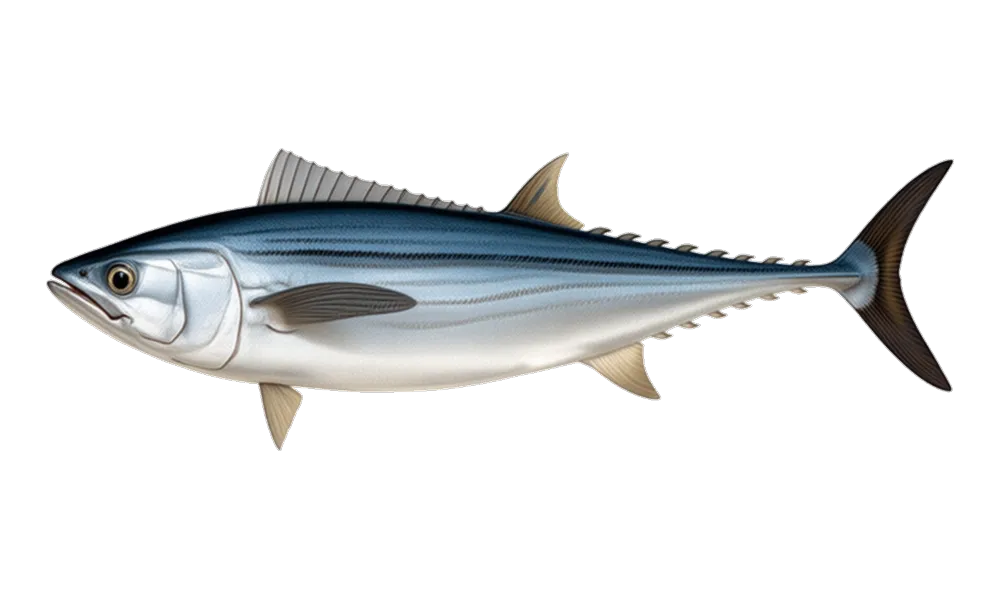
Bonito Sarda lineolata
Typical: 16–26 in, 2–8 lb
Quickest tell: Bonito's slanting dark stripes run along the BACK (not the belly) and it has finlets, separating it from the stripeless, finlet-less Yellowtail.
- Steel-blue back marked with dark oblique stripes that slant up onto the BACK
- Silvery sides and belly without stripes
- Row of small separate finlets behind both the dorsal and anal fins
- Slender torpedo body, deeply forked tail with keels at the base
- Mouth with small but distinct conical teeth
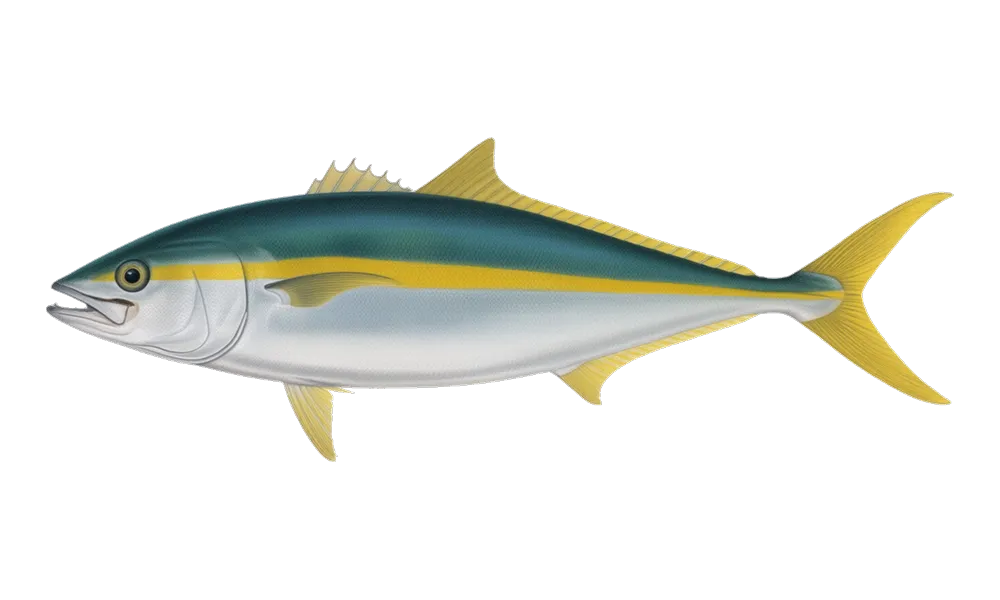
Yellowtail Seriola dorsalis
Typical: 20–32 in, 4–15 lb
Quickest tell: Yellowtail (an amberjack, not a tuna) has a single solid yellow forked tail and a yellow side-stripe but NO finlets, unlike the tuna-like Bonito which has a row of small finlets.
- Iron-blue to green back, silver sides, solid yellow tail
- Brassy-yellow horizontal stripe running along the side from eye to tail
- Streamlined torpedo body with a deeply forked yellow tail
- NO separate finlets between the dorsal/anal fins and the tail
- Pointed snout; small, terminal mouth
When Each Is Running October — current month highlighted
| Jan | Feb | Mar | Apr | May | Jun | Jul | Aug | Sep | Oct | Nov | Dec | |
|---|---|---|---|---|---|---|---|---|---|---|---|---|
| Bonito | ||||||||||||
| Yellowtail |
Peak Good Fair Slow
Where Bonito and Yellowtail Overlap
Both run in Southern California — that is where telling them apart actually matters.