 The Fishing Report
Fishing seasons & conditions by region
Broad Whitefish Coregonus nasus
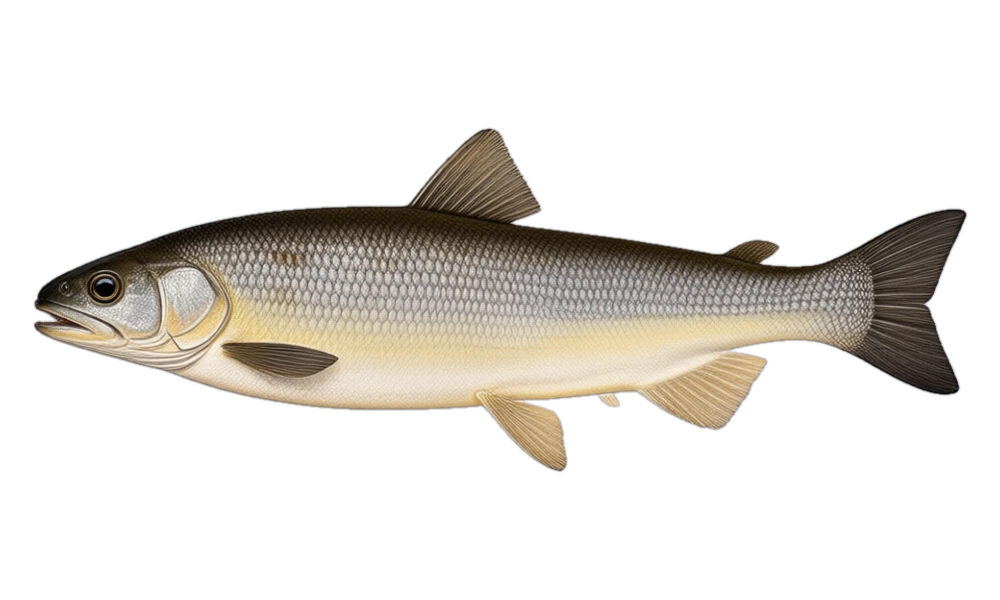
Broad Whitefish Size, Range & Diet
| Typical size | about 500–600 mm (20–24 in), 4.5–11 lb at maturity |
|---|---|
| Lifespan | 20+ years in northern coastal populations |
| Range | Freshwater drainages of the Bering Sea including the Yukon and Kuskokwim rivers, and drainages of the Chukchi Sea and Arctic Ocean; tolerant of brackish water. Also northern coastal systems of Canada and Russia. |
| Habitat | Small stream and lake systems for summer feeding, moving to deep pools or brackish water to overwinter. |
| Diet | A bottom feeder taking snails, bivalves and other mollusks, plus aquatic insect larvae. |
Sizes are typical rod-and-reel and documented maximum figures, not size limits — see the regulations links below for the rules where you fish.
How to Identify a Broad Whitefish
- Body very broad from back to belly compared with other whitefish — the source of the name
- Blunt head with a very small, slightly down-turned mouth adapted to feeding off the bottom
- Elongated body covered in silvery scales
- Deeply forked tail and an adipose fin
- Belly white to faded yellow; cheeks may carry brownish spots, and the fins are dark
Tell it apart: The small, distinctly down-turned bottom-feeder's mouth under a blunt head is the tell — a sheefish has a large mouth with the lower jaw thrust forward.
Easily confused with: Sheefish
Side by side: Broad Whitefish vs Sheefish
How to Catch Broad Whitefish
Gear links open Amazon searches. As an Amazon Associate, The Fishing Report earns from qualifying purchases — at no extra cost to you. Using these links helps keep the site ad-free.
- Feeds head-down on snails and insect larvae over soft bottom; tiny baited hooks fished right on the deck, with a very light touch on the take.GearSmall bait hooksSplit shot and floatsUltralight combo
When & Where Broad Whitefish Are in Season
Peak Good Fair Slow
| Jan | Feb | Mar | Apr | May | Jun | Jul | Aug | Sep | Oct | Nov | Dec | |
|---|---|---|---|---|---|---|---|---|---|---|---|---|
| Alaska — Bering Strait & Kotzebue Sound Inshore |
Broad Whitefish Regulations
Always check local regulations — seasons, size, and bag limits vary by state and species, and change year to year. When in doubt, release.