 The Fishing Report
Fishing seasons & conditions by region
Broad Whitefish vs Sheefish
Two fish anglers routinely mix up. Here is what actually separates them — and when and where you are likely to meet each.
Side by Side
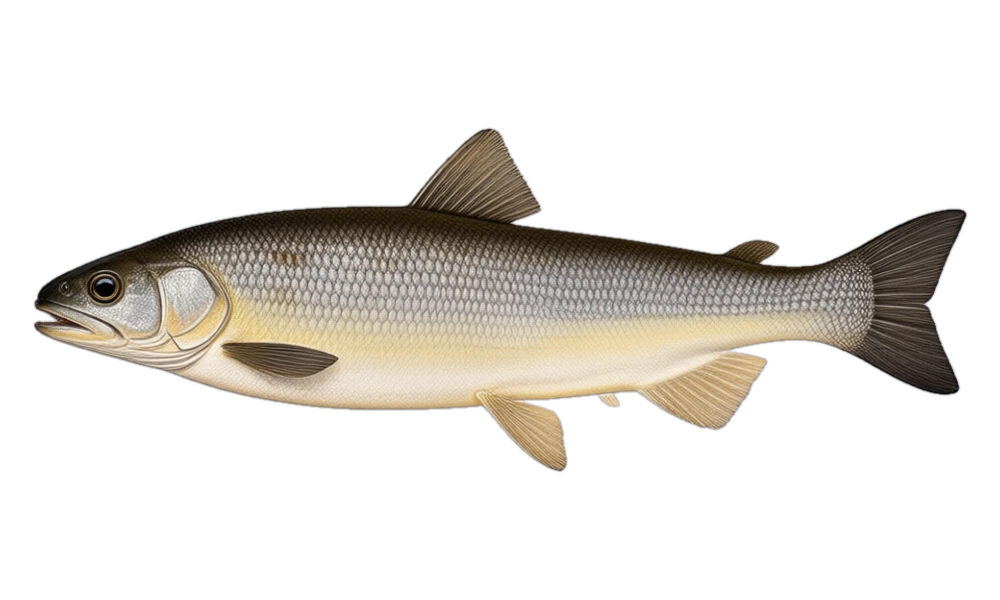
Broad Whitefish Coregonus nasus
Typical: about 500–600 mm (20–24 in), 4.5–11 lb at maturity
Quickest tell: The small, distinctly down-turned bottom-feeder's mouth under a blunt head is the tell — a sheefish has a large mouth with the lower jaw thrust forward.
- Body very broad from back to belly compared with other whitefish — the source of the name
- Blunt head with a very small, slightly down-turned mouth adapted to feeding off the bottom
- Elongated body covered in silvery scales
- Deeply forked tail and an adipose fin
- Belly white to faded yellow; cheeks may carry brownish spots, and the fins are dark
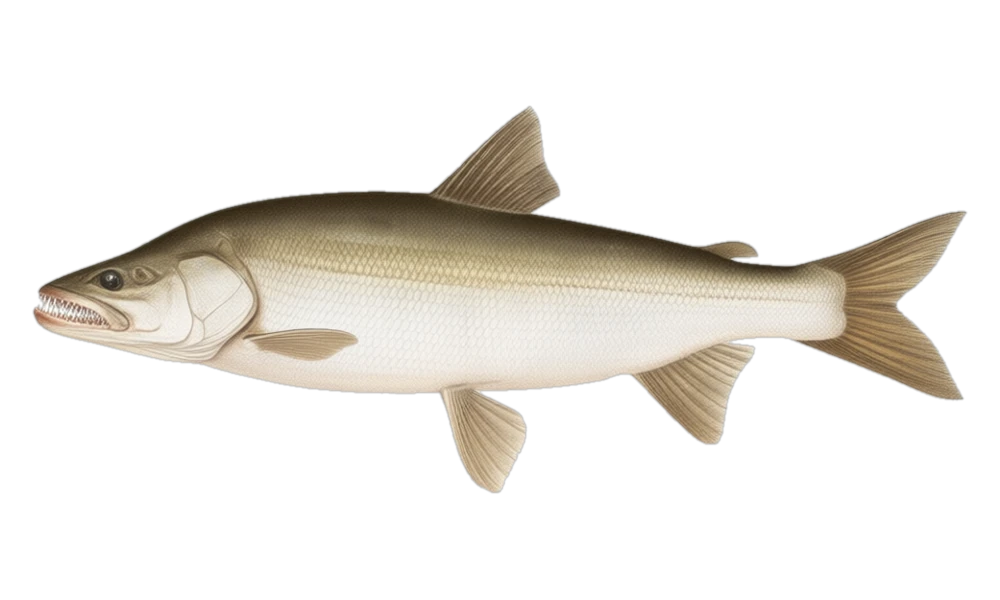
Sheefish Stenodus leucichthys
Quickest tell: A big unspotted silver fish with very large scales and a lower jaw that juts past the upper — a broad whitefish has the opposite, a small down-turned mouth under a blunt head.
- White to silvery body with no spots or other markings at all
- Very large scales
- Lower jaw projecting beyond the upper jaw
- Mouth full of small, densely packed teeth
When Each Is Running October — current month highlighted
| Jan | Feb | Mar | Apr | May | Jun | Jul | Aug | Sep | Oct | Nov | Dec | |
|---|---|---|---|---|---|---|---|---|---|---|---|---|
| Broad Whitefish | ||||||||||||
| Sheefish |
Peak Good Fair Slow
Where Broad Whitefish and Sheefish Overlap
Both run in Alaska — Bering Strait & Kotzebue Sound — that is where telling them apart actually matters.