 The Fishing Report
Fishing seasons & conditions by region
Cero Mackerel vs King Mackerel
Two fish anglers routinely mix up. Here is what actually separates them — and when and where you are likely to meet each.
Side by Side
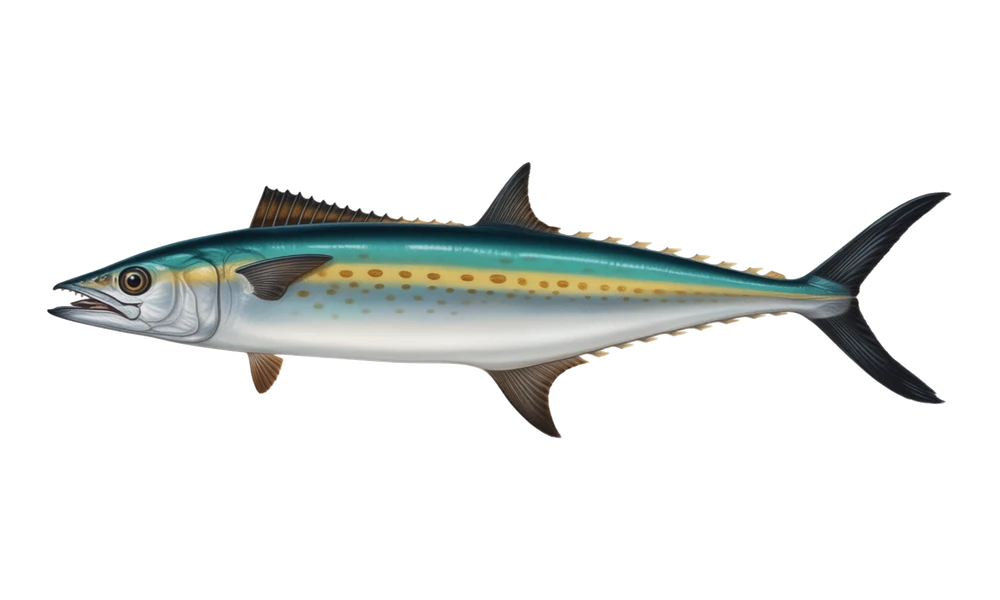
Cero Mackerel Scomberomorus regalis
Typical: 18–30 in, 3–8 lb
Quickest tell: The bronze midbody stripe with rows of spots above and below it is unique to cero; king mackerel adults are plain-sided and their lateral line drops sharply under the second dorsal.
- Bronze-to-yellow stripe running along the midbody from pectoral fin to tail
- Rows of yellow-bronze spots ABOVE and BELOW that stripe
- Black patch on the front of the first dorsal fin
- Slender mackerel body with a row of finlets and a deeply forked tail
- Lateral line curving gently down — no sharp drop
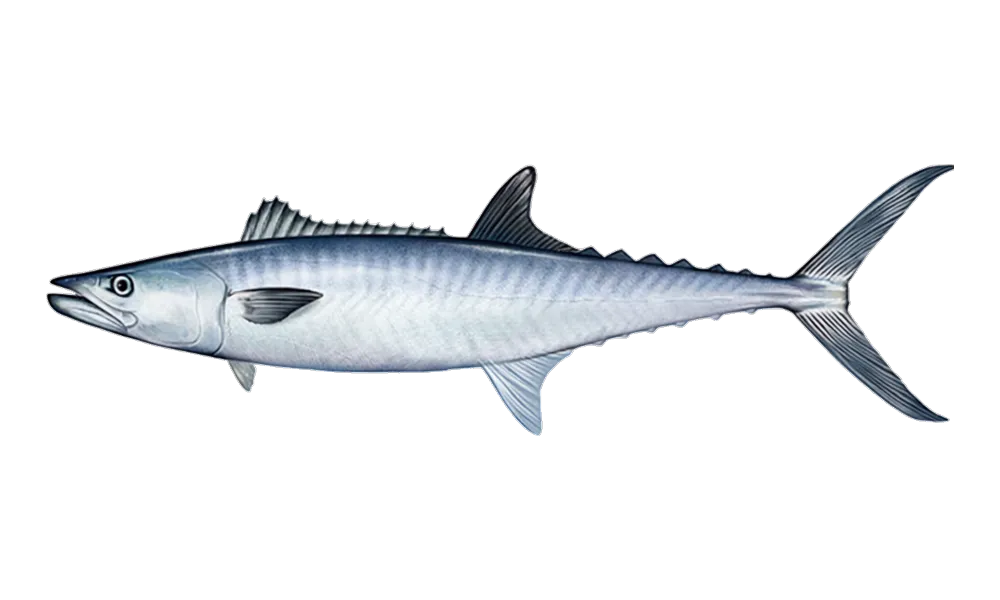
King Mackerel Scomberomorus cavalla
Typical: 24–40 in, 8–20 lb
Quickest tell: The sharp downward dip in the lateral line under the second dorsal, plus a pale (not black-fronted) first dorsal fin, marks a king mackerel.
- Steel-blue back, silver sides; adults lack spots
- Lateral line drops sharply downward below the second dorsal fin
- First dorsal fin uniformly pale (no black front patch); folds into a groove
- Slender elongate body, deeply forked tail
- Row of finlets behind dorsal and anal fins
- Juveniles may show faint yellow spots
When Each Is Running October — current month highlighted
| Jan | Feb | Mar | Apr | May | Jun | Jul | Aug | Sep | Oct | Nov | Dec | |
|---|---|---|---|---|---|---|---|---|---|---|---|---|
| Cero Mackerel | ||||||||||||
| King Mackerel |
Peak Good Fair Slow
Where Cero Mackerel and King Mackerel Overlap
Both run in Puerto Rico & the U.S. Virgin Islands — that is where telling them apart actually matters.