 The Fishing Report
Fishing seasons & conditions by region
Mangrove Snapper vs Yellowtail Snapper
Two fish anglers routinely mix up. Here is what actually separates them — and when and where you are likely to meet each.
Side by Side
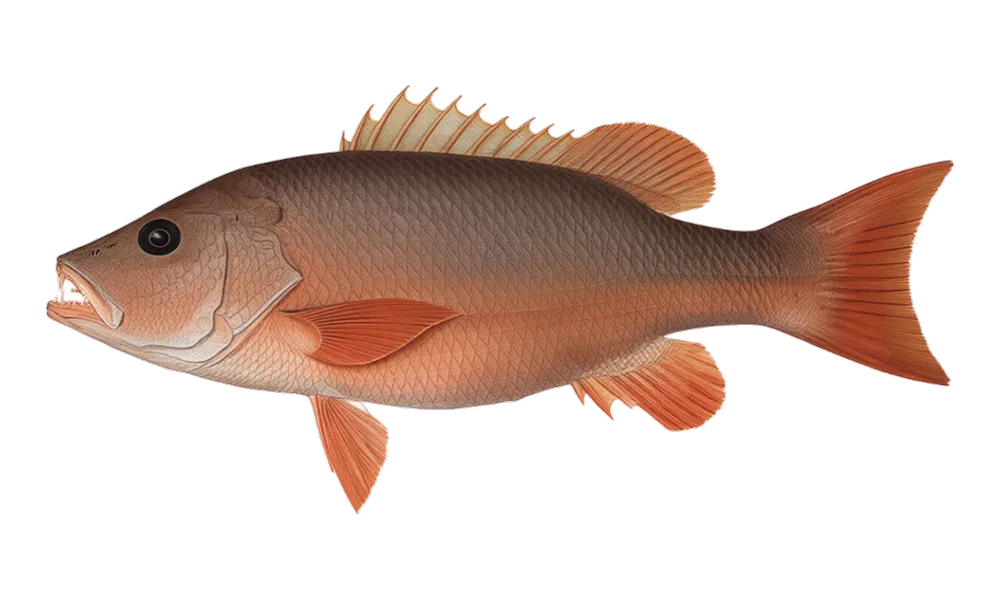
Mangrove Snapper Lutjanus griseus
Typical: 12–18 in, 1–4 lb
Quickest tell: Gray (mangrove) snapper lacks the mutton's blue facial lines and high side spot and lacks the yellowtail's bright yellow lateral stripe and yellow tail; look for the dark eye-bar and a plain gray body with no markings.
- Gray to reddish-brown body, often a coppery sheen
- Dark band through the eye, more obvious when feeding/excited
- Two enlarged canine teeth in the upper jaw
- Reddish-orange tinge to the fins; no spot on the body
- Single continuous dorsal, slightly forked tail
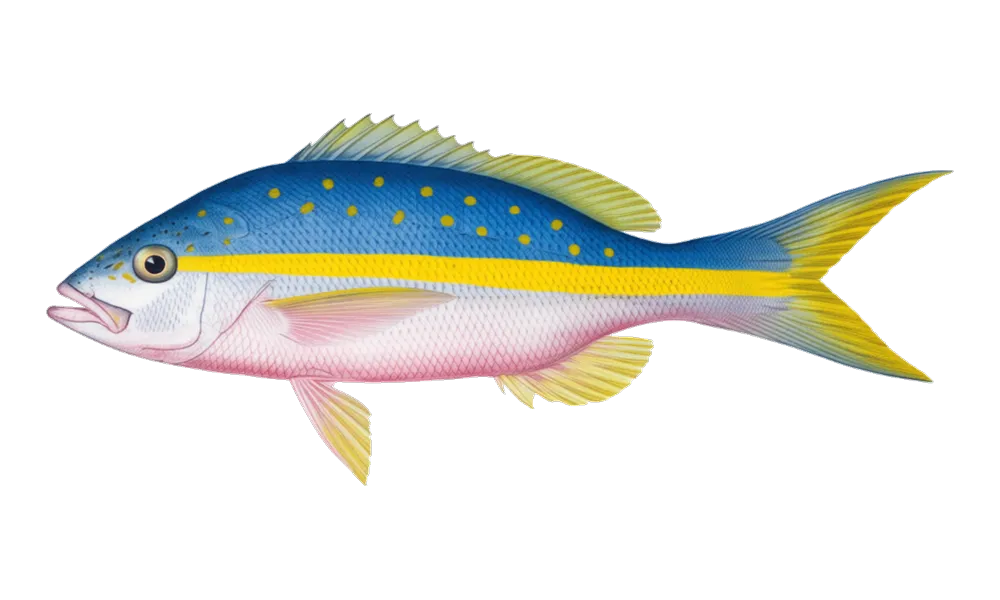
Yellowtail Snapper Ocyurus chrysurus
Typical: 12–18 in, 1–3 lb
Quickest tell: The unbroken bright-yellow stripe running into a fully yellow deeply forked tail is unmistakable and separates it instantly from gray (mangrove) snapper.
- Bright yellow midbody stripe widening into the tail
- Bluish back with yellow spots above the stripe
- Slender, streamlined body (less deep than other snappers)
- Deeply forked, all-yellow tail
- Pinkish-white belly, small mouth
When Each Is Running October — current month highlighted
| Jan | Feb | Mar | Apr | May | Jun | Jul | Aug | Sep | Oct | Nov | Dec | |
|---|---|---|---|---|---|---|---|---|---|---|---|---|
| Mangrove Snapper | ||||||||||||
| Yellowtail Snapper |
Peak Good Fair Slow
Where Mangrove Snapper and Yellowtail Snapper Overlap
Both run in Puerto Rico & the U.S. Virgin Islands, South Florida & the Keys — that is where telling them apart actually matters.