 The Fishing Report
Fishing seasons & conditions by region
Mangrove Snapper Lutjanus griseus
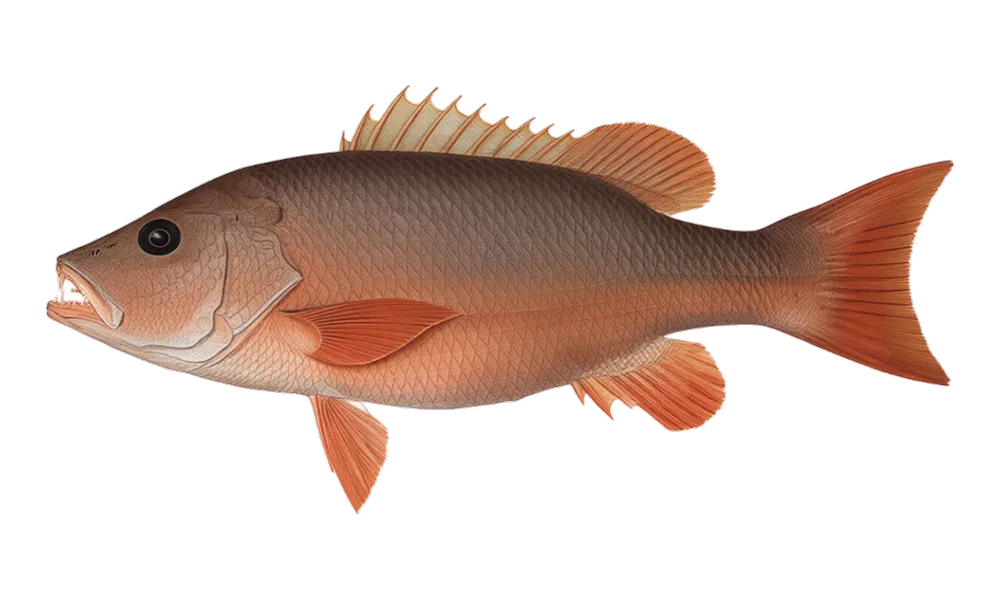
Mangrove Snapper Size, Range & Diet
| Typical size | 12–18 in, 1–4 lb |
|---|---|
| Maximum | up to about 35 in |
| Lifespan | up to about 25 years |
| Range | Western Atlantic from the Carolinas south through Florida and the Gulf of Mexico into the Caribbean, most abundant around Florida. |
| Habitat | Mangrove roots, docks, bridge pilings and grass flats when small; nearshore reefs, ledges and wrecks as they grow. |
| Diet | Live shrimp, small crabs and pilchard-sized baitfish, taken hardest at night. |
Sizes are typical rod-and-reel and documented maximum figures, not size limits — see the regulations links below for the rules where you fish.
How to Identify a Mangrove Snapper
- Gray to reddish-brown body, often a coppery sheen
- Dark band through the eye, more obvious when feeding/excited
- Two enlarged canine teeth in the upper jaw
- Reddish-orange tinge to the fins; no spot on the body
- Single continuous dorsal, slightly forked tail
Tell it apart: Gray (mangrove) snapper lacks the mutton's blue facial lines and high side spot and lacks the yellowtail's bright yellow lateral stripe and yellow tail; look for the dark eye-bar and a plain gray body with no markings.
Easily confused with: Mutton Snapper, Yellowtail Snapper
Side by side: Mangrove Snapper vs Mutton Snapper, Mangrove Snapper vs Red Snapper*, Mangrove Snapper vs Yellowtail Snapper
How to Catch Mangrove Snapper
Gear links open Amazon searches. As an Amazon Associate, The Fishing Report earns from qualifying purchases — at no extra cost to you. Using these links helps keep the site ad-free.
- Peaks in summer when fish school to spawn on patch reefs and bridges; freeline shrimp or small baits on light fluoro.Gear1/0 live-bait hooksKnocker rigs20 lb fluorocarbon leader
- Peaks in summer when fish school to spawn on nearshore reefs and rigs; freeline shrimp or small baits on light fluorocarbon.Gear1/0 live-bait hooksKnocker rigs20 lb fluorocarbon leader
- Best through the summer around mangrove roots, harbor walls and shallow patch reef; freeline a live shrimp or small bait on light fluorocarbon and expect them to be leader-shy in clear water.Gear1/0 live-bait hooksKnocker rigs20 lb fluorocarbon leader
When & Where Mangrove Snapper Are in Season
Peak Good Fair Slow
| Jan | Feb | Mar | Apr | May | Jun | Jul | Aug | Sep | Oct | Nov | Dec | |
|---|---|---|---|---|---|---|---|---|---|---|---|---|
| South Florida & the Keys Inshore | ||||||||||||
| Gulf of Mexico Nearshore | ||||||||||||
| Puerto Rico & the U.S. Virgin Islands Inshore |
Mangrove Snapper Regulations
FloridaFlorida Fish and Wildlife Conservation Commission (FWC)South Atlantic Fishery Management CouncilSAFMCGulf of Mexico Fishery Management Council (Gulf Council)GMFMCAlabamaAlabama Department of Conservation and Natural Resources, Marine Resources Division (Outdoor Alabama)MississippiMississippi Department of Marine Resources (DMR)LouisianaLouisiana Department of Wildlife and Fisheries (LDWF)TexasTexas Parks & Wildlife Department (TPWD)Puerto RicoPuerto Rico Department of Natural and Environmental Resources (DRNA/DNER), Office of Forestry, Wildlife and Fisheries Licences and PermitsU.S. Virgin IslandsVirgin Islands Department of Planning and Natural Resources (DPNR), Division of Fish and WildlifeCaribbean Fishery Management CouncilCFMCNOAA Fisheries Southeast Region — current U.S. Caribbean regulationsNOAA Fisheries
Always check local regulations — seasons, size, and bag limits vary by state and species, and change year to year. When in doubt, release.