 The Fishing Report
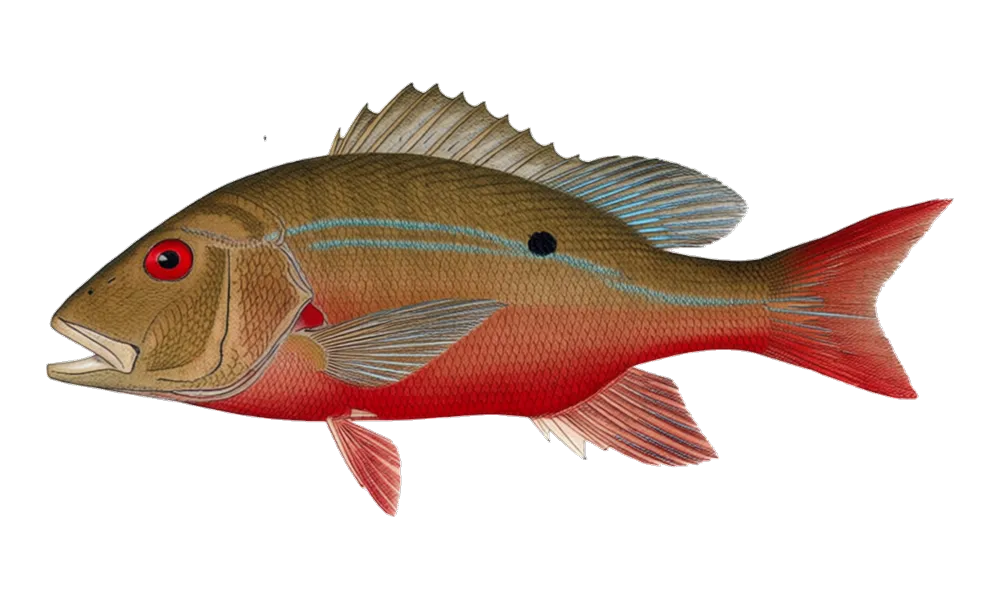
Mutton Snapper Lutjanus analis
Mutton Snapper Size, Range & Diet
| Typical size | 16–26 in, 4–12 lb |
|---|---|
| Maximum | up to 37 in and about 30 lb |
| Lifespan | up to 40 years |
| Range | Warm western Atlantic from the Carolinas south through Florida, the Keys, the Bahamas, the Gulf of Mexico and the Caribbean, most abundant off South Florida and around the Antilles. |
| Habitat | Adults hold on coral reefs, ledges and rubble bottom in roughly 80–310 ft; juveniles use seagrass flats, mangrove creeks and shallow bays. |
| Diet | Shrimp, crabs, snails, squid and small fish such as mullet and grunts, picked off the bottom day and night. |
Sizes are typical rod-and-reel and documented maximum figures, not size limits — see the regulations links below for the rules where you fish.
How to Identify a Mutton Snapper
- Olive-to-reddish body, often brick-red on the lower sides
- Small black spot high on the side below the rear dorsal
- Blue iridescent lines/streaks below and behind the eye
- Pointed (V-shaped) anal fin; strong canine teeth
- Red eye; reddish tail margins
Tell it apart: The single black spot high on the side plus blue lines under the eye and a pointed anal fin separate mutton from gray snapper; unlike redfish the spot is mid-body (not on the tail base), and unlike red grouper it has a forked tail and canine teeth.
Easily confused with: Mangrove Snapper, Redfish, Red Grouper
Side by side: Mutton Snapper vs Mangrove Snapper, Mutton Snapper vs Red Grouper, Mutton Snapper vs Red Hind, Mutton Snapper vs Redfish
How to Catch Mutton Snapper
Gear links open Amazon searches. As an Amazon Associate, The Fishing Report earns from qualifying purchases — at no extra cost to you. Using these links helps keep the site ad-free.
- Peaks in late spring and early summer around spawning aggregations; fish whole baits on a long-leader knocker rig on deep reefs.Gear5/0 circle hooksKnocker rigs50 lb fluorocarbon leader
- Spring is the window, when muttons group up on the deeper shelf edge; a whole ballyhoo or live pilchard on a long fluorocarbon leader fished right on the bottom, with the least weight the current allows.Gear5/0–7/0 circle hooks40 lb fluorocarbon leaderEgg sinkers
When & Where Mutton Snapper Are in Season
| Jan | Feb | Mar | Apr | May | Jun | Jul | Aug | Sep | Oct | Nov | Dec | |
|---|---|---|---|---|---|---|---|---|---|---|---|---|
| South Florida & the Keys Nearshore | ||||||||||||
| Puerto Rico & the U.S. Virgin Islands Nearshore |