 The Fishing Report
Mutton Snapper vs Red Hind
Two fish anglers routinely mix up. Here is what actually separates them — and when and where you are likely to meet each.
Side by Side
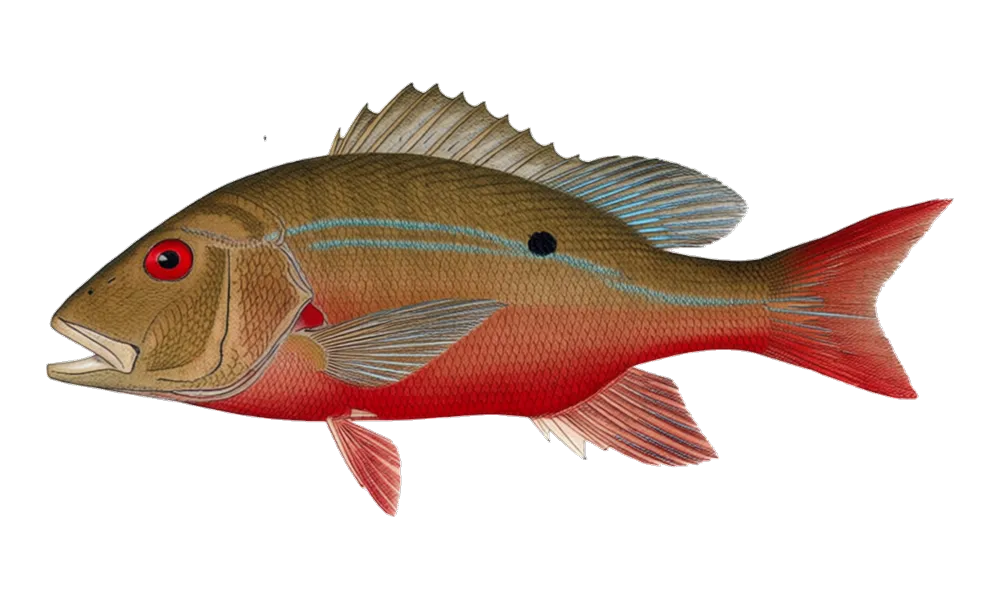
Mutton Snapper Lutjanus analis
Typical: 16–26 in, 4–12 lb
Key field mark: The single black spot high on the side plus blue lines under the eye and a pointed anal fin separate mutton from gray snapper; unlike redfish the spot is mid-body (not on the tail base), and unlike red grouper it has a forked tail and canine teeth.
- Olive-to-reddish body, often brick-red on the lower sides
- Small black spot high on the side below the rear dorsal
- Blue iridescent lines/streaks below and behind the eye
- Pointed (V-shaped) anal fin; strong canine teeth
- Red eye; reddish tail margins
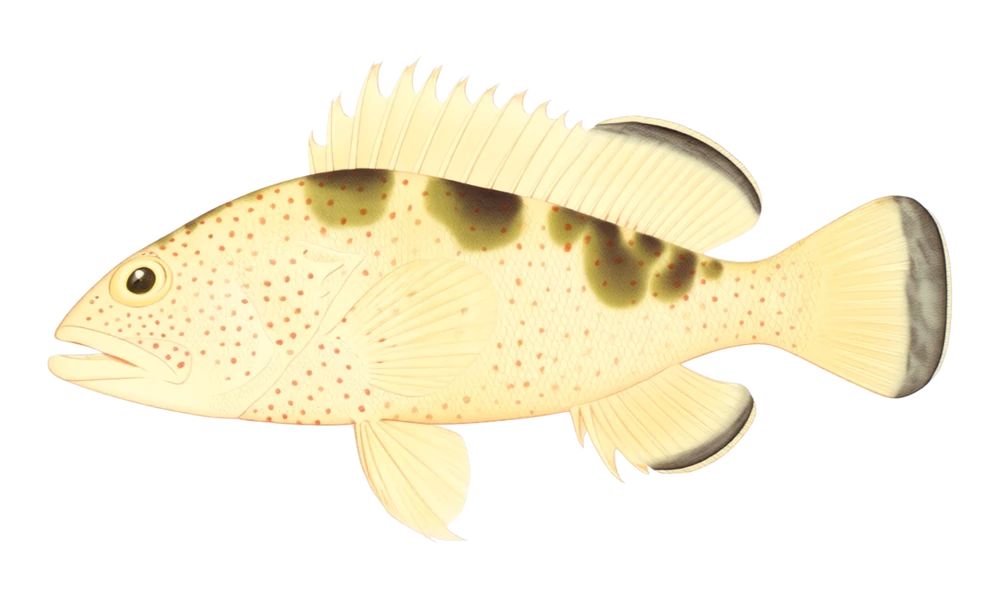
Red Hind Epinephelus guttatus
Typical: 10–16 in, 1–3 lb
Quickest tell: Dense small red spots over a pale body, a rounded tail and dark-edged rear fins mark the red hind; mutton snapper is a forked-tailed snapper with canine teeth and a single black spot high on the side.
- Pale greenish-white to buff body densely covered in small red-brown spots
- Dark blotches along the back at the base of the dorsal fin
- Blackish margins on the rear dorsal, anal and tail fins
- Squat, heavy-bodied grouper shape with a large mouth
- Rounded (not forked) tail
When Each Is Running October — current month highlighted
| Jan | Feb | Mar | Apr | May | Jun | Jul | Aug | Sep | Oct | Nov | Dec | |
|---|---|---|---|---|---|---|---|---|---|---|---|---|
| Mutton Snapper | ||||||||||||
| Red Hind |
Where Mutton Snapper and Red Hind Overlap
Both run in Puerto Rico & the U.S. Virgin Islands — that is where telling them apart actually matters.