 The Fishing Report
Fishing seasons & conditions by region
Red Hind Epinephelus guttatus
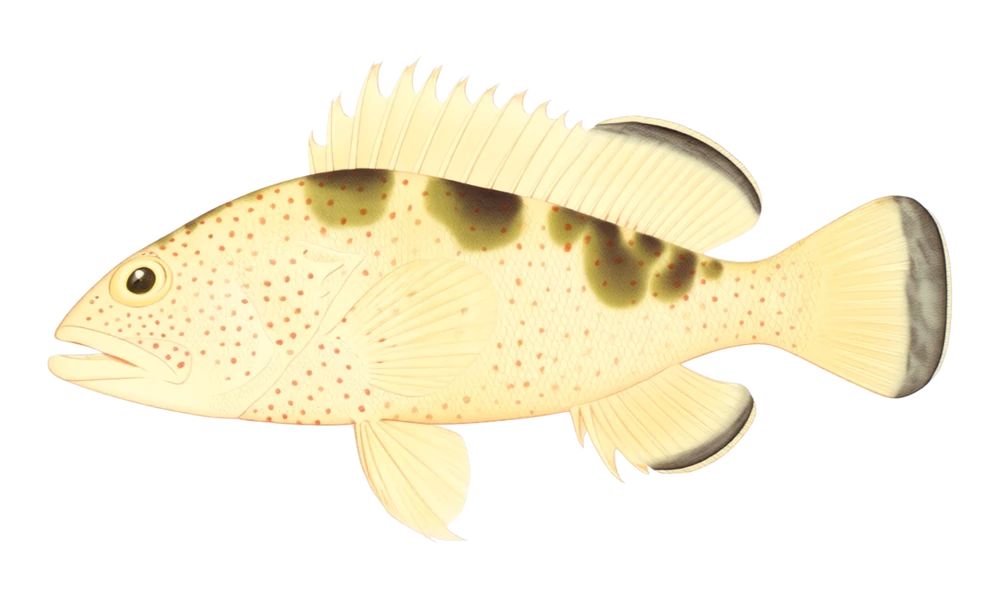
Red Hind Size, Range & Diet
| Typical size | 10–16 in, 1–3 lb |
|---|---|
| Maximum | up to about 30 in; the hook-and-line record is 6 lb 1 oz |
| Lifespan | up to 22 years |
| Range | Western Atlantic from North Carolina south through the Bahamas, the Gulf of Mexico and the Caribbean — the most common grouper of the West Indies. |
| Habitat | Coral reef and rocky bottom from the shallows down to about 300 ft, holding tight to holes, ledges and rubble. |
| Diet | Crabs above all, plus shrimp, small reef fish and octopus picked off the bottom. |
Sizes are typical rod-and-reel and documented maximum figures, not size limits — see the regulations links below for the rules where you fish.
How to Identify a Red Hind
- Pale greenish-white to buff body densely covered in small red-brown spots
- Dark blotches along the back at the base of the dorsal fin
- Blackish margins on the rear dorsal, anal and tail fins
- Squat, heavy-bodied grouper shape with a large mouth
- Rounded (not forked) tail
Tell it apart: Dense small red spots over a pale body, a rounded tail and dark-edged rear fins mark the red hind; mutton snapper is a forked-tailed snapper with canine teeth and a single black spot high on the side.
Easily confused with: Mutton Snapper
Side by side: Red Hind vs Mutton Snapper
How to Catch Red Hind
Gear links open Amazon searches. As an Amazon Associate, The Fishing Report earns from qualifying purchases — at no extra cost to you. Using these links helps keep the site ad-free.
- The everyday grouper of these reefs — drop a cut bait or small live bait into holes and ledge edges and lift hard immediately, because they bury into the coral the moment they feel the hook.Gear3/0–5/0 circle hooksBottom fishing rigsBottom fishing combo
When & Where Red Hind Are in Season
Peak Good Fair Slow
| Jan | Feb | Mar | Apr | May | Jun | Jul | Aug | Sep | Oct | Nov | Dec | |
|---|---|---|---|---|---|---|---|---|---|---|---|---|
| Puerto Rico & the U.S. Virgin Islands Nearshore |
Red Hind Regulations
Puerto RicoPuerto Rico Department of Natural and Environmental Resources (DRNA/DNER), Office of Forestry, Wildlife and Fisheries Licences and PermitsU.S. Virgin IslandsVirgin Islands Department of Planning and Natural Resources (DPNR), Division of Fish and WildlifeCaribbean Fishery Management CouncilCFMCNOAA Fisheries Southeast Region — current U.S. Caribbean regulationsNOAA Fisheries
Always check local regulations — seasons, size, and bag limits vary by state and species, and change year to year. When in doubt, release.