 The Fishing Report
Fishing seasons & conditions by region
Sablefish Anoplopoma fimbria
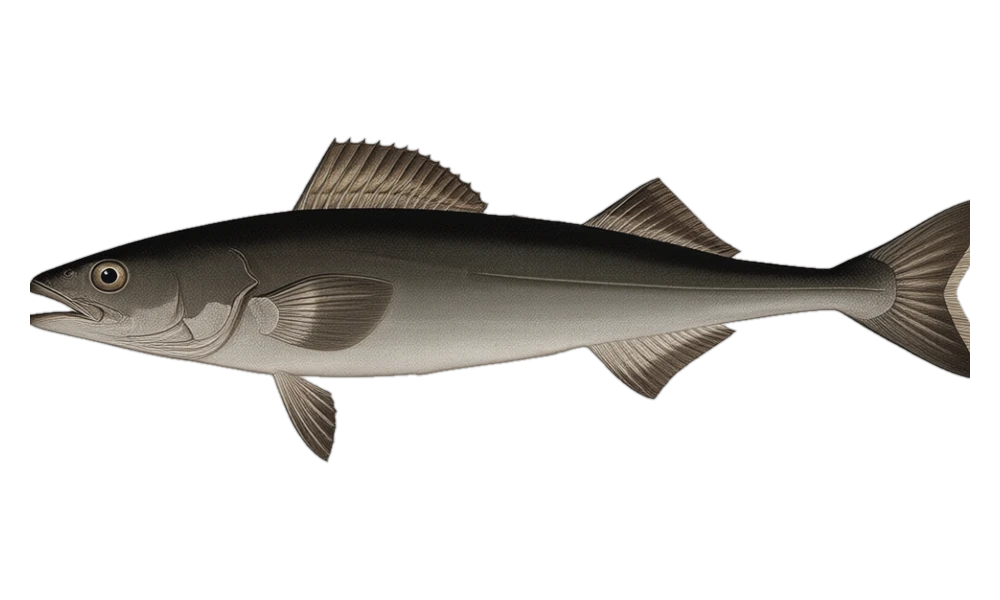
Sablefish Size, Range & Diet
| Typical size | 2–3 ft |
|---|---|
| Maximum | up to 114 cm (about 45 in) and 25 kg (55 lb) |
| Lifespan | more than 90 years; the oldest recorded in Alaskan waters was 94 |
| Range | Northeastern Pacific from northern Mexico to the Gulf of Alaska, westward to the Aleutian Islands and into the Bering Sea. |
| Habitat | Deep water along the continental slope, in shelf gullies and in fjords — roughly 150 to 1,500 m, with records far deeper. Juveniles live throughout the water column in nearshore waters. |
| Diet | An opportunistic feeder on fish, cephalopods (squid and octopus) and crustaceans; young fish eat mainly euphausiids. |
Sizes are typical rod-and-reel and documented maximum figures, not size limits — see the regulations links below for the rules where you fish.
How to Identify a Sablefish
- Elongate body, dark gray to black above with a lighter gray underside
- TWO dorsal fins, well separated from each other
- Small scales giving a soft, velvety feel
- No chin barbel
Tell it apart: Two well-separated dorsal fins and no chin barbel — despite the market name 'black cod', a Pacific cod has three dorsal fins and a prominent barbel under the chin.
Easily confused with: Pacific Cod
Side by side: Sablefish vs Pacific Cod
How to Catch Sablefish
Gear links open Amazon searches. As an Amazon Associate, The Fishing Report earns from qualifying purchases — at no extra cost to you. Using these links helps keep the site ad-free.
- Lives deep on the slope below about 650 ft; heavy weighted bait rigs and deep jigs on the mud edges, with electric or high-gear reels doing most of the work.GearDeep-drop rigsHeavy sinkersDeep-drop combo
- Available year-round on the deep slope — deep-drop a squid-baited gangion rig to 1000-plus feet, often on an electric reel for the depth.GearDeep-drop gangion rigHeavy deep-drop weightsElectric deep-drop combo
- Available year-round on the deep slope — deep-drop a squid-baited gangion rig to 1000-plus feet, usually on an electric reel for the depth.GearDeep-drop gangion rigHeavy deep-drop weightsElectric deep-drop combo
When & Where Sablefish Are in Season
Peak Good Fair Slow
| Jan | Feb | Mar | Apr | May | Jun | Jul | Aug | Sep | Oct | Nov | Dec | |
|---|---|---|---|---|---|---|---|---|---|---|---|---|
| Alaska — Aleutians & Alaska Peninsula Offshore | ||||||||||||
| Northern California Offshore | ||||||||||||
| Pacific Northwest Offshore |
Sablefish Regulations
AlaskaAlaska Department of Fish and Game (ADF&G), Division of Sport FishNOAA Fisheries, Alaska Regional OfficeNPFMCCaliforniaCalifornia Department of Fish and Wildlife (CDFW), Marine RegionNOAA Fisheries (West Coast Region)PFMCWashingtonWashington Department of Fish & Wildlife (WDFW)OregonOregon Department of Fish & Wildlife (ODFW)
Always check local regulations — seasons, size, and bag limits vary by state and species, and change year to year. When in doubt, release.