 The Fishing Report
Alaska — Aleutians & Alaska Peninsula — Fishing Seasons & Conditions
Storm-driven marine grounds off the Aleutians and the Alaska Peninsula — halibut, cod and rockfish over a wide shallow shelf, with all five salmon running the beaches and passes in a short, weather-dominated June–September season.
The AI First Mate’s Read — Monday, October 19
Monday starts manageable with light winds gusting to 14 knots and seas running 3 feet, giving anglers a reasonable window for coho and Pacific halibut before conditions deteriorate. Tuesday brings a significant pickup—winds jump to 16 knots with gusts near 23 and seas building to 7 feet, making it a tough day on the water. Wednesday stays rough with 12-knot winds gusting to 19 and seas holding at 7 feet. If you're targeting Pacific cod or rockfish, get out Monday while seas are down; just watch for a rain chance around 44 percent. Plan on staying ashore or in protected water Tuesday and Wednesday unless you've got a sturdy boat and plenty of experience in rough Aleutian conditions.
Our AI first mate reads the live NOAA forecast and this region’s season calendar every morning and writes this up — it covers the next few days. Conditions shift; check the live report before you go.
Alaska — Aleutians & Alaska Peninsula: What’s Biting in October 2026
Biting right now — 8 species are worth targeting in October here.
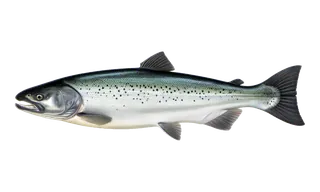 Coho / Silver Salmon
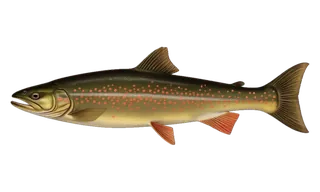 Dolly Varden
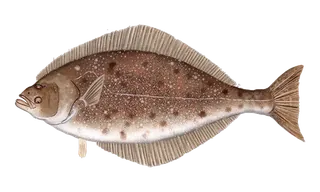 Pacific Halibut
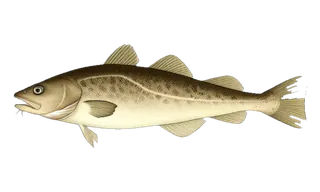 Pacific Cod
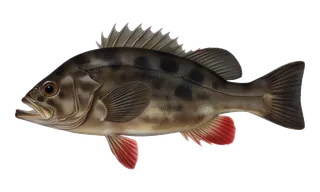 Black/Dusky Rockfish
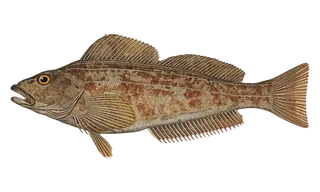 Kelp Greenling
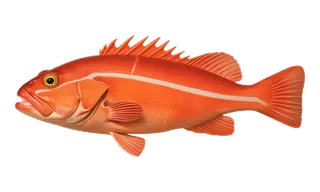 Yelloweye Rockfish
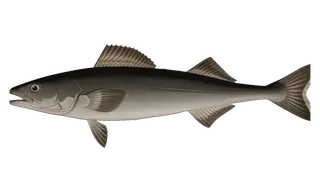 Sablefish
Tap any species for how to identify it, when it runs and what to throw. This is when the fish are active here — check the regulations below before you keep anything.
What's Biting — Month by Month October — current month highlighted
Bays, Lagoons & Beaches
| Jan | Feb | Mar | Apr | May | Jun | Jul | Aug | Sep | Oct | Nov | Dec | |
|---|---|---|---|---|---|---|---|---|---|---|---|---|
| Sockeye Salmon | ||||||||||||
| Chinook / King Salmon | ||||||||||||
| Chum Salmon | ||||||||||||
| Pink Salmon | ||||||||||||
| Coho / Silver Salmon | ||||||||||||
| Dolly Varden |
Nearshore Reefs & Kelp
| Jan | Feb | Mar | Apr | May | Jun | Jul | Aug | Sep | Oct | Nov | Dec | |
|---|---|---|---|---|---|---|---|---|---|---|---|---|
| Pacific Halibut | ||||||||||||
| Pacific Cod | ||||||||||||
| Black/Dusky Rockfish | ||||||||||||
| Kelp Greenling | ||||||||||||
| Coho / Silver Salmon | ||||||||||||
| Chinook / King Salmon |
Open Water & Banks
| Jan | Feb | Mar | Apr | May | Jun | Jul | Aug | Sep | Oct | Nov | Dec | |
|---|---|---|---|---|---|---|---|---|---|---|---|---|
| Pacific Halibut | ||||||||||||
| Pacific Cod | ||||||||||||
| Yelloweye Rockfish | ||||||||||||
| Sablefish | ||||||||||||
| Chinook / King Salmon | ||||||||||||
| Coho / Silver Salmon |
What to Target & How
Gear links open Amazon searches. As an Amazon Associate, The Fishing Report earns from qualifying purchases — at no extra cost to you. Using these links helps keep the site ad-free.
Inshore
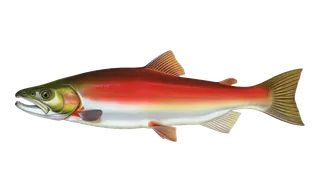 Sockeye Salmon — Bristol Bay's run peaks late June into July; short-line a weighted sparse fly or bare hook through the travel lane along the bank, where reds move in dense pulses.GearSockeye fliesBead and yarn rigsDrift fishing rod
How to ID
- No spots on back or tail
- Bright silver body at sea, greenish-blue back; prominent glassy eye
- Many long, fine, serrated and closely spaced gill rakers on the first arch (over 30–40)
- Spawners turn bright red with a green head
Typical: 22–28 in, 4–8 lb
Tell it apart: Spotless body plus numerous long, fine, closely set gill rakers (count them on the first arch — far more than chum's short, sparse rakers) confirm a sockeye.
Easily confused with: Chum Salmon, Pink Salmon, Coho / Silver Salmon
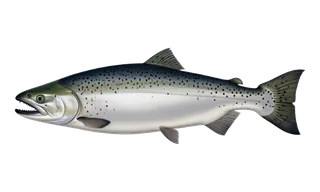 Chinook / King Salmon — Runs June-July on the Nushagak and the Peninsula rivers; back-troll plugs and drift bobber-and-yarn through holding water, or troll cut-plug herring in the salt.GearCut-plug herring rigSalmon plugsSalmon mooching rod
How to ID
- Black gums/gumline at base of teeth on lower jaw (mouth interior also dark)
- Irregular black spots on the back AND on BOTH lobes of the tail
- Silver body, blue-green back; large, robust, deep-bodied
- Spots present on entire caudal fin, not just the upper lobe
Typical: 24–36 in, 15–30 lb
Tell it apart: Black gumline along the lower jaw PLUS spots covering both tail lobes separate a king from a coho's pale/white gums and upper-lobe-only tail spotting. Don't rely on size or fin-ray counts alone.
Easily confused with: Coho / Silver Salmon
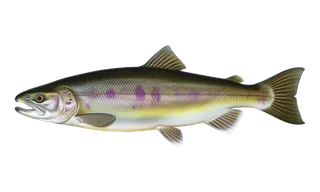 Chum Salmon — Thick July-August in tidewater and the lower rivers; swing chartreuse and green spoons, spinners and yarn flies for fish that hit swung hardware hard.GearBright casting spoonsInline spinnersYarn flies
How to ID
- No distinct spots on back or tail
- Silver at sea; spawners show purple/green vertical 'calico' bars
- Whitish tips on anal and pelvic fins
- Narrow caudal peduncle (thin tail base)
- Large, often white-rimmed pupil/eye
Typical: 24–28 in, 8–15 lb
Tell it apart: A spotless back and tail combined with a thin caudal peduncle and white-tipped anal/pelvic fins separate chum from spotted pinks/coho and from spotless sockeye (use gill-raker count to split chum from sockeye).
Easily confused with: Sockeye Salmon, Pink Salmon, Coho / Silver Salmon
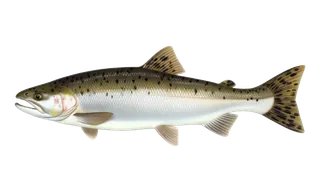 Pink Salmon — Heavy on even years July-August; cast small pink spoons and jigs into the schools stacked at river mouths and along tide rips.GearPink casting spoonsSmall pink jigsLight salmon combo
How to ID
- Large oval/oblong black blotches over the entire tail AND on the back
- Very small scales (smallest of any Pacific salmon)
- Bright silver at sea; smallest, most slender Pacific salmon
- Spawning males develop a pronounced humped back
Typical: 18–25 in, 3–5 lb
Tell it apart: Big oval spots covering the WHOLE tail plus the tiniest scales of any salmon clinch a pink; coho spot only the upper lobe and chum has no real spots.
Easily confused with: Coho / Silver Salmon, Chum Salmon
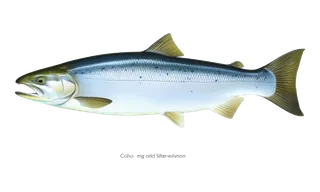 Coho / Silver Salmon — Best August into October, later than Southeast; cast bright spoons and spinners across tidewater current and swing them, or troll herring outside the lagoons.GearCasting spoonsInline spinnersSalmon spinning combo
How to ID
- Black mouth interior but WHITE/gray gums at base of teeth on lower jaw
- Spots on back and on the UPPER tail lobe only (lower lobe usually clean)
- Bright silver sides, blue back; broad caudal peduncle
- Moderately forked tail
Typical: 24–30 in, 8–12 lb
Tell it apart: White/gray gums (against the black mouth) with spots confined to the upper tail lobe mark a coho versus the king's black gumline and fully spotted tail.
Easily confused with: Chinook / King Salmon
- Dolly Varden — Sea-run dollies follow the salmon in from June; small bright spoons, beads and egg patterns along current seams and behind spawning fish.GearSmall casting spoonsBead rigsLight spinning combo
How to ID
- Light-colored spots on a darker greenish body — the inverse of a trout
- Many small spots, each SMALLER than the pupil of the eye
- Relatively thick caudal peduncle and only a slightly forked tail
- Spawning males develop a distinct kype, red-black-and-white bellies, black gill covers and bright orange to red spots
Typical: 12–24 in
Tell it apart: Spots smaller than the eye's pupil, a thick caudal peduncle and a barely forked tail separate a Dolly Varden from an Arctic char, which has fewer and larger spots on a slimmer peduncle behind a deeply forked tail.
Nearshore
- Pacific Halibut — Prime May-September; drift sand and gravel edges in 120-350 ft with heavy jigs, or anchor with large circle hooks baited with herring over the flats.GearHeavy circle hooksLarge leadhead jigsHalibut rod combo
How to ID
- Both eyes on the right (dark, upper) side; right-eyed flatfish
- Large diamond/oval flat body, lies on its side
- Dark brown/mottled top side, white underside
- Large mouth reaching to the eye; strongly forked (lunate) tail
- Lateral line arches high over the pectoral fin
Typical: 30–45 in, 12–40 lb
Tell it apart: A large right-eyed flatfish with a strongly forked tail and white underside is a halibut, not an arrowtooth flounder (slimmer, large-mouthed, nearly straight tail) — confirm the forked tail and arched lateral line.
- Pacific Cod — The dependable fallback nearly year-round; work a plain leadhead with a big soft tail slowly over hard bottom in 100-300 ft.GearHeavy bottom jigsShrimp fly bait rigsBottomfish rod combo
How to ID
- Single long chin barbel (whisker) at least as long as eye diameter
- Three separate dorsal fins and two anal fins
- Brown/gray mottled body, pale belly
- Pale, curved lateral line
- Rounded/square tail, blunt snout
Typical: 20–32 in, 5–15 lb
Tell it apart: The single fleshy chin barbel and three separate dorsal fins are unique among Alaska bottomfish and immediately separate cod from the barbel-less, single-dorsal lingcod.
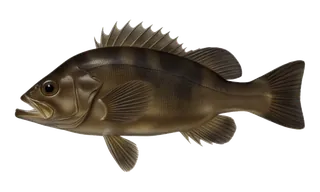 Black/Dusky Rockfish — Sits up off the rock around nearshore pinnacles; cast and jig swimbaits and shrimp flies near the surface and through the mid-column.GearSoft swimbaitsShrimp fly rigsMedium jigging combo
How to ID
- Dark gray to black (black rockfish) or olive/brown-gray (dusky)
- Spiny dorsal fin: black rockfish ~13 spines, dusky ~14
- Black rockfish: dark spots/blotches on the spiny dorsal fin; dusky plainer
- Black rockfish anal fin trailing edge ROUNDED; dusky SLANTED/straight
- Heavy-bodied schooling rockfishes; large mouth
Typical: 14–20 in, 2–5 lb
Tell it apart: Both are dark schooling rockfish; the trailing edge of the anal fin separates them — ROUNDED in black rockfish, SLANTED/straight in dusky.
Easily confused with: Yelloweye Rockfish
- Kelp Greenling — Right in the kelp and over shallow rock inside 150 ft; small baited hooks, shrimp flies and little jigs fished close to the weed take them readily.GearSmall shrimp fliesLight metal jigsLight saltwater combo
How to ID
- Five lateral lines along each side
- Two fleshy cirri — one above the eye, one small one midway between eye and dorsal fin
- Females freckled all over with small reddish-brown to golden spots on gray-brown, fins mostly yellowish orange
- Males gray to brownish olive with irregular BLUE spots over the front half to two-thirds, each ringed by small reddish-brown spots
- Often an eye-like ocellus at the rear of the soft dorsal, just ahead of the tail; mouth yellowish inside
Tell it apart: Five lateral lines plus a pair of fleshy cirri over the eye identify a greenling; the sexes look like different fish — blue spots forward on males, rusty-gold freckling all over on females.
Offshore
- Yelloweye Rockfish — Deep on the same structure as the blacks; drop heavy jigs and bait rigs to the bottom and carry a descending device to release fish unharmed.GearHeavy rockfish jigsShrimp fly rigsDescending device
How to ID
- Bright orange to orange-red body (adults)
- Brilliant yellow eyes
- Raspy/rough bony ridges over and behind the eyes
- Juveniles have one or two pale/white horizontal stripes along the body
- Heavy body, strong dorsal and anal fin spines
Typical: 20–28 in, 5–12 lb
Tell it apart: Orange-red body with vivid yellow eyes and rough bony ridges over the eyes positively IDs a yelloweye (locally 'red snapper') — its bright color alone separates it from the dark black/dusky rockfishes.
Easily confused with: Black/Dusky Rockfish
- Sablefish — Lives deep on the slope below about 650 ft; heavy weighted bait rigs and deep jigs on the mud edges, with electric or high-gear reels doing most of the work.GearDeep-drop rigsHeavy sinkersDeep-drop combo
How to ID
- Elongate body, dark gray to black above with a lighter gray underside
- TWO dorsal fins, well separated from each other
- Small scales giving a soft, velvety feel
- No chin barbel
Typical: 2–3 ft
Tell it apart: Two well-separated dorsal fins and no chin barbel — despite the market name 'black cod', a Pacific cod has three dorsal fins and a prominent barbel under the chin.
Easily confused with: Pacific Cod
Fishing Regulations
Tides & Timing
Read the Tide
Tides run hard through the Aleutian passes and along the Peninsula, and the passes are where wind against a strong tide turns dangerous fastest. The first push of moving water after slack is the halibut and cod bite; salmon push into the lagoons hardest on the incoming.
Alaska — Aleutians & Alaska Peninsula Fishing Towns
Per-town fishing reports — local spots and launches inside this region.