 The Fishing Report
Sand Point, AK Fishing — Seasons & Conditions
Shumagin Islands port on Popof Strait — halibut and Pacific cod on the surrounding banks, silvers and kings through the passes in summer, and black rockfish thick along the kelp edges.
Part of the Alaska — Aleutians & Alaska Peninsula region.
What’s Biting at Sand Point, AK in October 2026
Biting right now — 8 species are worth targeting in October here.
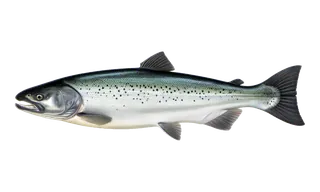 Coho / Silver Salmon
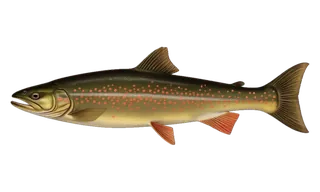 Dolly Varden
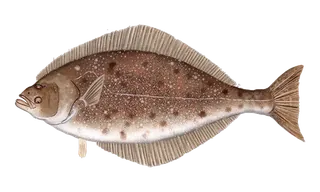 Pacific Halibut
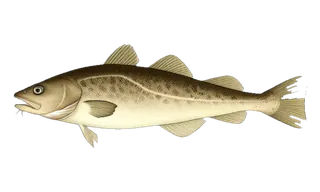 Pacific Cod
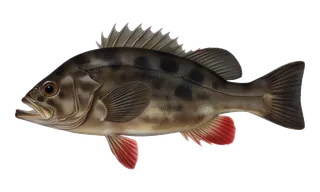 Black/Dusky Rockfish
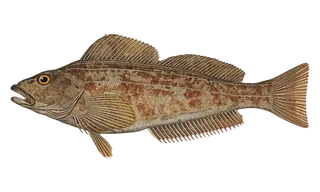 Kelp Greenling
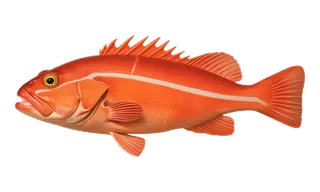 Yelloweye Rockfish
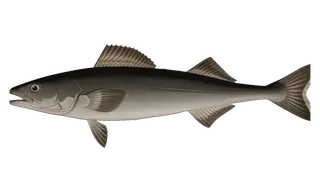 Sablefish
Tap any species for how to identify it, when it runs and what to throw. This is when the fish are active here — check the regulations below before you keep anything.
Fishing Sand Point, AK: The Local Water
The Inlet & Bar
The north part of Popof Strait carries dangerous reefs marked by buoys, and reefs covered 2 3/4 fathoms lie on both sides of the north entrance. Caton Shoal, with a 3-fathom spot, is 0.6 mile north of Sand Point and Unga Reef 0.8 mile north; a 5 1/2-fathom spot lies 0.5 mile 013 degrees from the point. Current in the north part of the strait runs about 0.5 knot, setting north on the flood and south on the ebb.
Local Waters
Humboldt Harbor, on the east side of Popof Strait 1.3 miles northeast of Sand Point, is an excellent shelter with good holding ground, though a second anchor is sometimes needed to prevent dragging in strong southwest winds. Vessels anchor in 10 fathoms 0.3 mile offshore with Humboldt Harbor Breakwater Light 2 bearing 105 degrees and Popof Strait Entrance Light 1 bearing 005 degrees.
Reefs, Structure & Marks
Baralof Bay, 5 miles south, carries a light 60 feet above the water on its north entrance point, and a small rocky area covered 2 1/2 fathoms sits in the middle 0.5 mile from the head of the bay. Kelly Rock, 3 miles southeast of Baralof Bay, is a flat-topped grassy islet 65 feet high lying 200 yards offshore with kelp growing between it and the shore. Off the east coast of Unga Island a 4-fathom shoal lies 0.5 mile out and a half-fathom rock 0.3 mile out.
Harbors, Launches & Access
A small-boat basin protected by breakwaters lies in Humboldt Harbor with moorage for 148 craft; the south breakwater is marked by two lights and the north breakwater by a light at its south end. A second small-boat basin protected by jetties is just south, where depths were 16.5 to 18.5 feet in 2010. A travel-lift is available in the small boat basin, and the municipal airport and two wharves are on the north side of the spit.
Sand Point, AK Season Calendar October — current month highlighted
Bays, Lagoons & Beaches
| Jan | Feb | Mar | Apr | May | Jun | Jul | Aug | Sep | Oct | Nov | Dec | |
|---|---|---|---|---|---|---|---|---|---|---|---|---|
| Sockeye Salmon | ||||||||||||
| Chinook / King Salmon | ||||||||||||
| Chum Salmon | ||||||||||||
| Pink Salmon | ||||||||||||
| Coho / Silver Salmon | ||||||||||||
| Dolly Varden |
Nearshore Reefs & Kelp
| Jan | Feb | Mar | Apr | May | Jun | Jul | Aug | Sep | Oct | Nov | Dec | |
|---|---|---|---|---|---|---|---|---|---|---|---|---|
| Pacific Halibut | ||||||||||||
| Pacific Cod | ||||||||||||
| Black/Dusky Rockfish | ||||||||||||
| Kelp Greenling | ||||||||||||
| Coho / Silver Salmon | ||||||||||||
| Chinook / King Salmon |
Open Water & Banks
| Jan | Feb | Mar | Apr | May | Jun | Jul | Aug | Sep | Oct | Nov | Dec | |
|---|---|---|---|---|---|---|---|---|---|---|---|---|
| Pacific Halibut | ||||||||||||
| Pacific Cod | ||||||||||||
| Yelloweye Rockfish | ||||||||||||
| Sablefish | ||||||||||||
| Chinook / King Salmon | ||||||||||||
| Coho / Silver Salmon |
What to Target & How
Gear links open Amazon searches. As an Amazon Associate, The Fishing Report earns from qualifying purchases — at no extra cost to you. Using these links helps keep the site ad-free.
Inshore
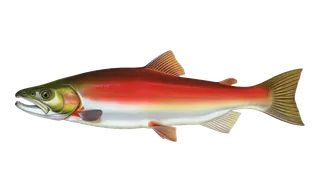 Sockeye Salmon — Bristol Bay's run peaks late June into July; short-line a weighted sparse fly or bare hook through the travel lane along the bank, where reds move in dense pulses.GearSockeye fliesBead and yarn rigsDrift fishing rod
How to ID
- No spots on back or tail
- Bright silver body at sea, greenish-blue back; prominent glassy eye
- Many long, fine, serrated and closely spaced gill rakers on the first arch (over 30–40)
- Spawners turn bright red with a green head
Typical: 22–28 in, 4–8 lb
Tell it apart: Spotless body plus numerous long, fine, closely set gill rakers (count them on the first arch — far more than chum's short, sparse rakers) confirm a sockeye.
Easily confused with: Chum Salmon, Pink Salmon, Coho / Silver Salmon
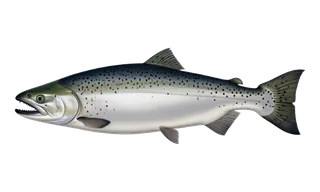 Chinook / King Salmon — Runs June-July on the Nushagak and the Peninsula rivers; back-troll plugs and drift bobber-and-yarn through holding water, or troll cut-plug herring in the salt.GearCut-plug herring rigSalmon plugsSalmon mooching rod
How to ID
- Black gums/gumline at base of teeth on lower jaw (mouth interior also dark)
- Irregular black spots on the back AND on BOTH lobes of the tail
- Silver body, blue-green back; large, robust, deep-bodied
- Spots present on entire caudal fin, not just the upper lobe
Typical: 24–36 in, 15–30 lb
Tell it apart: Black gumline along the lower jaw PLUS spots covering both tail lobes separate a king from a coho's pale/white gums and upper-lobe-only tail spotting. Don't rely on size or fin-ray counts alone.
Easily confused with: Coho / Silver Salmon
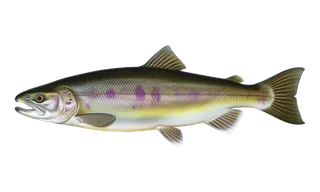 Chum Salmon — Thick July-August in tidewater and the lower rivers; swing chartreuse and green spoons, spinners and yarn flies for fish that hit swung hardware hard.GearBright casting spoonsInline spinnersYarn flies
How to ID
- No distinct spots on back or tail
- Silver at sea; spawners show purple/green vertical 'calico' bars
- Whitish tips on anal and pelvic fins
- Narrow caudal peduncle (thin tail base)
- Large, often white-rimmed pupil/eye
Typical: 24–28 in, 8–15 lb
Tell it apart: A spotless back and tail combined with a thin caudal peduncle and white-tipped anal/pelvic fins separate chum from spotted pinks/coho and from spotless sockeye (use gill-raker count to split chum from sockeye).
Easily confused with: Sockeye Salmon, Pink Salmon, Coho / Silver Salmon
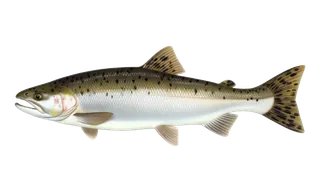 Pink Salmon — Heavy on even years July-August; cast small pink spoons and jigs into the schools stacked at river mouths and along tide rips.GearPink casting spoonsSmall pink jigsLight salmon combo
How to ID
- Large oval/oblong black blotches over the entire tail AND on the back
- Very small scales (smallest of any Pacific salmon)
- Bright silver at sea; smallest, most slender Pacific salmon
- Spawning males develop a pronounced humped back
Typical: 18–25 in, 3–5 lb
Tell it apart: Big oval spots covering the WHOLE tail plus the tiniest scales of any salmon clinch a pink; coho spot only the upper lobe and chum has no real spots.
Easily confused with: Coho / Silver Salmon, Chum Salmon
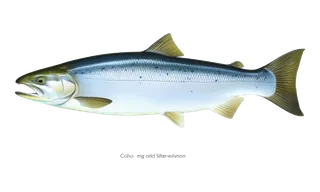 Coho / Silver Salmon — Best August into October, later than Southeast; cast bright spoons and spinners across tidewater current and swing them, or troll herring outside the lagoons.GearCasting spoonsInline spinnersSalmon spinning combo
How to ID
- Black mouth interior but WHITE/gray gums at base of teeth on lower jaw
- Spots on back and on the UPPER tail lobe only (lower lobe usually clean)
- Bright silver sides, blue back; broad caudal peduncle
- Moderately forked tail
Typical: 24–30 in, 8–12 lb
Tell it apart: White/gray gums (against the black mouth) with spots confined to the upper tail lobe mark a coho versus the king's black gumline and fully spotted tail.
Easily confused with: Chinook / King Salmon
- Dolly Varden — Sea-run dollies follow the salmon in from June; small bright spoons, beads and egg patterns along current seams and behind spawning fish.GearSmall casting spoonsBead rigsLight spinning combo
How to ID
- Light-colored spots on a darker greenish body — the inverse of a trout
- Many small spots, each SMALLER than the pupil of the eye
- Relatively thick caudal peduncle and only a slightly forked tail
- Spawning males develop a distinct kype, red-black-and-white bellies, black gill covers and bright orange to red spots
Typical: 12–24 in
Tell it apart: Spots smaller than the eye's pupil, a thick caudal peduncle and a barely forked tail separate a Dolly Varden from an Arctic char, which has fewer and larger spots on a slimmer peduncle behind a deeply forked tail.
Nearshore
- Pacific Halibut — Prime May-September; drift sand and gravel edges in 120-350 ft with heavy jigs, or anchor with large circle hooks baited with herring over the flats.GearHeavy circle hooksLarge leadhead jigsHalibut rod combo
How to ID
- Both eyes on the right (dark, upper) side; right-eyed flatfish
- Large diamond/oval flat body, lies on its side
- Dark brown/mottled top side, white underside
- Large mouth reaching to the eye; strongly forked (lunate) tail
- Lateral line arches high over the pectoral fin
Typical: 30–45 in, 12–40 lb
Tell it apart: A large right-eyed flatfish with a strongly forked tail and white underside is a halibut, not an arrowtooth flounder (slimmer, large-mouthed, nearly straight tail) — confirm the forked tail and arched lateral line.
- Pacific Cod — The dependable fallback nearly year-round; work a plain leadhead with a big soft tail slowly over hard bottom in 100-300 ft.GearHeavy bottom jigsShrimp fly bait rigsBottomfish rod combo
How to ID
- Single long chin barbel (whisker) at least as long as eye diameter
- Three separate dorsal fins and two anal fins
- Brown/gray mottled body, pale belly
- Pale, curved lateral line
- Rounded/square tail, blunt snout
Typical: 20–32 in, 5–15 lb
Tell it apart: The single fleshy chin barbel and three separate dorsal fins are unique among Alaska bottomfish and immediately separate cod from the barbel-less, single-dorsal lingcod.
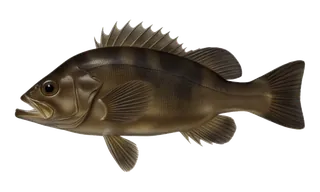 Black/Dusky Rockfish — Sits up off the rock around nearshore pinnacles; cast and jig swimbaits and shrimp flies near the surface and through the mid-column.GearSoft swimbaitsShrimp fly rigsMedium jigging combo
How to ID
- Dark gray to black (black rockfish) or olive/brown-gray (dusky)
- Spiny dorsal fin: black rockfish ~13 spines, dusky ~14
- Black rockfish: dark spots/blotches on the spiny dorsal fin; dusky plainer
- Black rockfish anal fin trailing edge ROUNDED; dusky SLANTED/straight
- Heavy-bodied schooling rockfishes; large mouth
Typical: 14–20 in, 2–5 lb
Tell it apart: Both are dark schooling rockfish; the trailing edge of the anal fin separates them — ROUNDED in black rockfish, SLANTED/straight in dusky.
Easily confused with: Yelloweye Rockfish
- Kelp Greenling — Right in the kelp and over shallow rock inside 150 ft; small baited hooks, shrimp flies and little jigs fished close to the weed take them readily.GearSmall shrimp fliesLight metal jigsLight saltwater combo
How to ID
- Five lateral lines along each side
- Two fleshy cirri — one above the eye, one small one midway between eye and dorsal fin
- Females freckled all over with small reddish-brown to golden spots on gray-brown, fins mostly yellowish orange
- Males gray to brownish olive with irregular BLUE spots over the front half to two-thirds, each ringed by small reddish-brown spots
- Often an eye-like ocellus at the rear of the soft dorsal, just ahead of the tail; mouth yellowish inside
Tell it apart: Five lateral lines plus a pair of fleshy cirri over the eye identify a greenling; the sexes look like different fish — blue spots forward on males, rusty-gold freckling all over on females.
Offshore
- Yelloweye Rockfish — Deep on the same structure as the blacks; drop heavy jigs and bait rigs to the bottom and carry a descending device to release fish unharmed.GearHeavy rockfish jigsShrimp fly rigsDescending device
How to ID
- Bright orange to orange-red body (adults)
- Brilliant yellow eyes
- Raspy/rough bony ridges over and behind the eyes
- Juveniles have one or two pale/white horizontal stripes along the body
- Heavy body, strong dorsal and anal fin spines
Typical: 20–28 in, 5–12 lb
Tell it apart: Orange-red body with vivid yellow eyes and rough bony ridges over the eyes positively IDs a yelloweye (locally 'red snapper') — its bright color alone separates it from the dark black/dusky rockfishes.
Easily confused with: Black/Dusky Rockfish
- Sablefish — Lives deep on the slope below about 650 ft; heavy weighted bait rigs and deep jigs on the mud edges, with electric or high-gear reels doing most of the work.GearDeep-drop rigsHeavy sinkersDeep-drop combo
How to ID
- Elongate body, dark gray to black above with a lighter gray underside
- TWO dorsal fins, well separated from each other
- Small scales giving a soft, velvety feel
- No chin barbel
Typical: 2–3 ft
Tell it apart: Two well-separated dorsal fins and no chin barbel — despite the market name 'black cod', a Pacific cod has three dorsal fins and a prominent barbel under the chin.
Easily confused with: Pacific Cod
Fishing Regulations
Tides & Timing
Read the Tide
Tides run hard through the Aleutian passes and along the Peninsula, and the passes are where wind against a strong tide turns dangerous fastest. The first push of moving water after slack is the halibut and cod bite; salmon push into the lagoons hardest on the incoming.
Other towns in the Alaska — Aleutians & Alaska Peninsula
Cold Bay, AK · King Cove, AK · Unalaska (Dutch Harbor), AK
Back to the Alaska — Aleutians & Alaska Peninsula overview →