 The Fishing Report
Fishing seasons & conditions by region
Sockeye Salmon Oncorhynchus nerka
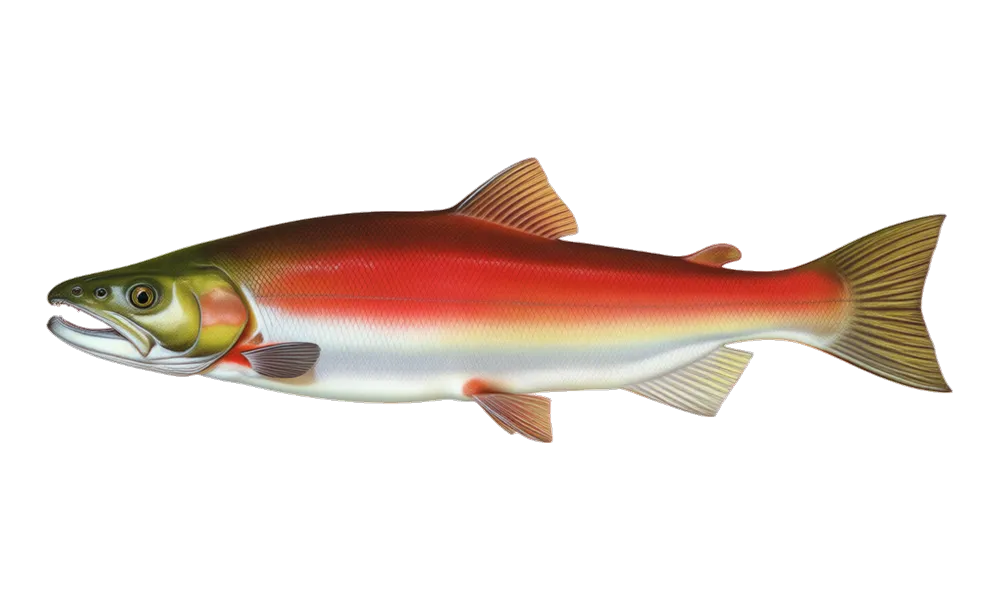
Sockeye Salmon Size, Range & Diet
| Typical size | 22–28 in, 4–8 lb |
|---|---|
| Maximum | up to 31 in and 16 lb |
| Lifespan | 3–7 years |
| Range | Pacific coast lake-and-river systems from Oregon north through Washington and British Columbia to northwest Alaska, with the heaviest runs in Bristol Bay and the Kenai. |
| Habitat | Clear glacial rivers and the lake systems feeding them during the run; juveniles rear a year or more in the lake before going to sea. |
| Diet | Plankton, amphipods and small crustaceans — reds rarely chase bait, so sparse flies swung in the migration lane do the work. |
Sizes are typical rod-and-reel and documented maximum figures, not size limits — see the regulations links below for the rules where you fish.
How to Identify a Sockeye Salmon
- No spots on back or tail
- Bright silver body at sea, greenish-blue back; prominent glassy eye
- Many long, fine, serrated and closely spaced gill rakers on the first arch (over 30–40)
- Spawners turn bright red with a green head
Tell it apart: Spotless body plus numerous long, fine, closely set gill rakers (count them on the first arch — far more than chum's short, sparse rakers) confirm a sockeye.
Easily confused with: Chum Salmon, Pink Salmon, Coho / Silver Salmon
Side by side: Sockeye Salmon vs Chum Salmon, Sockeye Salmon vs Coho Salmon, Sockeye Salmon vs Pink Salmon
How to Catch Sockeye Salmon
Gear links open Amazon searches. As an Amazon Associate, The Fishing Report earns from qualifying purchases — at no extra cost to you. Using these links helps keep the site ad-free.
- Sharp June-July run; flip-and-drift weighted sparse flies and yarn on short leaders, lining mouths of densely packed fish in clear river current.GearSockeye fliesBead and yarn rigsDrift fishing rod
- Bristol Bay's run peaks late June into July; short-line a weighted sparse fly or bare hook through the travel lane along the bank, where reds move in dense pulses.GearSockeye fliesBead and yarn rigsDrift fishing rod
When & Where Sockeye Salmon Are in Season
Peak Good Fair Slow
| Jan | Feb | Mar | Apr | May | Jun | Jul | Aug | Sep | Oct | Nov | Dec | |
|---|---|---|---|---|---|---|---|---|---|---|---|---|
| Alaska — Southcentral & Southeast Inshore | ||||||||||||
| Alaska — Aleutians & Alaska Peninsula Inshore | ||||||||||||
| Alaska — Bristol Bay Inshore | ||||||||||||
| Alaska — Bristol Bay Nearshore |
Sockeye Salmon Regulations
Always check local regulations — seasons, size, and bag limits vary by state and species, and change year to year. When in doubt, release.