 The Fishing Report
Fishing seasons & conditions by region
Chum Salmon vs Sockeye Salmon
Two fish anglers routinely mix up. Here is what actually separates them — and when and where you are likely to meet each.
Side by Side
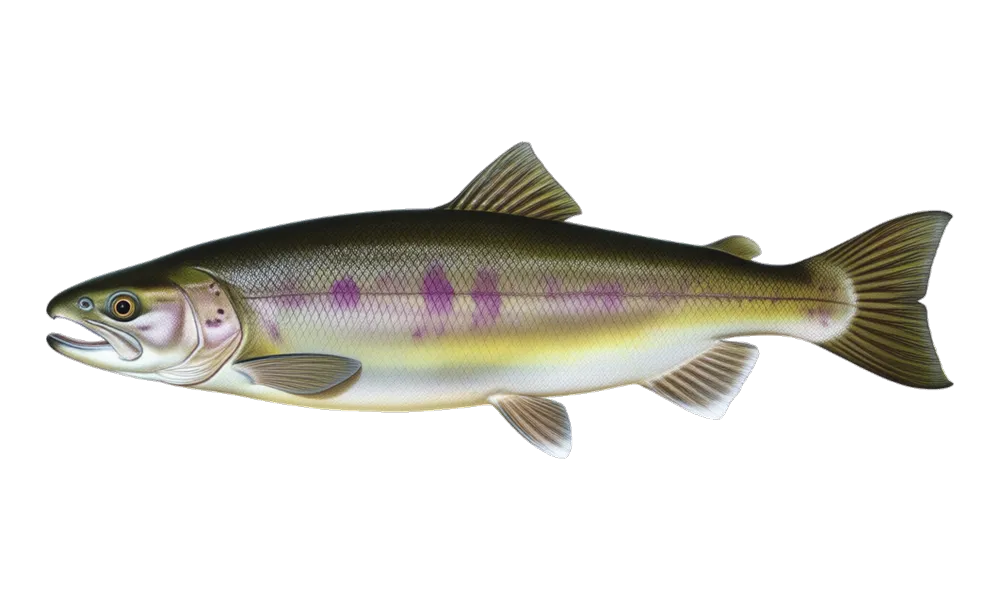
Chum Salmon Oncorhynchus keta
Typical: 24–28 in, 8–15 lb
Quickest tell: A spotless back and tail combined with a thin caudal peduncle and white-tipped anal/pelvic fins separate chum from spotted pinks/coho and from spotless sockeye (use gill-raker count to split chum from sockeye).
- No distinct spots on back or tail
- Silver at sea; spawners show purple/green vertical 'calico' bars
- Whitish tips on anal and pelvic fins
- Narrow caudal peduncle (thin tail base)
- Large, often white-rimmed pupil/eye
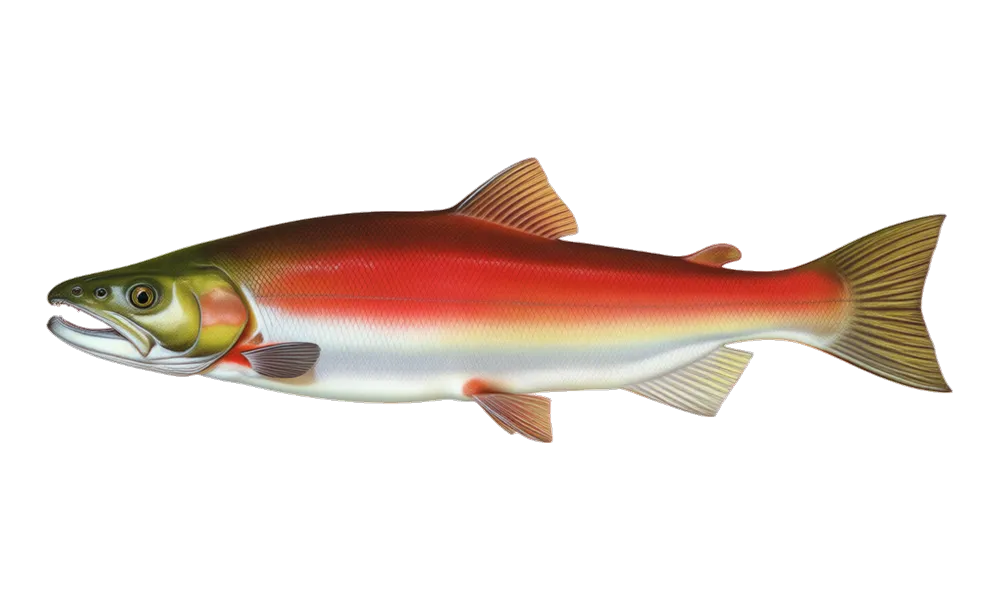
Sockeye Salmon Oncorhynchus nerka
Typical: 22–28 in, 4–8 lb
Quickest tell: Spotless body plus numerous long, fine, closely set gill rakers (count them on the first arch — far more than chum's short, sparse rakers) confirm a sockeye.
- No spots on back or tail
- Bright silver body at sea, greenish-blue back; prominent glassy eye
- Many long, fine, serrated and closely spaced gill rakers on the first arch (over 30–40)
- Spawners turn bright red with a green head
When Each Is Running October — current month highlighted
| Jan | Feb | Mar | Apr | May | Jun | Jul | Aug | Sep | Oct | Nov | Dec | |
|---|---|---|---|---|---|---|---|---|---|---|---|---|
| Chum Salmon | ||||||||||||
| Sockeye Salmon |
Peak Good Fair Slow
Where Chum Salmon and Sockeye Salmon Overlap
Both run in Alaska — Southcentral & Southeast, Alaska — Bristol Bay, Alaska — Aleutians & Alaska Peninsula — that is where telling them apart actually matters.