 The Fishing Report
Fishing seasons & conditions by region
Vermilion / B-sea Rhomboplites aurorubens
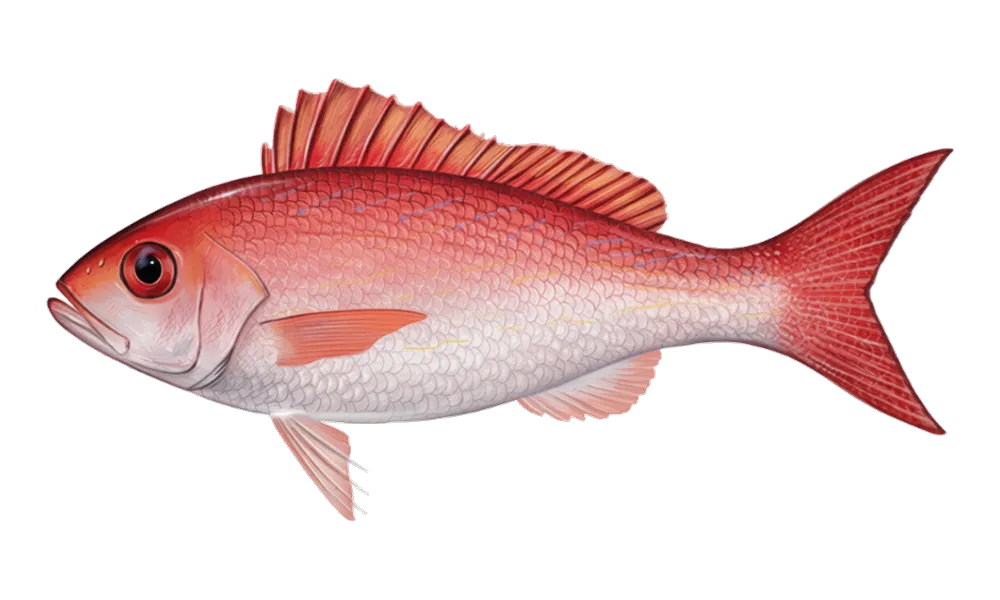
Vermilion / B-sea Size, Range & Diet
| Typical size | 12–18 in, 1–3 lb |
|---|---|
| Maximum | up to about 2 ft — vermilion near 7 lb, black sea bass near 9 lb |
| Lifespan | Vermilion to about 15 years; black sea bass about 8–12 years, with some to 20 |
| Range | This entry covers two hard-bottom fish that come over the rail together off the Southeast — vermilion snapper and black sea bass — from North Carolina through Georgia and Florida and into the Gulf of Mexico. |
| Habitat | Live-bottom ledges, reefs and wrecks, mostly in 60–200 ft, with vermilion holding out to 400 ft. |
| Diet | Squid, shrimp, crabs, worms and small fish picked off hard bottom — cut bait and squid strips on a two-hook rig. |
Sizes are typical rod-and-reel and documented maximum figures, not size limits — see the regulations links below for the rules where you fish.
How to Identify a Vermilion / B-sea
- Vermilion/red back fading to silvery-pink sides
- Large yellow-gold eye relative to a small mouth
- Faint yellow streaks/dashes along the upper sides
- Rounded anal fin; no enlarged canine teeth
- Deeply forked tail; smaller, more slender body than red snapper
Tell it apart: A proportionally large eye over a tiny mouth, a rounded anal fin and a deeply forked tail flag a vermilion (beeliner) versus the canine-toothed, red-eyed, barely-forked red snapper.
Easily confused with: Red Snapper*
Side by side: Vermilion / B-sea vs Red Snapper*
How to Catch Vermilion / B-sea
Gear links open Amazon searches. As an Amazon Associate, The Fishing Report earns from qualifying purchases — at no extra cost to you. Using these links helps keep the site ad-free.
- Year-round bottom fishing — multi-hook rigs with small squid or cut strips on the ledges and Snapper Banks.GearMulti-hook bottom rigsSquid bait stripsBottom fishing combo
When & Where Vermilion / B-sea Are in Season
Peak Good Fair Slow
| Jan | Feb | Mar | Apr | May | Jun | Jul | Aug | Sep | Oct | Nov | Dec | |
|---|---|---|---|---|---|---|---|---|---|---|---|---|
| Southeast Atlantic Offshore |
Vermilion / B-sea Regulations
GeorgiaGeorgia Department of Natural Resources, Coastal Resources DivisionSouth CarolinaSouth Carolina Department of Natural Resources, Marine Resources DivisionNorth CarolinaNorth Carolina Department of Environmental Quality (NC DEQ), Division of Marine FisheriesSouth Atlantic Fishery Management CouncilSAFMCAtlantic States Marine Fisheries CommissionASMFC
Always check local regulations — seasons, size, and bag limits vary by state and species, and change year to year. When in doubt, release.