 The Fishing Report
Fishing seasons & conditions by region
Walleye Sander vitreus
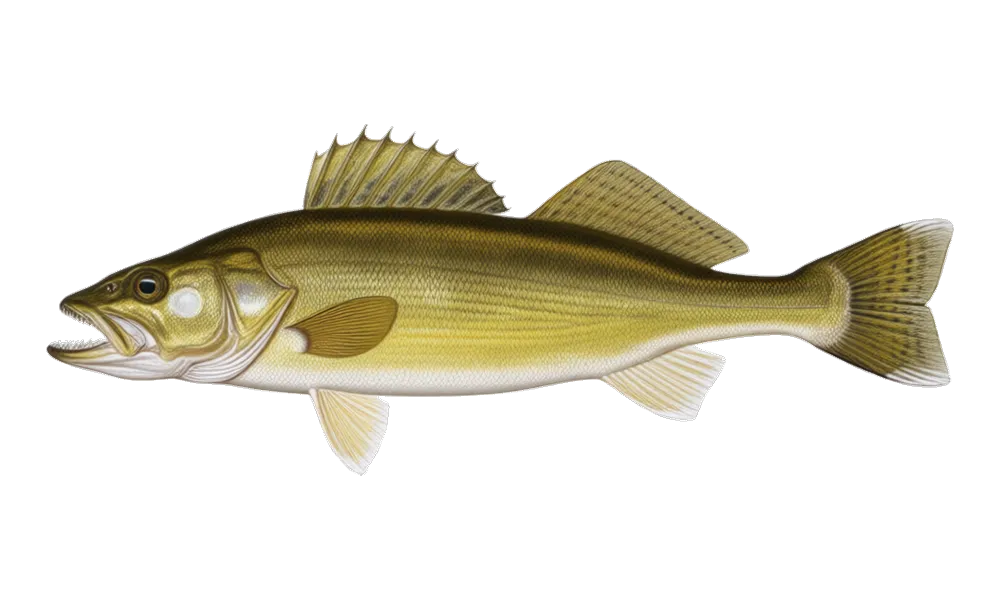
Walleye Size, Range & Diet
| Typical size | 15–25 in, 1–5 lb |
|---|---|
| Maximum | up to about 42 in and 25 lb |
| Lifespan | Up to about 29 years |
| Range | The Great Lakes and their tributaries — Lake Erie above all — plus lakes and rivers across the northern U.S. and Canada. |
| Habitat | Gravel and rock shoals, drop-offs and open-water basins; low light and chop pull them shallow at dawn, dusk and after dark. |
| Diet | Small fish, especially yellow perch and shiners, along with leeches, crayfish and nightcrawlers. |
Sizes are typical rod-and-reel and documented maximum figures, not size limits — see the regulations links below for the rules where you fish.
How to Identify a Walleye
- Olive-gold flanks with brassy mottling
- Glassy, light-reflecting eye (silvery tapetum)
- Two separate dorsal fins, first spiny
- White tip on the lower lobe of the tail
- Large canine teeth in the jaws
- Dark blotch at the rear base of the spiny dorsal
Tell it apart: The milky light-reflecting eye, large canine teeth, and white-tipped lower tail lobe separate a walleye from a yellow perch, which has a normal dark eye and no canines.
Easily confused with: Yellow Perch
Side by side: Walleye vs Yellow Perch
How to Catch Walleye
Gear links open Amazon searches. As an Amazon Associate, The Fishing Report earns from qualifying purchases — at no extra cost to you. Using these links helps keep the site ad-free.
- Peaks April-May and again in October as fish stage shallow; troll crawler harnesses and crankbaits over open water in summer, jig vertically through winter ice.GearCrawler harnessesDeep-diving crankbaitsJigging rod combo
When & Where Walleye Are in Season
Peak Good Fair Slow
| Jan | Feb | Mar | Apr | May | Jun | Jul | Aug | Sep | Oct | Nov | Dec | |
|---|---|---|---|---|---|---|---|---|---|---|---|---|
| Great Lakes Inshore | ||||||||||||
| Great Lakes Nearshore | ||||||||||||
| Great Lakes Offshore |
Walleye Regulations
MinnesotaMinnesota Department of Natural Resources (Minnesota DNR)WisconsinWisconsin Department of Natural Resources (DNR)MichiganMichigan Department of Natural Resources (DNR)IllinoisIllinois Department of Natural Resources, Division of Fisheries (iFish Illinois)IndianaIndiana Department of Natural Resources (DNR), Division of Fish & WildlifeOhioOhio Department of Natural Resources (ODNR), Division of WildlifePennsylvaniaPennsylvania Fish and Boat CommissionNew York (Great Lakes / inland)New York State Department of Environmental Conservation (NYSDEC)
Always check local regulations — seasons, size, and bag limits vary by state and species, and change year to year. When in doubt, release.