 The Fishing Report
Fishing seasons & conditions by region
Walleye vs Yellow Perch
Two fish anglers routinely mix up. Here is what actually separates them — and when and where you are likely to meet each.
Side by Side
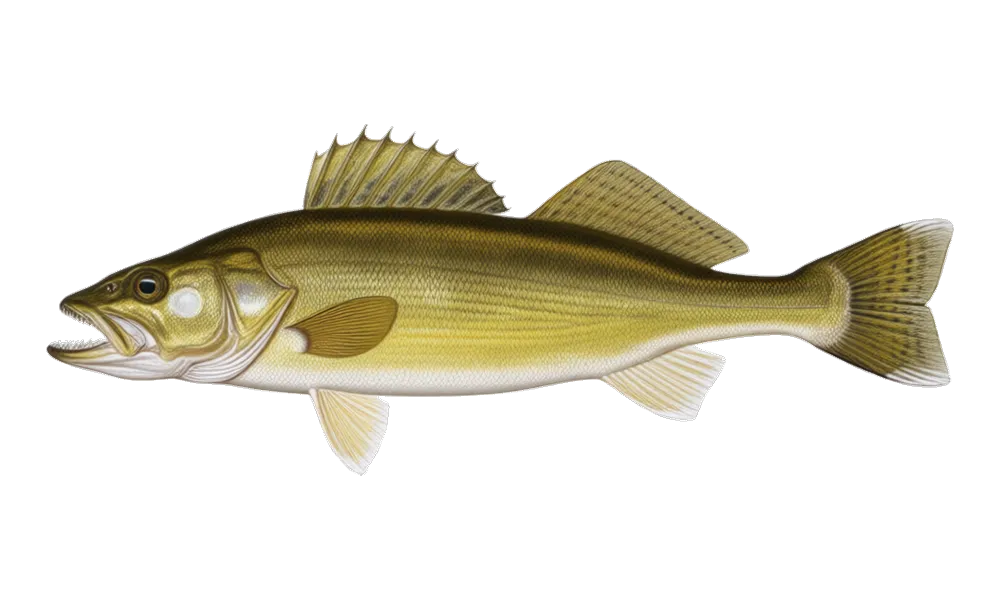
Walleye Sander vitreus
Typical: 15–25 in, 1–5 lb
Quickest tell: The milky light-reflecting eye, large canine teeth, and white-tipped lower tail lobe separate a walleye from a yellow perch, which has a normal dark eye and no canines.
- Olive-gold flanks with brassy mottling
- Glassy, light-reflecting eye (silvery tapetum)
- Two separate dorsal fins, first spiny
- White tip on the lower lobe of the tail
- Large canine teeth in the jaws
- Dark blotch at the rear base of the spiny dorsal
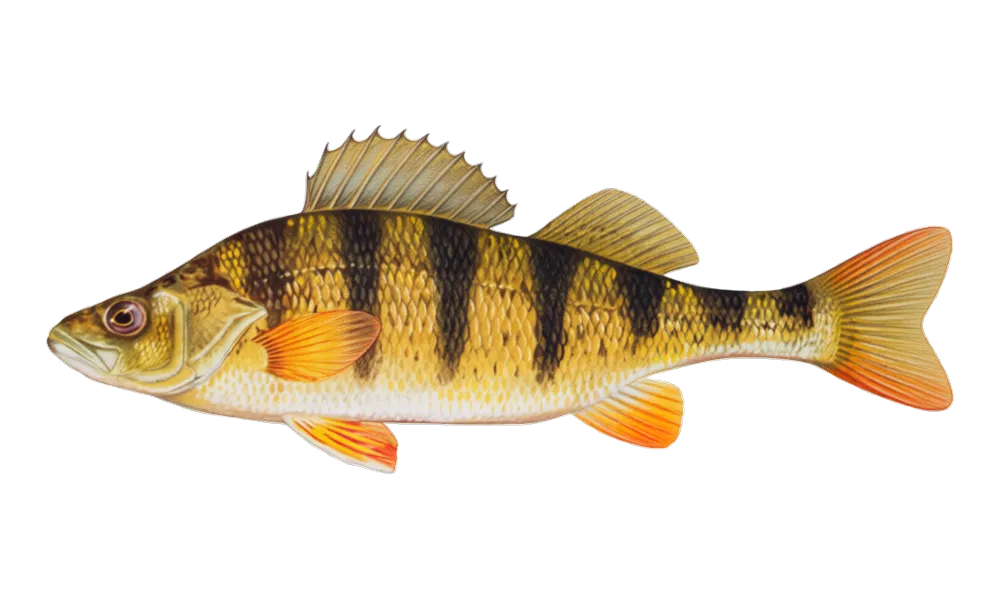
Yellow Perch Perca flavescens
Typical: 7–11 in, 0.3–0.8 lb
Quickest tell: Bold dark vertical bars over a yellow body, orange-tinted lower fins, a normal dark eye, and no canine teeth mark it as a perch, not a walleye.
- Golden-yellow body with 6-8 dark vertical bars
- Two separate dorsal fins, first spiny
- Orange-tinted pelvic and anal fins (esp. spawning males)
- Slightly humped back, blunt snout
- No canine teeth, only small rasp-like teeth
- Dark, non-reflective eye
When Each Is Running October — current month highlighted
| Jan | Feb | Mar | Apr | May | Jun | Jul | Aug | Sep | Oct | Nov | Dec | |
|---|---|---|---|---|---|---|---|---|---|---|---|---|
| Walleye | ||||||||||||
| Yellow Perch |
Peak Good Fair Slow
Where Walleye and Yellow Perch Overlap
Both run in Great Lakes — that is where telling them apart actually matters.