 The Fishing Report
Fishing seasons & conditions by region
Bluefish vs Spanish Mackerel
Two fish anglers routinely mix up. Here is what actually separates them — and when and where you are likely to meet each.
Side by Side
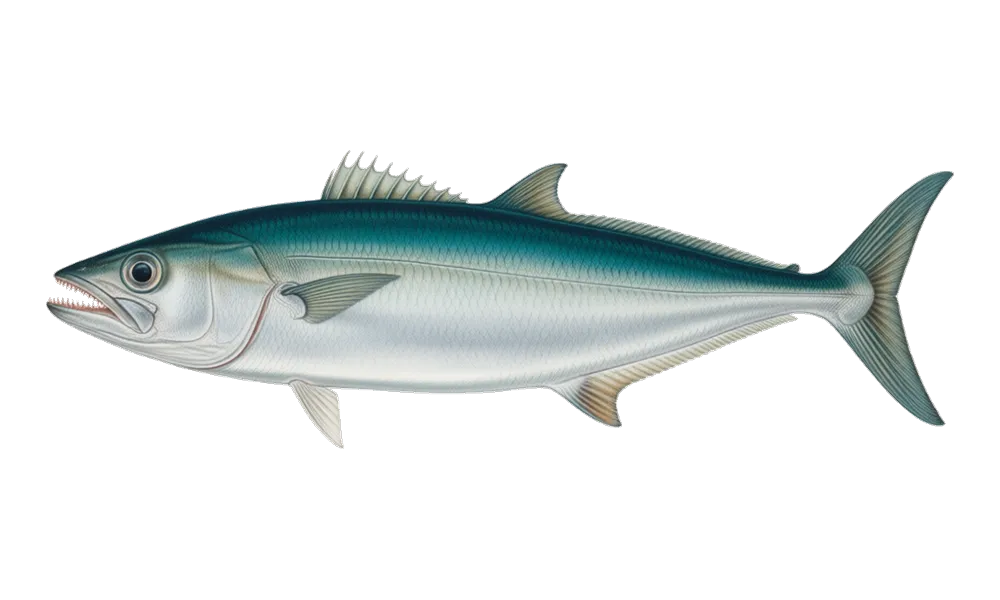
Bluefish Pomatomus saltatrix
Typical: 14–26 in, 1–7 lb
Quickest tell: The single row of large, flat, razor-sharp triangular teeth in a heavy lower jaw is unmistakable and separates it from the small needle-toothed Spanish mackerel, which also wears gold spots a bluefish never has.
- blue-green back fading to silvery sides
- mouth full of prominent, sharp, flat triangular teeth
- moderately forked tail
- dusky blotch at the base of the pectoral fin
- two dorsal fins, the soft rear one long and low
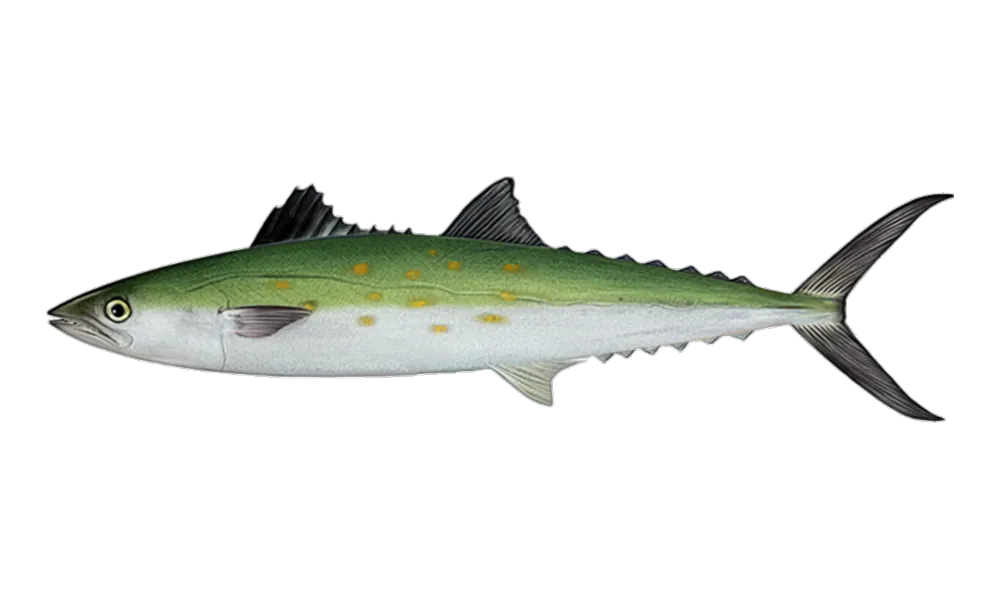
Spanish Mackerel Scomberomorus maculatus
Typical: 14–22 in, 1–3 lb
Key field mark: Golden-yellow oval spots plus a black front patch on the first dorsal fin and an evenly sloping lateral line separate Spanish from the spot-poor king mackerel.
- Greenish back, silver sides with round golden-yellow spots (no stripes)
- Front third of first dorsal fin jet black
- Lateral line slopes gently to the tail, no abrupt dip
- Forked tail; row of finlets behind dorsal and anal fins
- Adults rarely exceed a few pounds (much smaller than king)
When Each Is Running October — current month highlighted
| Jan | Feb | Mar | Apr | May | Jun | Jul | Aug | Sep | Oct | Nov | Dec | |
|---|---|---|---|---|---|---|---|---|---|---|---|---|
| Bluefish | ||||||||||||
| Spanish Mackerel |
Peak Good Fair Slow
Where Bluefish and Spanish Mackerel Overlap
Both run in Mid-Atlantic, Northeast — that is where telling them apart actually matters.