 The Fishing Report
Fishing seasons & conditions by region
Cabezon Scorpaenichthys marmoratus
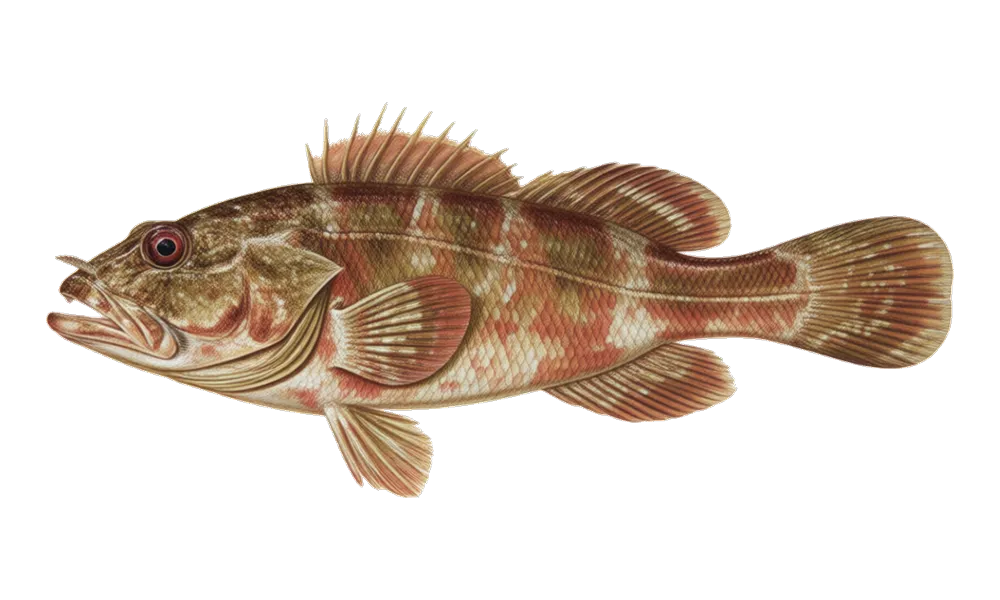
Cabezon Size, Range & Diet
| Typical size | 14–22 in, 2–8 lb |
|---|---|
| Maximum | up to 39 in and about 25 lb |
| Lifespan | up to about 14 years |
| Range | Rocky Pacific coast from southeast Alaska through British Columbia, Washington and Oregon down to central Baja California. |
| Habitat | Shallow rocky ground — reefs, pinnacles, jetties, kelp and tidepools — from the intertidal out to about 650 ft, though most come from far shallower water. |
| Diet | Crabs, small lobsters, octopus, squid, abalone and small fish, engulfed in one lunge from ambush. |
Sizes are typical rod-and-reel and documented maximum figures, not size limits — see the regulations links below for the rules where you fish.
How to Identify a Cabezon
- Broad, flattened, scaleless head
- A single fleshy flap (cirrus) on the snout plus a branched cirrus over each eye
- About 11 stout dorsal spines; jaws lack the large canine teeth lingcod have
- Mottled red, brown, or green blotchy body
- Broad pectoral fins; body completely scaleless
Tell it apart: The single fleshy flap on the snout, a fully scaleless body, and the absence of big canine teeth distinguish cabezon from the toothy lingcod and from the smaller sculpins.
Easily confused with: Lingcod
Side by side: Cabezon vs Lingcod
How to Catch Cabezon
Gear links open Amazon searches. As an Amazon Associate, The Fishing Report earns from qualifying purchases — at no extra cost to you. Using these links helps keep the site ad-free.
- Best in the cold months, December through March — fish shrimp, squid, or crab baits tight to rocky structure on a short dropper rig.GearRock-fishing dropper rigOctopus bait hooksSoft-plastic swimbaits
- Available year-round, best in the cold months around January and December — drop crab, shrimp, or squid baits tight to rocky structure.GearRock-fishing dropper rigOctopus bait hooksSoft-plastic swimbaits
When & Where Cabezon Are in Season
Peak Good Fair Slow
| Jan | Feb | Mar | Apr | May | Jun | Jul | Aug | Sep | Oct | Nov | Dec | |
|---|---|---|---|---|---|---|---|---|---|---|---|---|
| Northern California Nearshore | ||||||||||||
| Pacific Northwest Nearshore |
Cabezon Regulations
Always check local regulations — seasons, size, and bag limits vary by state and species, and change year to year. When in doubt, release.