 The Fishing Report
Fishing seasons & conditions by region
Lingcod Ophiodon elongatus
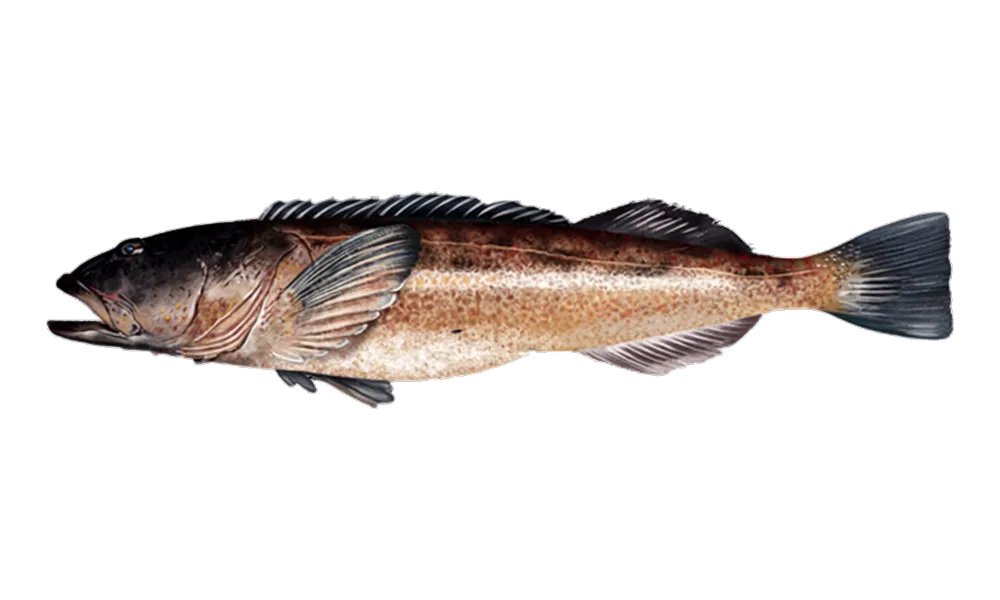
Lingcod Size, Range & Diet
| Typical size | 24–36 in, 5–20 lb |
|---|---|
| Maximum | up to 5 ft and about 85 lb |
| Lifespan | up to 25 years |
| Range | Pacific coast only, from the Gulf of Alaska and the Alaska Peninsula south through Washington, Oregon and California to northern Baja. |
| Habitat | Rocky reefs, pinnacles and kelp-edge structure, mostly in 30–330 ft where current sweeps the bottom. |
| Diet | Herring, sanddabs, small rockfish, octopus and squid — big whole baits and heavy swimbaits get eaten. |
Sizes are typical rod-and-reel and documented maximum figures, not size limits — see the regulations links below for the rules where you fish.
How to Identify a Lingcod
- Long, mottled body; color ranges gray-brown to blue-green or copper
- Very large mouth with 18+ big sharp canine teeth
- Single long dorsal fin with a notch between the spiny and soft sections
- Cirrus (small flap) over each eye; head largely scaleless
- Flesh sometimes tinted blue-green
Tell it apart: Big fanged canine teeth, an elongate body, and a long notched dorsal separate lingcod from the toothless-jawed, broad-headed cabezon.
Easily confused with: Cabezon
Side by side: Lingcod vs Cabezon, Lingcod vs Pacific Cod
How to Catch Lingcod
Gear links open Amazon searches. As an Amazon Associate, The Fishing Report earns from qualifying purchases — at no extra cost to you. Using these links helps keep the site ad-free.
- Best in winter and early summer, January and June through August — drop heavy swimbaits and pipe jigs onto rock pinnacles and reef edges.GearHeavy lingcod swimbaitsPipe jigsHeavy jigging combo
- Best late winter and again in summer, February through March and June through August — drop heavy swimbaits and pipe jigs onto rock pinnacles.GearHeavy lingcod swimbaitsPipe jigsHeavy jigging combo
- Best July-August once seasons open; drop heavy jigs and swimbaits onto rocky pinnacles and reefs, where aggressive lingcod ambush from cover.GearHeavy leadhead jigsLarge swimbaitsHeavy jigging rod
When & Where Lingcod Are in Season
Peak Good Fair Slow
| Jan | Feb | Mar | Apr | May | Jun | Jul | Aug | Sep | Oct | Nov | Dec | |
|---|---|---|---|---|---|---|---|---|---|---|---|---|
| Northern California Nearshore | ||||||||||||
| Pacific Northwest Nearshore | ||||||||||||
| Alaska — Southcentral & Southeast Nearshore | ||||||||||||
| Alaska — Southcentral & Southeast Offshore |
Lingcod Regulations
CaliforniaCalifornia Department of Fish and Wildlife (CDFW), Marine RegionNOAA Fisheries (West Coast Region)PFMCWashingtonWashington Department of Fish & Wildlife (WDFW)OregonOregon Department of Fish & Wildlife (ODFW)AlaskaAlaska Department of Fish and Game (ADF&G), Division of Sport FishNOAA Fisheries, Alaska Regional OfficeNPFMC
Always check local regulations — seasons, size, and bag limits vary by state and species, and change year to year. When in doubt, release.