 The Fishing Report
Fishing seasons & conditions by region
Lingcod vs Pacific Cod
Two fish anglers routinely mix up. Here is what actually separates them — and when and where you are likely to meet each.
Side by Side
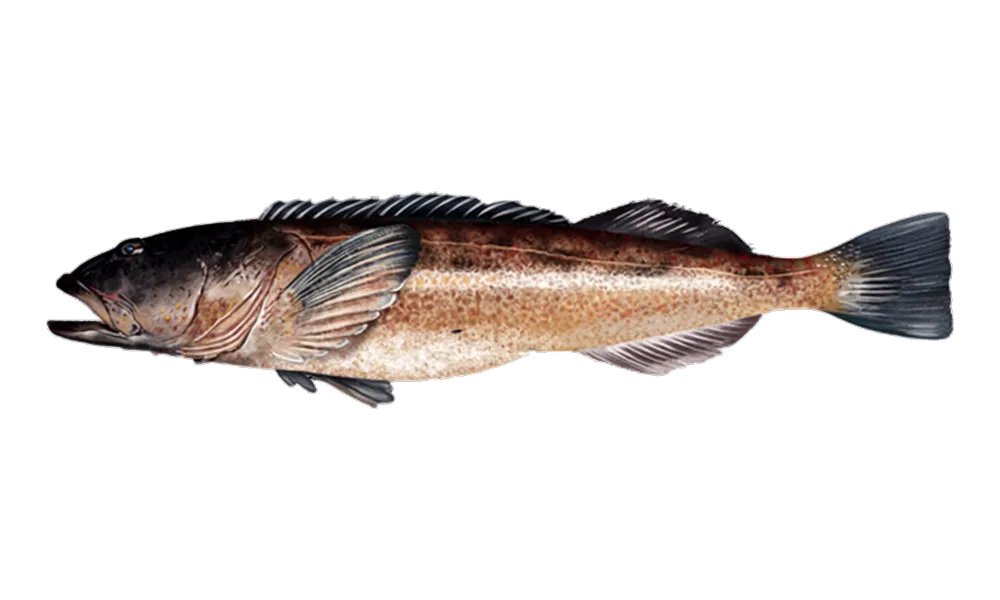
Lingcod Ophiodon elongatus
Typical: 24–36 in, 5–20 lb
Key field mark: Big fanged canine teeth, an elongate body, and a long notched dorsal separate lingcod from the toothless-jawed, broad-headed cabezon.
- Long, mottled body; color ranges gray-brown to blue-green or copper
- Very large mouth with 18+ big sharp canine teeth
- Single long dorsal fin with a notch between the spiny and soft sections
- Cirrus (small flap) over each eye; head largely scaleless
- Flesh sometimes tinted blue-green
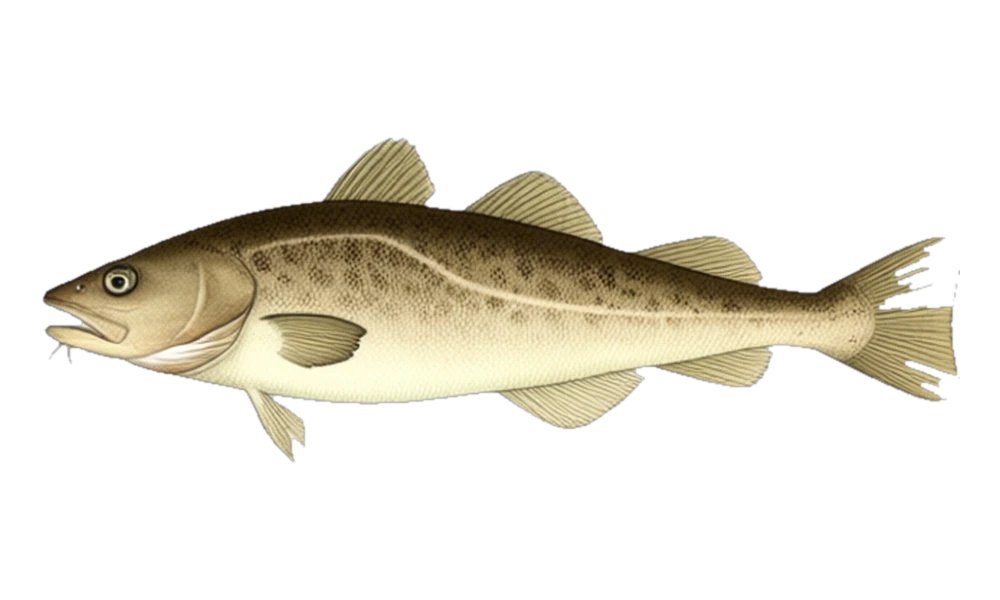
Pacific Cod Gadus macrocephalus
Typical: 20–32 in, 5–15 lb
Quickest tell: The single fleshy chin barbel and three separate dorsal fins are unique among Alaska bottomfish and immediately separate cod from the barbel-less, single-dorsal lingcod.
- Single long chin barbel (whisker) at least as long as eye diameter
- Three separate dorsal fins and two anal fins
- Brown/gray mottled body, pale belly
- Pale, curved lateral line
- Rounded/square tail, blunt snout
When Each Is Running October — current month highlighted
| Jan | Feb | Mar | Apr | May | Jun | Jul | Aug | Sep | Oct | Nov | Dec | |
|---|---|---|---|---|---|---|---|---|---|---|---|---|
| Lingcod | ||||||||||||
| Pacific Cod |
Peak Good Fair Slow
Where Lingcod and Pacific Cod Overlap
Both run in Alaska — Southcentral & Southeast — that is where telling them apart actually matters.