 The Fishing Report
Fishing seasons & conditions by region
Cabezon vs Lingcod
Two fish anglers routinely mix up. Here is what actually separates them — and when and where you are likely to meet each.
Side by Side
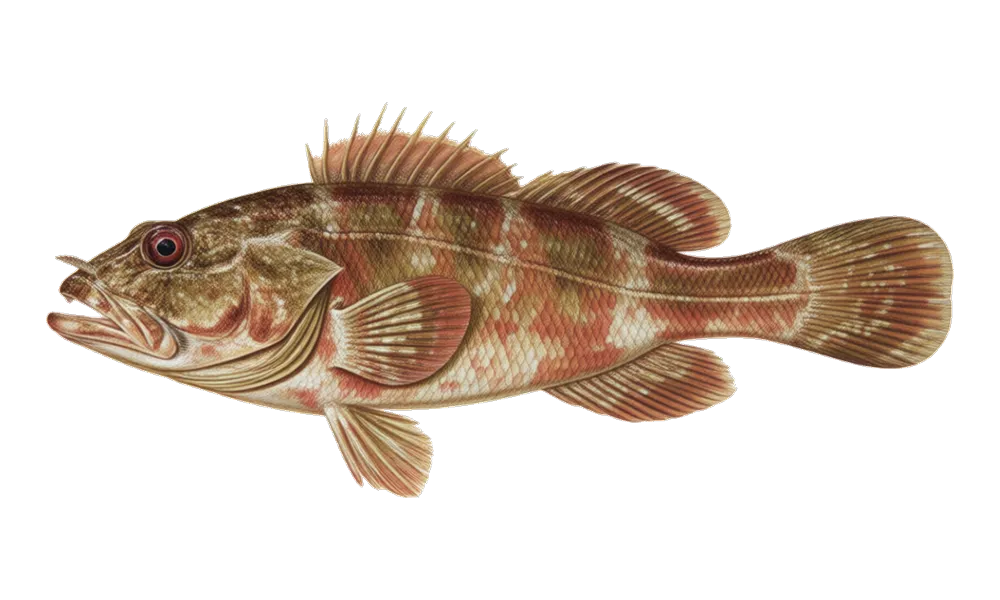
Cabezon Scorpaenichthys marmoratus
Typical: 14–22 in, 2–8 lb
Quickest tell: The single fleshy flap on the snout, a fully scaleless body, and the absence of big canine teeth distinguish cabezon from the toothy lingcod and from the smaller sculpins.
- Broad, flattened, scaleless head
- A single fleshy flap (cirrus) on the snout plus a branched cirrus over each eye
- About 11 stout dorsal spines; jaws lack the large canine teeth lingcod have
- Mottled red, brown, or green blotchy body
- Broad pectoral fins; body completely scaleless
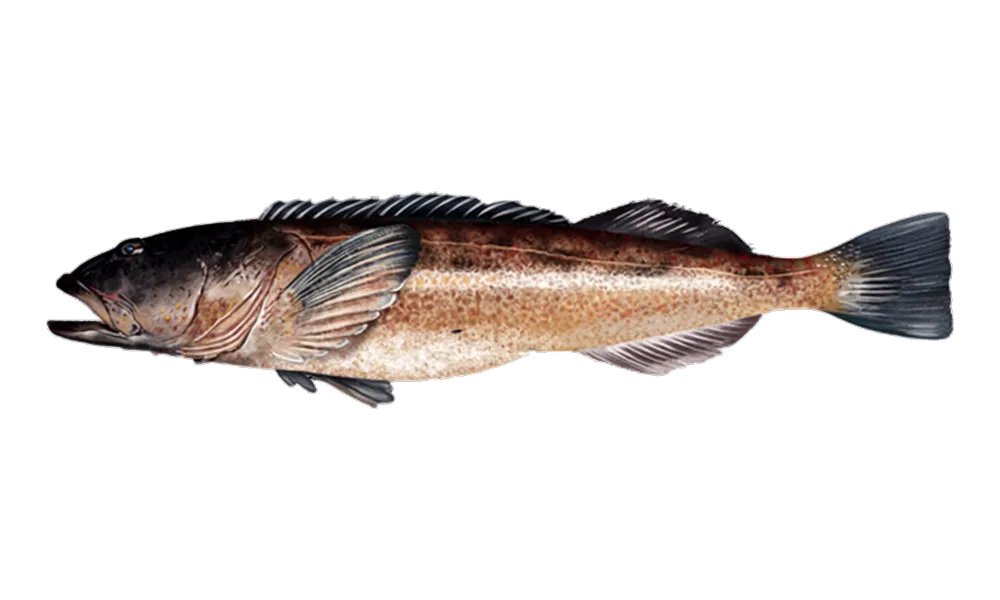
Lingcod Ophiodon elongatus
Typical: 24–36 in, 5–20 lb
Quickest tell: Big fanged canine teeth, an elongate body, and a long notched dorsal separate lingcod from the toothless-jawed, broad-headed cabezon.
- Long, mottled body; color ranges gray-brown to blue-green or copper
- Very large mouth with 18+ big sharp canine teeth
- Single long dorsal fin with a notch between the spiny and soft sections
- Cirrus (small flap) over each eye; head largely scaleless
- Flesh sometimes tinted blue-green
When Each Is Running October — current month highlighted
Peak Good Fair Slow
Where Cabezon and Lingcod Overlap
Both run in Northern California, Pacific Northwest — that is where telling them apart actually matters.