 The Fishing Report
Canary / Vermilion Rock Sebastes pinniger
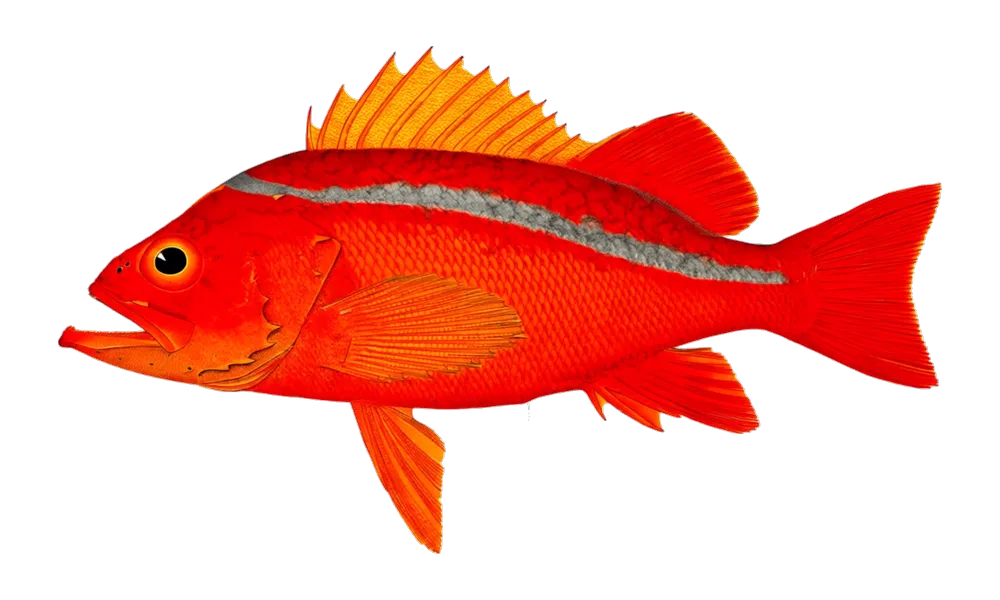
Canary / Vermilion Rock Size, Range & Diet
| Typical size | 14–24 in, 2–6 lb |
|---|---|
| Maximum | up to about 30 in and 15 lb |
| Lifespan | Canary up to 75 years, vermilion up to 60 years |
| Range | A pair of look-alike orange-red shelf rockfish fished together — canary runs the Gulf of Alaska to Baja, vermilion British Columbia to Baja, both common off Washington and Oregon. |
| Habitat | Rocky offshore banks, pinnacles and shelf breaks — canary mostly 160–820 ft, vermilion 50–500 ft. |
| Diet | Small fish, squid, octopus and krill picked up just above the rocks. |
Sizes are typical rod-and-reel and documented maximum figures, not size limits — see the regulations links below for the rules where you fish.
How to Identify a Canary / Vermilion Rock
- Bright orange to red body; Canary is gray-mottled, Vermilion is more uniformly red
- Canary: 3 orange bars radiating across the head; lateral line runs in a clear gray zone
- Vermilion: black-edged fins, gray mottling on the back, rough scales
- Canary: fins all orange, anal fin slanting rearward
- Both have normal dark eyes (NOT the bright yellow of Yelloweye)
Tell it apart: Run a finger along the lateral line: Canary shows a clear light-gray stripe right at the lateral line with 3 orange head bars, while Vermilion is more uniformly red with black fin edges; neither has Yelloweye's yellow eye or raspy eye ridges.
Easily confused with: Yelloweye Rockfish
Side by side: Canary / Vermilion Rock vs Black Rockfish, Canary / Vermilion Rock vs Shelf Rockfish, Canary / Vermilion Rock vs Yelloweye Rockfish
How to Catch Canary / Vermilion Rock
Gear links open Amazon searches. As an Amazon Associate, The Fishing Report earns from qualifying purchases — at no extra cost to you. Using these links helps keep the site ad-free.
- Best summer into fall, June through September — drop multi-hook shrimp fly rigs onto deeper offshore reef and shelf structure with heavy weight.GearShrimp fly rigsHeavy bank sinkersDeep-water bait rig
- Best summer into fall, July through September — drop multi-hook shrimp fly rigs onto deeper offshore reef and shelf structure with heavy weight.GearShrimp fly rigsHeavy bank sinkersDeep-water bait rig
When & Where Canary / Vermilion Rock Are in Season
| Jan | Feb | Mar | Apr | May | Jun | Jul | Aug | Sep | Oct | Nov | Dec | |
|---|---|---|---|---|---|---|---|---|---|---|---|---|
| Pacific Northwest Offshore | ||||||||||||
| Northern California Offshore |