 The Fishing Report
Fishing seasons & conditions by region
Haddock Melanogrammus aeglefinus
Haddock Size, Range & Diet
| Typical size | 16–24 in, 2–5 lb |
|---|---|
| Maximum | up to 44 in and about 37 lb |
| Lifespan | up to 20 years |
| Range | Northwest Atlantic from Newfoundland south to New Jersey, thickest on Georges Bank and through the Gulf of Maine. |
| Habitat | Cold offshore banks and ledges in about 130–500 ft, favoring gravel, pebble and smooth hard sand rather than soft mud. |
| Diet | Grazes the bottom for worms, small shellfish, crabs, urchins and brittle stars, with the bigger ones chasing herring — a clam bait is hard to beat. |
Sizes are typical rod-and-reel and documented maximum figures, not size limits — see the regulations links below for the rules where you fish.
How to Identify a Haddock
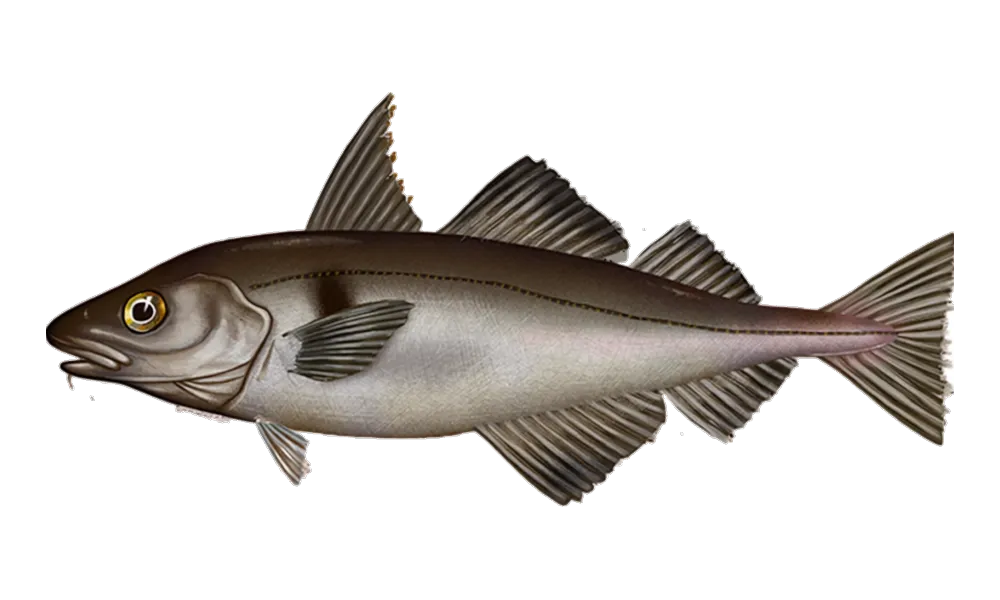
- dark gray back, silver sides, dark (black) lateral line
- prominent black 'thumbprint' blotch above the pectoral fin
- three dorsal fins, the first tall and pointed
- small chin barbel present
- slightly forked-to-square tail; no overhang/spotting like cod
Tell it apart: The dark lateral line plus the black 'devil's thumbprint' over the pectoral fin instantly separate haddock from cod (pale/white lateral line, overhanging upper jaw) and from green forked-tailed pollock.
Easily confused with: Atlantic Cod, Pollock
Side by side: Haddock vs Atlantic Cod, Haddock vs Pollock
How to Catch Haddock
Gear links open Amazon searches. As an Amazon Associate, The Fishing Report earns from qualifying purchases — at no extra cost to you. Using these links helps keep the site ad-free.
- Best April-May on offshore banks - drop clam baits on a high-low rig over gravel and sand bottom, with a teaser jig above.GearHaddock rigsJig-and-teaser combosBottom fishing rod
When & Where Haddock Are in Season
Peak Good Fair Slow
| Jan | Feb | Mar | Apr | May | Jun | Jul | Aug | Sep | Oct | Nov | Dec | |
|---|---|---|---|---|---|---|---|---|---|---|---|---|
| Northeast Offshore |
Haddock Regulations
New YorkNew York State Department of Environmental Conservation (NYSDEC), Division of Marine ResourcesConnecticutConnecticut Department of Energy and Environmental Protection (DEEP), Marine FisheriesRhode IslandRhode Island Department of Environmental Management (DEM), Division of Marine FisheriesMassachusettsMassachusetts Division of Marine Fisheries (MA DMF), Department of Fish and Game / Mass.govNew HampshireNew Hampshire Fish and Game Department (Marine Fisheries Division)MaineMaine Department of Marine Resources (DMR)NOAA Fisheries (Greater Atlantic Region / New England-Mid-Atlantic)NEFMCAtlantic States Marine Fisheries CommissionASMFC
Always check local regulations — seasons, size, and bag limits vary by state and species, and change year to year. When in doubt, release.