 The Fishing Report
Fishing seasons & conditions by region
Steelhead Oncorhynchus mykiss
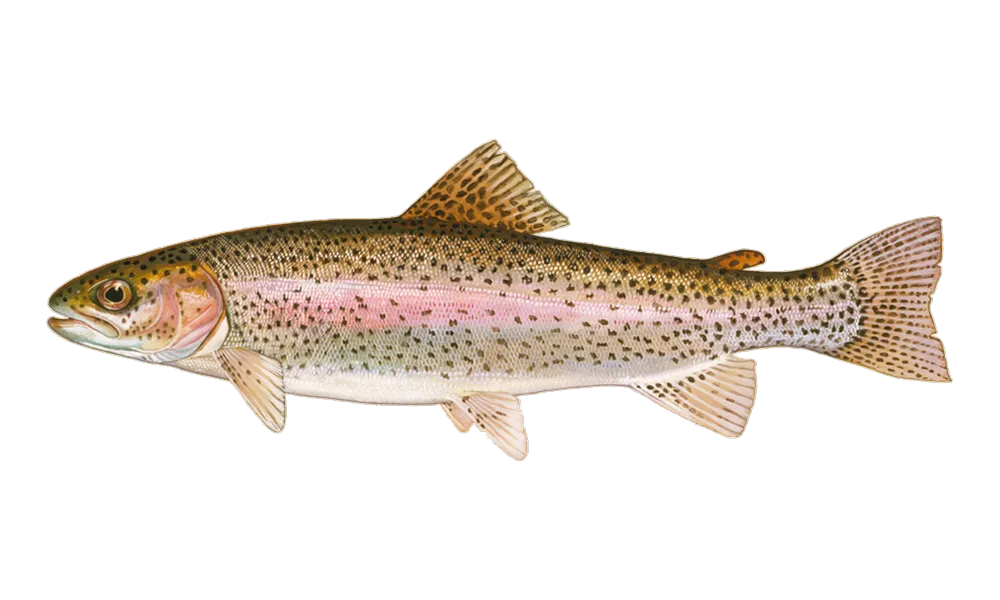
Steelhead Size, Range & Diet
| Typical size | 24–30 in, 5–10 lb |
|---|---|
| Maximum | up to 40 in and 30 lb |
| Lifespan | up to 11 years |
| Range | All five Great Lakes and their tributaries — a Pacific-coast transplant now carried by a mix of stocking and wild reproduction, with the best-known runs in Michigan, Erie and Ontario waters. |
| Habitat | Open lake over temperature breaks and bait schools most of the year, dropping into deeper water off tributary mouths in late summer before running gravel-bottom streams from fall through spring. |
| Diet | Alewife, rainbow smelt and other open-lake forage; eggs, nymphs and small minnows once they push into the rivers. |
Sizes are typical rod-and-reel and documented maximum figures, not size limits — see the regulations links below for the rules where you fish.
How to Identify a Steelhead
- Bright chrome-silver sides, white belly
- Small black spots scattered over the back, dorsal, and entire tail (both lobes)
- Squared tail; 8-12 anal fin rays (fewer than salmon)
- Faint pink-red lateral band (bright on resident/mature fish)
- White mouth and white gums inside
- Small head relative to a same-size Chinook
Tell it apart: A white mouth AND white gums with spots radiating across the whole tail separate a steelhead from coho (dark mouth, white gums, spots on the upper tail lobe only) and chinook (black mouth and black gums).
Easily confused with: Brown Trout, Coho Salmon, Chinook Salmon
Side by side: Steelhead vs Brown Trout, Steelhead vs Coho Salmon, Steelhead vs King Salmon, Steelhead vs Lake Trout
How to Catch Steelhead
Gear links open Amazon searches. As an Amazon Associate, The Fishing Report earns from qualifying purchases — at no extra cost to you. Using these links helps keep the site ad-free.
- Runs peak April-May and October-November; drift float rigs with spawn sacs and beads in tributary rivers, troll spoons in the open lake when fish are dispersed.GearFloat rigsSpawn sac meshSteelhead drift rod
- Bristol Bay's big resident rainbows key on the sockeye spawn; fish beads and egg patterns through the gravel August-September, then swing flesh and streamers into October.GearTrout beadsFlesh and egg fliesSingle-hand trout rod
When & Where Steelhead Are in Season
Peak Good Fair Slow
| Jan | Feb | Mar | Apr | May | Jun | Jul | Aug | Sep | Oct | Nov | Dec | |
|---|---|---|---|---|---|---|---|---|---|---|---|---|
| Great Lakes Inshore | ||||||||||||
| Great Lakes Offshore | ||||||||||||
| Alaska — Bristol Bay Inshore |
Steelhead Regulations
MinnesotaMinnesota Department of Natural Resources (Minnesota DNR)WisconsinWisconsin Department of Natural Resources (DNR)MichiganMichigan Department of Natural Resources (DNR)IllinoisIllinois Department of Natural Resources, Division of Fisheries (iFish Illinois)IndianaIndiana Department of Natural Resources (DNR), Division of Fish & WildlifeOhioOhio Department of Natural Resources (ODNR), Division of WildlifePennsylvaniaPennsylvania Fish and Boat CommissionNew York (Great Lakes / inland)New York State Department of Environmental Conservation (NYSDEC)AlaskaAlaska Department of Fish and Game (ADF&G), Division of Sport FishNOAA Fisheries, Alaska Regional OfficeNPFMC
Always check local regulations — seasons, size, and bag limits vary by state and species, and change year to year. When in doubt, release.