 The Fishing Report
Fishing seasons & conditions by region
Summer Flounder Paralichthys dentatus
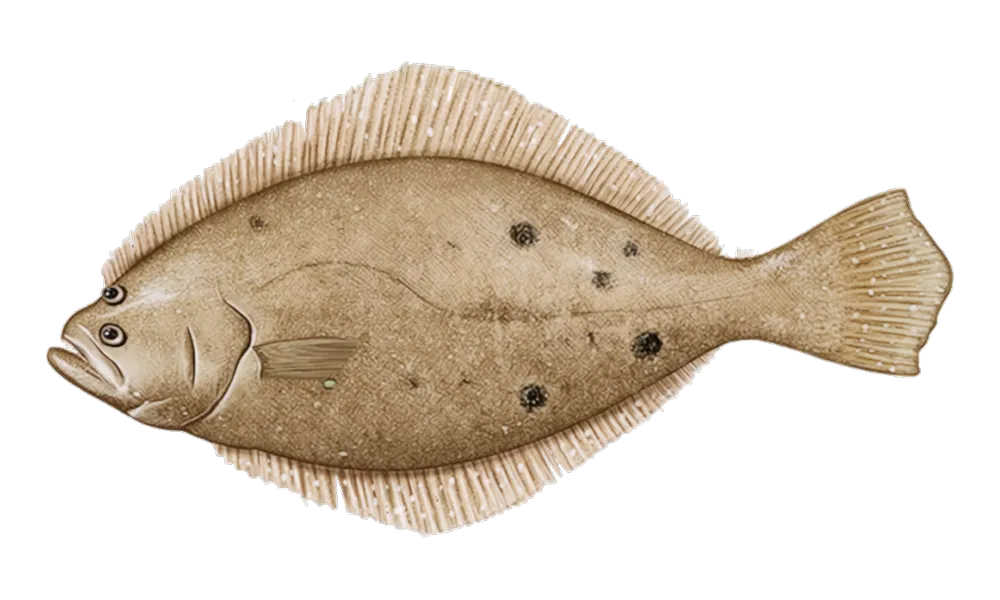
Summer Flounder Size, Range & Diet
| Typical size | 15–22 in, 1–4 lb |
|---|---|
| Maximum | up to 37 in and about 26 lb |
| Lifespan | 12–14 years |
| Range | Atlantic coast from Nova Scotia to Florida, most abundant from Cape Cod, Massachusetts south to Cape Fear, North Carolina. |
| Habitat | Sand and mud bottom in bays, inlets, channel edges and nearshore ocean in the warm months, dropping to the outer shelf in winter. |
| Diet | Ambushes small fish such as bay anchovy, silversides and sand eels, plus squid, shrimp and crabs taken off the bottom. |
Sizes are typical rod-and-reel and documented maximum figures, not size limits — see the regulations links below for the rules where you fish.
How to Identify a Summer Flounder
- left-eyed: both eyes on the left side when the dark (eyed) side faces up
- 5 prominent ocellated (dark-ringed) eyespots arranged in an X, plus smaller scattered spots
- large mouth, sharp teeth, gape reaching to or past the rear of the eye
- mottled brown eyed-side, plain white blind side
- broad oval body with a long continuous dorsal fin
Tell it apart: With the dark side up and the dorsal fin away from you, the eyes sit on the LEFT and the mouth is large and toothy, the gape reaching past the eye, separating fluke from the smaller, right-eyed, tiny-mouthed winter flounder.
Side by side: Summer Flounder vs Winter Flounder
How to Catch Summer Flounder
Gear links open Amazon searches. As an Amazon Associate, The Fishing Report earns from qualifying purchases — at no extra cost to you. Using these links helps keep the site ad-free.
- Peaks June-September - drift sandy channels and inlets bouncing a bucktail tipped with Gulp or a squid-and-minnow rig along the bottom.GearBucktail jigsGulp swimming mulletFlounder rigs
When & Where Summer Flounder Are in Season
Peak Good Fair Slow
| Jan | Feb | Mar | Apr | May | Jun | Jul | Aug | Sep | Oct | Nov | Dec | |
|---|---|---|---|---|---|---|---|---|---|---|---|---|
| Mid-Atlantic Inshore | ||||||||||||
| Northeast Nearshore |
Summer Flounder Regulations
VirginiaVirginia Marine Resources Commission (VMRC)MarylandMaryland Department of Natural Resources, Fishing and Boating ServicesDelawareDelaware DNREC, Division of Fish & WildlifeNew JerseyNew Jersey Department of Environmental Protection, Division of Fish & Wildlife (NJDEP Fish & Wildlife)New YorkNew York State Department of Environmental Conservation (NYSDEC), Division of Marine ResourcesMid-Atlantic Fishery Management CouncilMAFMCAtlantic States Marine Fisheries CommissionASMFCConnecticutConnecticut Department of Energy and Environmental Protection (DEEP), Marine FisheriesRhode IslandRhode Island Department of Environmental Management (DEM), Division of Marine FisheriesMassachusettsMassachusetts Division of Marine Fisheries (MA DMF), Department of Fish and Game / Mass.govNew HampshireNew Hampshire Fish and Game Department (Marine Fisheries Division)MaineMaine Department of Marine Resources (DMR)NOAA Fisheries (Greater Atlantic Region / New England-Mid-Atlantic)NEFMC
Always check local regulations — seasons, size, and bag limits vary by state and species, and change year to year. When in doubt, release.