 The Fishing Report
Black Sea Bass vs Scup / Porgy
Two fish anglers routinely mix up. Here is what actually separates them — and when and where you are likely to meet each.
Side by Side
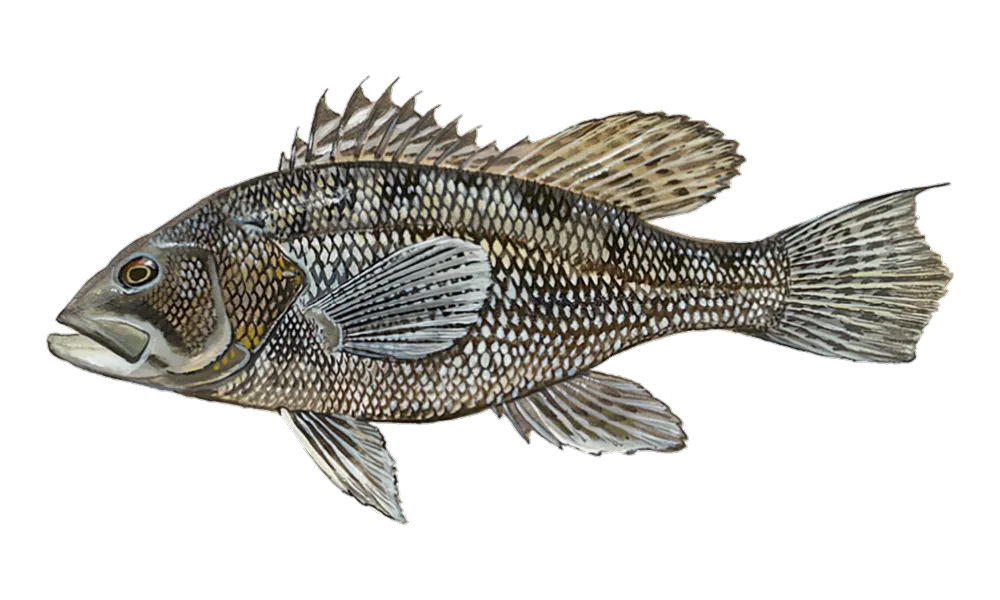
Black Sea Bass Centropristis striata
Typical: 11–17 in, 1–3 lb
Quickest tell: The long single spiny dorsal with rows of white spots, plus the trailing top tail-ray filament (and bluish nuchal hump) on adults, separate it from the blunt rubbery-lipped tautog and the deeper-bodied, smaller-mouthed scup.
- stocky body, smoky gray to blue-black, often with light spots and lines in rows along the fins
- single long dorsal fin with stout sharp spines
- rounded fins, the dorsal with pale spots/streaks
- elongated top tail-fin ray (filament) trailing on large fish
- fleshy nuchal hump, often bluish, on big spawning males
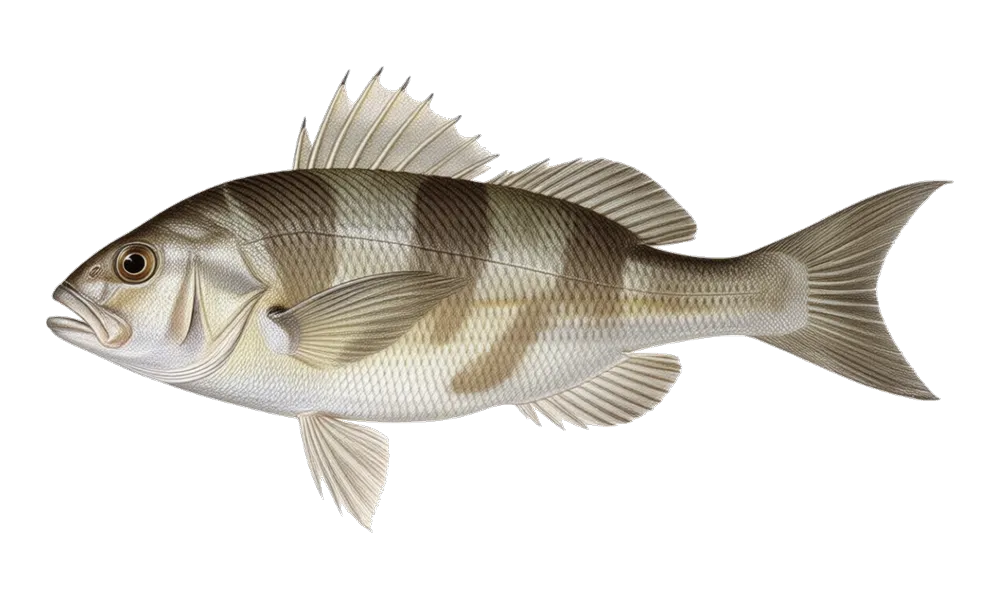
Scup / Porgy Stenotomus chrysops
Typical: 8–14 in, 0.5–2 lb
Quickest tell: The deep silvery oval body with a tiny blunt mouth and no fangs or incisors marks a scup; black sea bass is darker, longer-bodied, and shows white-spotted fin rows, while sheepshead wears bold black bars and protruding front teeth.
- deep, compressed silvery body, sometimes with faint dusky bars
- small mouth, blunt snout, no canine or incisor teeth (rows of small teeth only)
- single dorsal fin with sharp spines
- slightly forked tail
- iridescent silvery flanks, sometimes dusky-blotched
When Each Is Running October — current month highlighted
| Jan | Feb | Mar | Apr | May | Jun | Jul | Aug | Sep | Oct | Nov | Dec | |
|---|---|---|---|---|---|---|---|---|---|---|---|---|
| Black Sea Bass | ||||||||||||
| Scup / Porgy |
Where Black Sea Bass and Scup / Porgy Overlap
Both run in Mid-Atlantic, Northeast — that is where telling them apart actually matters.