 The Fishing Report
Fishing seasons & conditions by region
Black Sea Bass Centropristis striata
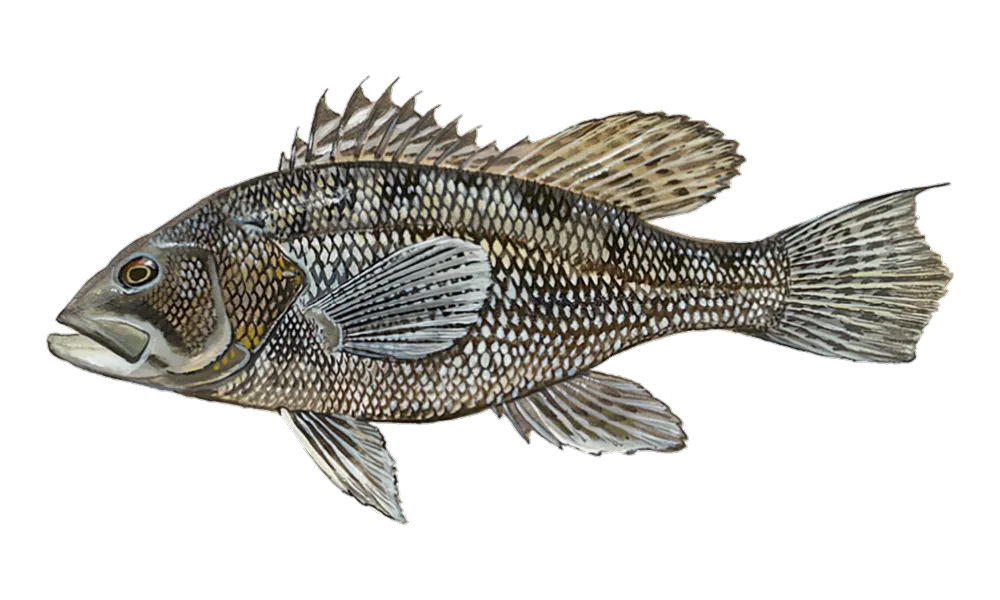
Black Sea Bass Size, Range & Diet
| Typical size | 11–17 in, 1–3 lb |
|---|---|
| Maximum | up to 2 ft and about 9 lb |
| Lifespan | Up to about 12 years |
| Range | Atlantic coast from Cape Cod and southern New England south to Florida and around into the eastern Gulf, with the heaviest recreational fishery between Massachusetts and Virginia. |
| Habitat | Hard structure — wrecks, rockpiles, reefs and mussel beds — inshore and in bays through summer, then out to deeper shelf water in fall. |
| Diet | Crabs, shrimp, squid, clams and small baitfish picked off hard bottom. |
Sizes are typical rod-and-reel and documented maximum figures, not size limits — see the regulations links below for the rules where you fish.
How to Identify a Black Sea Bass
- stocky body, smoky gray to blue-black, often with light spots and lines in rows along the fins
- single long dorsal fin with stout sharp spines
- rounded fins, the dorsal with pale spots/streaks
- elongated top tail-fin ray (filament) trailing on large fish
- fleshy nuchal hump, often bluish, on big spawning males
Tell it apart: The long single spiny dorsal with rows of white spots, plus the trailing top tail-ray filament (and bluish nuchal hump) on adults, separate it from the blunt rubbery-lipped tautog and the deeper-bodied, smaller-mouthed scup.
Easily confused with: Tautog, Scup / Porgy
Side by side: Black Sea Bass vs Scup / Porgy, Black Sea Bass vs Tautog
How to Catch Black Sea Bass
Gear links open Amazon searches. As an Amazon Associate, The Fishing Report earns from qualifying purchases — at no extra cost to you. Using these links helps keep the site ad-free.
- Best May through October - drop squid strips or clam on a high-low rig over wrecks and rockpiles, or jig with a teaser dropper.GearDiamond jigsHigh-low rigsBottom fishing rod
- Best May through October - drop squid and clam on a high-low rig over wrecks, or jig with a teaser dropper once water warms.GearDiamond jigsHigh-low rigsBottom fishing rod
When & Where Black Sea Bass Are in Season
Peak Good Fair Slow
| Jan | Feb | Mar | Apr | May | Jun | Jul | Aug | Sep | Oct | Nov | Dec | |
|---|---|---|---|---|---|---|---|---|---|---|---|---|
| Mid-Atlantic Nearshore | ||||||||||||
| Northeast Inshore |
Black Sea Bass Regulations
VirginiaVirginia Marine Resources Commission (VMRC)MarylandMaryland Department of Natural Resources, Fishing and Boating ServicesDelawareDelaware DNREC, Division of Fish & WildlifeNew JerseyNew Jersey Department of Environmental Protection, Division of Fish & Wildlife (NJDEP Fish & Wildlife)New YorkNew York State Department of Environmental Conservation (NYSDEC), Division of Marine ResourcesMid-Atlantic Fishery Management CouncilMAFMCAtlantic States Marine Fisheries CommissionASMFCConnecticutConnecticut Department of Energy and Environmental Protection (DEEP), Marine FisheriesRhode IslandRhode Island Department of Environmental Management (DEM), Division of Marine FisheriesMassachusettsMassachusetts Division of Marine Fisheries (MA DMF), Department of Fish and Game / Mass.govNew HampshireNew Hampshire Fish and Game Department (Marine Fisheries Division)MaineMaine Department of Marine Resources (DMR)NOAA Fisheries (Greater Atlantic Region / New England-Mid-Atlantic)NEFMC
Always check local regulations — seasons, size, and bag limits vary by state and species, and change year to year. When in doubt, release.