 The Fishing Report
Fishing seasons & conditions by region
Black Sea Bass vs Tautog
Two fish anglers routinely mix up. Here is what actually separates them — and when and where you are likely to meet each.
Side by Side
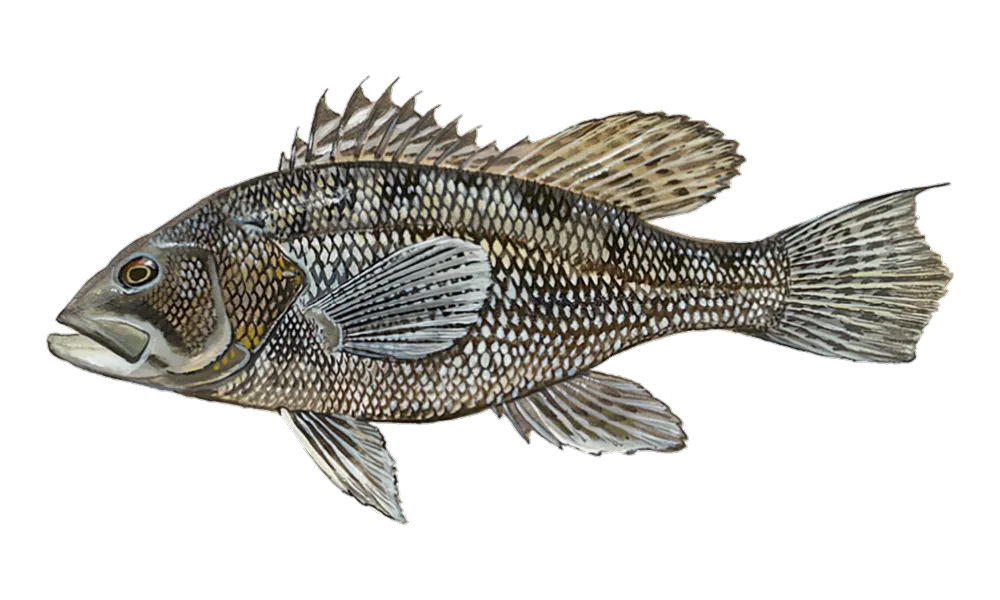
Black Sea Bass Centropristis striata
Typical: 11–17 in, 1–3 lb
Quickest tell: The long single spiny dorsal with rows of white spots, plus the trailing top tail-ray filament (and bluish nuchal hump) on adults, separate it from the blunt rubbery-lipped tautog and the deeper-bodied, smaller-mouthed scup.
- stocky body, smoky gray to blue-black, often with light spots and lines in rows along the fins
- single long dorsal fin with stout sharp spines
- rounded fins, the dorsal with pale spots/streaks
- elongated top tail-fin ray (filament) trailing on large fish
- fleshy nuchal hump, often bluish, on big spawning males
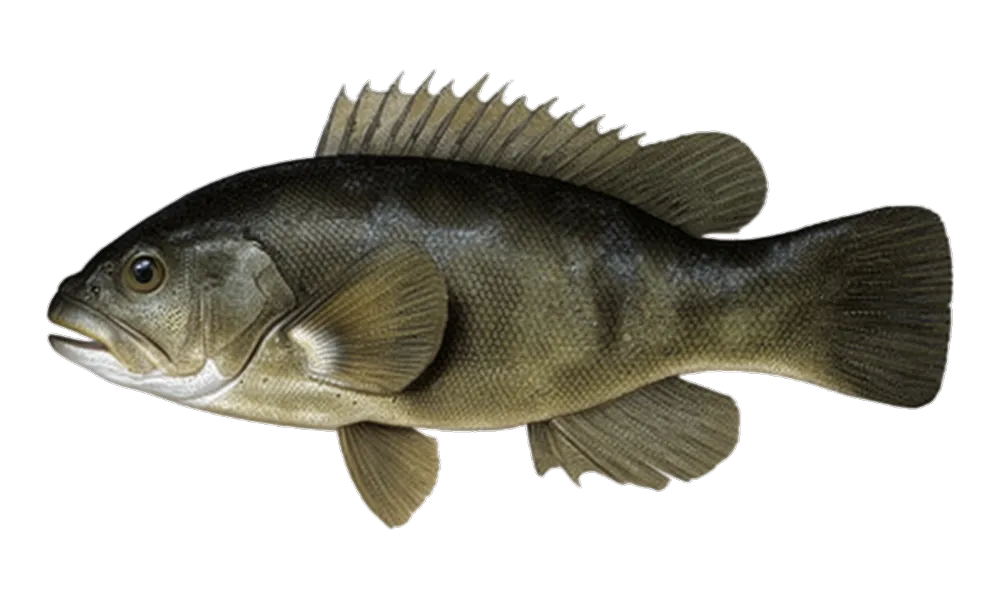
Tautog Tautoga onitis
Typical: 14–20 in, 2–5 lb
Quickest tell: The blunt rubbery-lipped head, thick leathery skin, and uniform blotchy dark coloring (no white-spotted fin rows, no trailing tail filament) separate tautog from the lighter, spinier black sea bass.
- blunt, rounded head with thick rubbery lips
- mottled dark gray to blackish-green, blotchy sides
- stout, deep body with thick leathery, slimy skin
- white chin patch on large males
- powerful jaws with crushing molar-like teeth set back in the mouth
When Each Is Running October — current month highlighted
| Jan | Feb | Mar | Apr | May | Jun | Jul | Aug | Sep | Oct | Nov | Dec | |
|---|---|---|---|---|---|---|---|---|---|---|---|---|
| Black Sea Bass | ||||||||||||
| Tautog |
Peak Good Fair Slow
Where Black Sea Bass and Tautog Overlap
Both run in Mid-Atlantic, Northeast — that is where telling them apart actually matters.