 The Fishing Report
Fishing seasons & conditions by region
Scup / Porgy Stenotomus chrysops
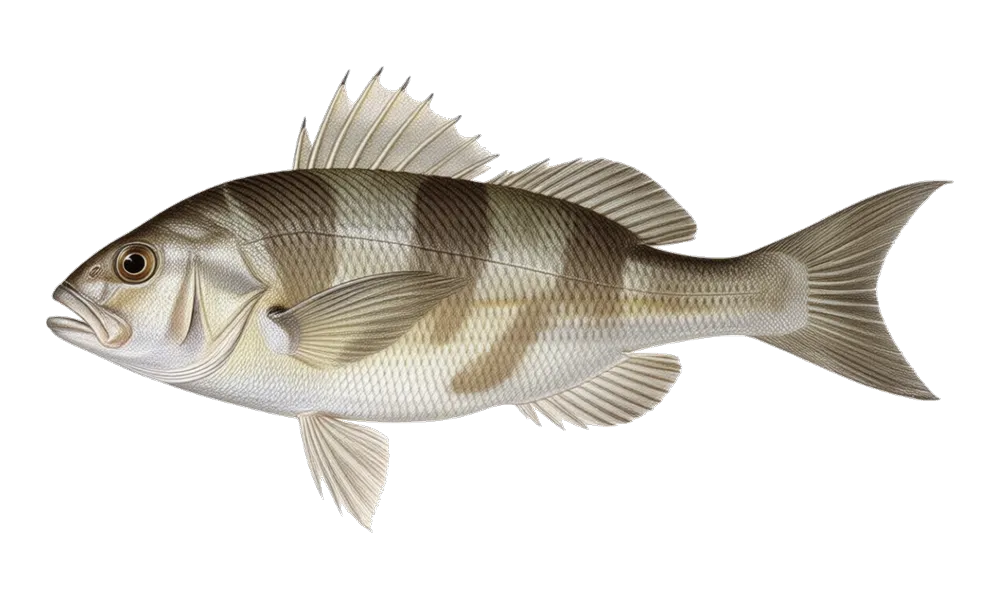
Scup / Porgy Size, Range & Diet
| Typical size | 8–14 in, 0.5–2 lb |
|---|---|
| Maximum | up to 20 in and about 4 lb |
| Lifespan | up to about 20 years |
| Range | Northwest Atlantic from Cape Cod south to Cape Hatteras, thickest through southern New England, Long Island and New Jersey. |
| Habitat | Sand, mud and shell bottom around rocks, wrecks, mussel beds and reefs inshore through summer, shifting to the outer shelf in winter. |
| Diet | Worms, small crabs and other crustaceans, clams, mussels and squid crushed off the bottom. |
Sizes are typical rod-and-reel and documented maximum figures, not size limits — see the regulations links below for the rules where you fish.
How to Identify a Scup / Porgy
- deep, compressed silvery body, sometimes with faint dusky bars
- small mouth, blunt snout, no canine or incisor teeth (rows of small teeth only)
- single dorsal fin with sharp spines
- slightly forked tail
- iridescent silvery flanks, sometimes dusky-blotched
Tell it apart: The deep silvery oval body with a tiny blunt mouth and no fangs or incisors marks a scup; black sea bass is darker, longer-bodied, and shows white-spotted fin rows, while sheepshead wears bold black bars and protruding front teeth.
Easily confused with: Black Sea Bass, Sheepshead
Side by side: Scup / Porgy vs Black Sea Bass, Scup / Porgy vs Sheepshead
How to Catch Scup / Porgy
Gear links open Amazon searches. As an Amazon Associate, The Fishing Report earns from qualifying purchases — at no extra cost to you. Using these links helps keep the site ad-free.
- Peaks June-September - anchor over rocky bottom and fish small hooks baited with clam or squid on a simple two-hook bottom rig.GearPorgy hooksTwo-hook bottom rigsBank sinkers
- Peaks June-September - anchor over rocky and mussel bottom, fishing small hooks baited with clam or squid on a two-hook bottom rig.GearPorgy hooksTwo-hook bottom rigsBank sinkers
When & Where Scup / Porgy Are in Season
Peak Good Fair Slow
| Jan | Feb | Mar | Apr | May | Jun | Jul | Aug | Sep | Oct | Nov | Dec | |
|---|---|---|---|---|---|---|---|---|---|---|---|---|
| Mid-Atlantic Nearshore | ||||||||||||
| Northeast Inshore |
Scup / Porgy Regulations
VirginiaVirginia Marine Resources Commission (VMRC)MarylandMaryland Department of Natural Resources, Fishing and Boating ServicesDelawareDelaware DNREC, Division of Fish & WildlifeNew JerseyNew Jersey Department of Environmental Protection, Division of Fish & Wildlife (NJDEP Fish & Wildlife)New YorkNew York State Department of Environmental Conservation (NYSDEC), Division of Marine ResourcesMid-Atlantic Fishery Management CouncilMAFMCAtlantic States Marine Fisheries CommissionASMFCConnecticutConnecticut Department of Energy and Environmental Protection (DEEP), Marine FisheriesRhode IslandRhode Island Department of Environmental Management (DEM), Division of Marine FisheriesMassachusettsMassachusetts Division of Marine Fisheries (MA DMF), Department of Fish and Game / Mass.govNew HampshireNew Hampshire Fish and Game Department (Marine Fisheries Division)MaineMaine Department of Marine Resources (DMR)NOAA Fisheries (Greater Atlantic Region / New England-Mid-Atlantic)NEFMC
Always check local regulations — seasons, size, and bag limits vary by state and species, and change year to year. When in doubt, release.