 The Fishing Report
Bluefin Tuna Thunnus thynnus
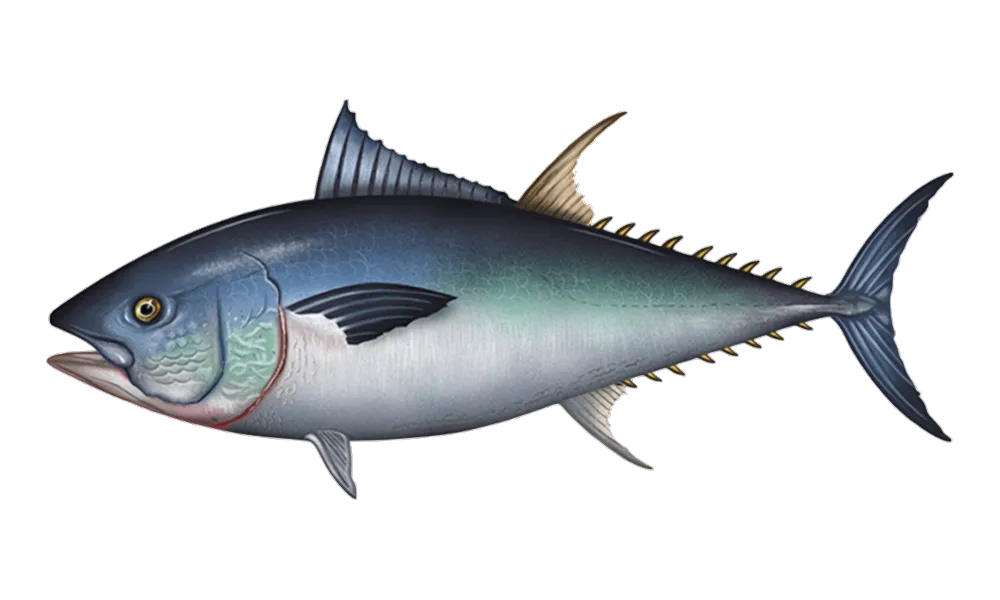
Bluefin Tuna Size, Range & Diet
| Typical size | 40–73 in, 50–300 lb |
|---|---|
| Maximum | up to 13 ft and about 2,000 lb |
| Lifespan | About 20 years or more |
| Range | Western Atlantic from Newfoundland and New England down to the Gulf of Mexico; the Southern California fishery is for the closely related Pacific bluefin. |
| Habitat | Cool to temperate open ocean — shelf edges, canyons, offshore banks and temperature breaks — feeding near the surface but diving well below 1,000 ft. |
| Diet | Herring, mackerel, bluefish, sand eels and squid chased down in open water. |
Sizes are typical rod-and-reel and documented maximum figures, not size limits — see the regulations links below for the rules where you fish.
How to Identify a Bluefin Tuna
- very short pectoral fins (clearly not reaching back to the second dorsal)
- short second dorsal and anal fins
- dark metallic blue-black back, silver-white belly with no bright yellow stripe
- dusky/grayish finlets edged with a thin black line (not bright yellow)
- stout, deep, football-shaped body
Tell it apart: The distinctly SHORT pectoral fin (not reaching the second dorsal), the dull dusky finlets, and the heavy football body separate bluefin from the long-pectoraled bigeye and the long-finned, yellow-striped yellowfin; bluefin alone has a heavily striated liver, the definitive lab check.
Easily confused with: Yellowfin Tuna, Bigeye Tuna
Side by side: Bluefin Tuna vs Albacore, Bluefin Tuna vs Bigeye Tuna, Bluefin Tuna vs Yellowfin Tuna
How to Catch Bluefin Tuna
Gear links open Amazon searches. As an Amazon Associate, The Fishing Report earns from qualifying purchases — at no extra cost to you. Using these links helps keep the site ad-free.
- Best August-October - troll spreader bars and chunk butterfish on inshore lumps; jig sand eel imitations when fish hold tight to bait.GearSpreader barsJigging luresStand-up tuna combo
- Best May through September — match the bite with sinker-rig sardines, flat-fall jigs worked deep, or surface poppers on schools busting bait.GearFlat-fall jigsSinker-rig hooksHeavy stand-up combo
When & Where Bluefin Tuna Are in Season
| Jan | Feb | Mar | Apr | May | Jun | Jul | Aug | Sep | Oct | Nov | Dec | |
|---|---|---|---|---|---|---|---|---|---|---|---|---|
| Mid-Atlantic Offshore | ||||||||||||
| Northeast Offshore | ||||||||||||
| Southern California Offshore |