 The Fishing Report
Fishing seasons & conditions by region
Bigeye Tuna Thunnus obesus
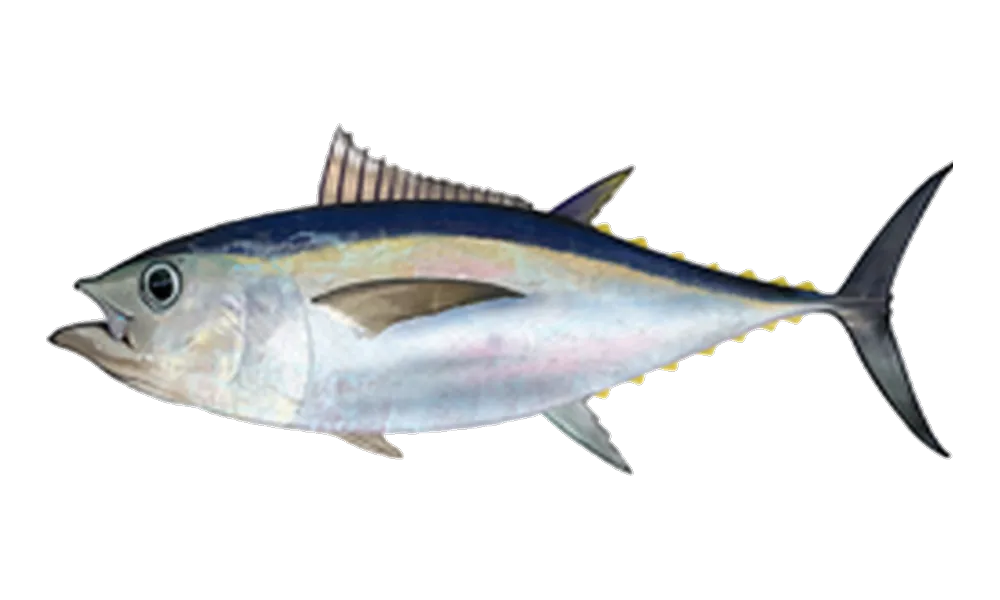
Bigeye Tuna Size, Range & Diet
| Typical size | 40–60 in, 60–150 lb |
|---|---|
| Maximum | up to about 8 ft and over 400 lb |
| Lifespan | commonly 7–9 years, with some reaching 16 |
| Range | Warm blue water off all three US coasts — the Atlantic canyons from Nova Scotia to Brazil, well offshore of Southern California, and around the Hawaiian Islands. |
| Habitat | Open ocean past the shelf break — canyon edges, seamounts, temperature breaks and floating debris; dives past 800 ft in daylight and rises at night. |
| Diet | Squid, crustaceans and schooling baitfish, taken up top at dawn and dusk and deep through the day. |
Sizes are typical rod-and-reel and documented maximum figures, not size limits — see the regulations links below for the rules where you fish.
How to Identify a Bigeye Tuna
- noticeably large eye
- very long pectoral fin (reaching past the second dorsal, especially in smaller fish)
- short second dorsal and anal fins (never elongated)
- dark metallic blue back, whitish belly
- bright yellow finlets edged in black
Tell it apart: A large eye plus a long pectoral fin AND short (un-elongated) second dorsal and anal fins separate bigeye from yellowfin; note the liver is SMOOTH (only bluefin has a striated liver), so dockside rely on the big eye and the long pectoral with short median fins.
Easily confused with: Yellowfin Tuna, Bluefin Tuna
Side by side: Bigeye Tuna vs Albacore, Bigeye Tuna vs Bluefin Tuna, Bigeye Tuna vs Yellowfin Tuna
How to Catch Bigeye Tuna
Gear links open Amazon searches. As an Amazon Associate, The Fishing Report earns from qualifying purchases — at no extra cost to you. Using these links helps keep the site ad-free.
- Best August-October in the canyons - troll dark spreader bars and large ballyhoo at first and last light, or deep-jig over structure.GearSpreader barsSpeed jigsHeavy trolling combo
- A rare late-summer prize, August and September — troll deep diving plugs and skirted lures down the canyons, often working low light early and late.GearDeep trolling luresHeavy trolling leaderHeavy trolling combo
- Peaks August-September; troll deep-running lures and weighted feathers before dawn near FADs, or deep-drop jigs to fish stacked well below the surface.GearWeighted trolling luresDeep jigging jigsHeavy jigging combo
When & Where Bigeye Tuna Are in Season
Peak Good Fair Slow
| Jan | Feb | Mar | Apr | May | Jun | Jul | Aug | Sep | Oct | Nov | Dec | |
|---|---|---|---|---|---|---|---|---|---|---|---|---|
| Mid-Atlantic Offshore | ||||||||||||
| Southern California Offshore | ||||||||||||
| Hawaiian Islands Offshore |
Bigeye Tuna Regulations
VirginiaVirginia Marine Resources Commission (VMRC)MarylandMaryland Department of Natural Resources, Fishing and Boating ServicesDelawareDelaware DNREC, Division of Fish & WildlifeNew JerseyNew Jersey Department of Environmental Protection, Division of Fish & Wildlife (NJDEP Fish & Wildlife)New YorkNew York State Department of Environmental Conservation (NYSDEC), Division of Marine ResourcesMid-Atlantic Fishery Management CouncilMAFMCAtlantic States Marine Fisheries CommissionASMFCCaliforniaCalifornia Department of Fish and Wildlife (CDFW), Marine RegionNOAA Fisheries (West Coast Region)PFMCHawaiiHawaii Department of Land and Natural Resources, Division of Aquatic Resources (DAR)NOAA Fisheries Pacific Islands Regional Office (in coordination with the Western Pacific Fishery Management Council)WPFMC
Always check local regulations — seasons, size, and bag limits vary by state and species, and change year to year. When in doubt, release.