 The Fishing Report
Fishing seasons & conditions by region
Cobia Rachycentron canadum
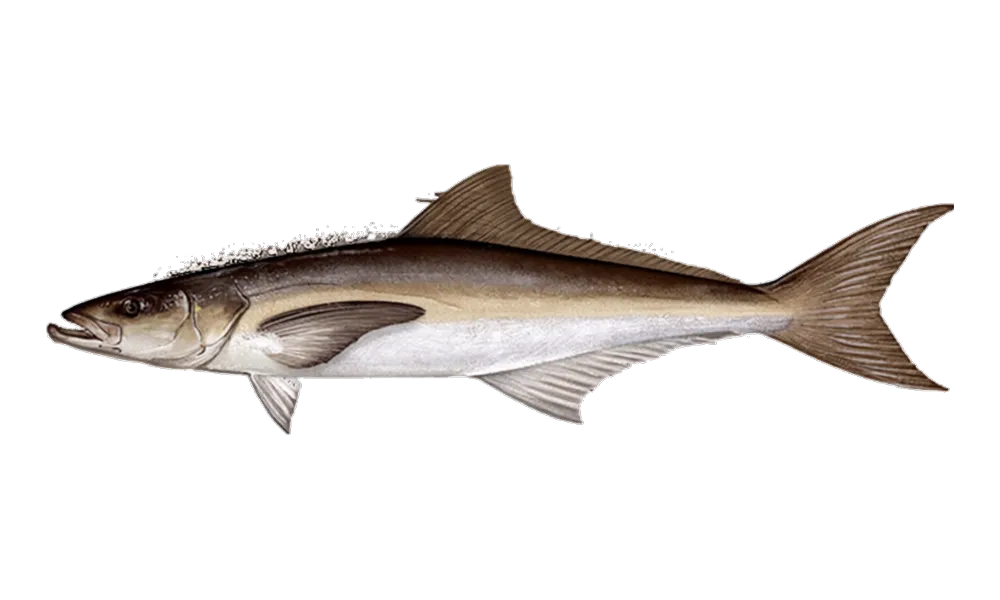
Cobia Size, Range & Diet
| Typical size | 30–45 in, 15–40 lb |
|---|---|
| Maximum | up to 6 ft and about 135 lb |
| Lifespan | up to 12 years |
| Range | Warm Atlantic coastal water from the Chesapeake and Delmarva south through Florida and across the Gulf of Mexico, with summer strays turning up farther north. |
| Habitat | Nearshore and coastal water, shadowing buoys, wrecks, reefs, channel markers and cruising rays, turtles and sharks. |
| Diet | Crabs, shrimp, squid and small bottom fish — live eels and blue crabs are the classic baits. |
Sizes are typical rod-and-reel and documented maximum figures, not size limits — see the regulations links below for the rules where you fish.
How to Identify a Cobia
- Long, broad, flattened head; dark brown back
- Single horizontal dark stripe with paler band above and below
- Row of 7-9 short, stout, separate spines ahead of the dorsal fin (no connecting membrane)
- Broad shark/remora-like head with projecting lower jaw
- White belly; broad, slightly forked tail
Tell it apart: A brown lateral stripe on a flat-headed, remora-like body with low isolated dorsal spines identifies cobia (often mistaken at a glance for a shark, which has gill slits and rough denticle skin).
Easily confused with: Sharks
Side by side: Cobia vs Amberjack, Cobia vs Sharks
How to Catch Cobia
Gear links open Amazon searches. As an Amazon Associate, The Fishing Report earns from qualifying purchases — at no extra cost to you. Using these links helps keep the site ad-free.
- The spring run (Apr–May) — run the beach in 10–30 ft on calm days and sight-cast a bucktail to fish on rays and pods.GearCobia bucktail jigsSoft-plastic eel luresHeavy spinning combo
- Spring is prime as fish migrate near beaches and buoys; sight-cast bucktail jigs or eels to cruising and surfacing fish.GearHeavy bucktail jigsSoft-plastic eelsMedium-heavy casting rod
- Spring is prime as fish migrate the beachfront; sight-cast heavy bucktail jigs or eels to cruising fish near buoys and rays.GearHeavy bucktail jigsSoft-plastic eelsMedium-heavy casting rod
- A brief late-spring to early-summer window (May-Aug) - sight-cast a bucktail or eel to fish cruising buoys, rays and the surface.GearHeavy bucktail jigsSoft-plastic eelsCircle hooks
When & Where Cobia Are in Season
Peak Good Fair Slow
| Jan | Feb | Mar | Apr | May | Jun | Jul | Aug | Sep | Oct | Nov | Dec | |
|---|---|---|---|---|---|---|---|---|---|---|---|---|
| Southeast Atlantic Nearshore | ||||||||||||
| South Florida & the Keys Nearshore | ||||||||||||
| Gulf of Mexico Nearshore | ||||||||||||
| Mid-Atlantic Nearshore |
Cobia Regulations
GeorgiaGeorgia Department of Natural Resources, Coastal Resources DivisionSouth CarolinaSouth Carolina Department of Natural Resources, Marine Resources DivisionNorth CarolinaNorth Carolina Department of Environmental Quality (NC DEQ), Division of Marine FisheriesSouth Atlantic Fishery Management CouncilSAFMCAtlantic States Marine Fisheries CommissionASMFCFloridaFlorida Fish and Wildlife Conservation Commission (FWC)Gulf of Mexico Fishery Management Council (Gulf Council)GMFMCAlabamaAlabama Department of Conservation and Natural Resources, Marine Resources Division (Outdoor Alabama)MississippiMississippi Department of Marine Resources (DMR)LouisianaLouisiana Department of Wildlife and Fisheries (LDWF)TexasTexas Parks & Wildlife Department (TPWD)VirginiaVirginia Marine Resources Commission (VMRC)MarylandMaryland Department of Natural Resources, Fishing and Boating ServicesDelawareDelaware DNREC, Division of Fish & WildlifeNew JerseyNew Jersey Department of Environmental Protection, Division of Fish & Wildlife (NJDEP Fish & Wildlife)New YorkNew York State Department of Environmental Conservation (NYSDEC), Division of Marine ResourcesMid-Atlantic Fishery Management CouncilMAFMC
Always check local regulations — seasons, size, and bag limits vary by state and species, and change year to year. When in doubt, release.