 The Fishing Report
Fishing seasons & conditions by region
Cobia vs Sharks
Two fish anglers routinely mix up. Here is what actually separates them — and when and where you are likely to meet each.
Side by Side
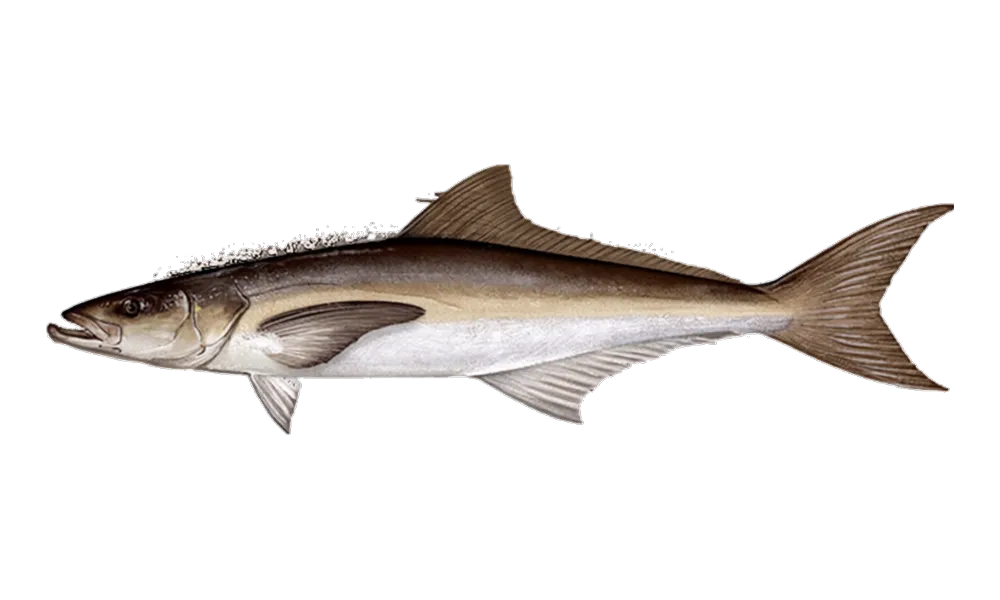
Cobia Rachycentron canadum
Typical: 30–45 in, 15–40 lb
Quickest tell: A brown lateral stripe on a flat-headed, remora-like body with low isolated dorsal spines identifies cobia (often mistaken at a glance for a shark, which has gill slits and rough denticle skin).
- Long, broad, flattened head; dark brown back
- Single horizontal dark stripe with paler band above and below
- Row of 7-9 short, stout, separate spines ahead of the dorsal fin (no connecting membrane)
- Broad shark/remora-like head with projecting lower jaw
- White belly; broad, slightly forked tail
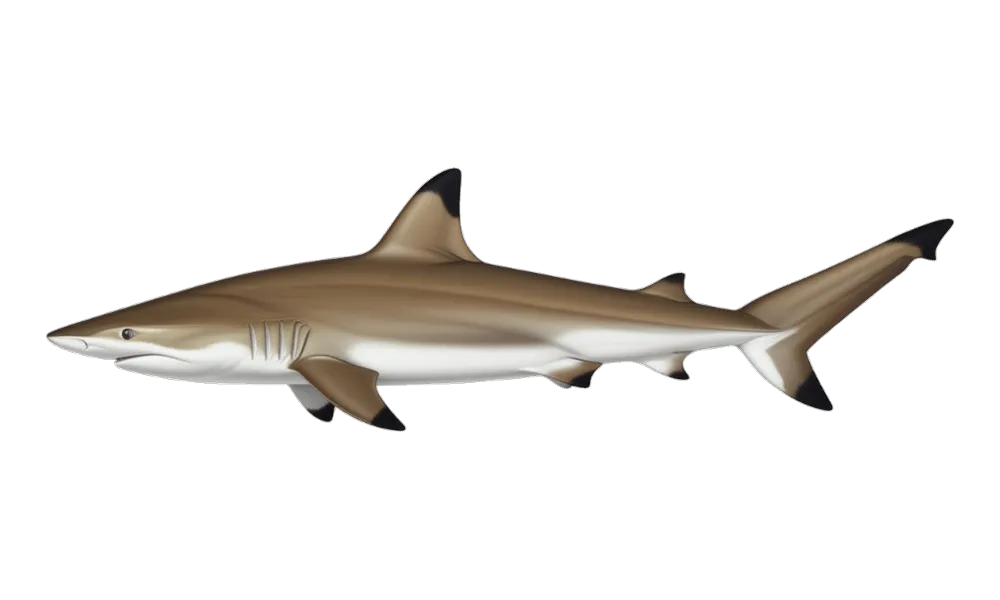
Sharks Carcharhinus limbatus
Typical: 2.5–6 ft, 10–90 lb
Key field mark: Open gill slits and rough denticle skin confirm a shark; common SE species split by snout/teeth: blacktip (black fin tips), bonnethead (shovel head), Atlantic sharpnose (white-spotted with white fin edges).
- Cartilaginous body, 5-7 gill slits on each side (no gill cover)
- Rough sandpaper skin (dermal denticles), no true scales
- Heterocercal tail with longer upper lobe
- Mouth set under the snout (ventral)
- Multiple rows of replaceable teeth
- Rigid fins that do not fold into grooves
When Each Is Running October — current month highlighted
Peak Good Fair Slow
Where Cobia and Sharks Overlap
Both run in Gulf of Mexico, Mid-Atlantic, Southeast Atlantic — that is where telling them apart actually matters.