 The Fishing Report
Fishing seasons & conditions by region
Sharks Carcharhinus limbatus
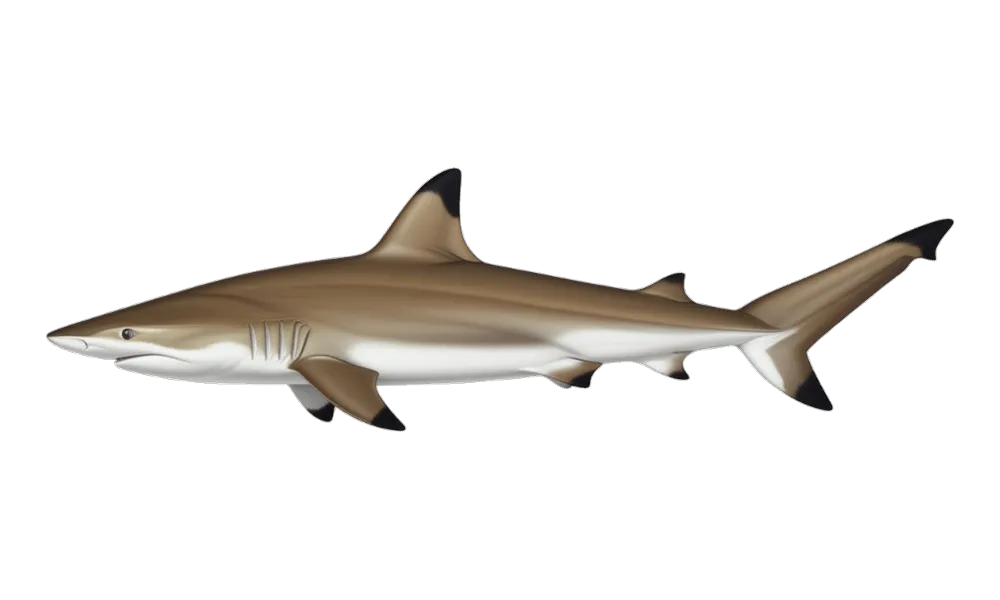
Sharks Size, Range & Diet
| Typical size | 2.5–6 ft, 10–90 lb |
|---|---|
| Maximum | up to about 11 ft for a big bull shark; the heaviest on record neared 700 lb |
| Lifespan | roughly 12–30 years depending on the species |
| Range | A mixed nearshore group — blacktip, spinner, Atlantic sharpnose, bonnethead and bull sharks — working the coast from the Mid-Atlantic south through Florida and across the Gulf of Mexico, pushing north each summer as the water warms. |
| Habitat | Beachfronts, inlets, bays, river mouths and nearshore reefs, usually in the upper 100 ft of water. |
| Diet | Menhaden, mullet, ladyfish and other schooling baitfish, with crabs, shrimp and shellfish taken by the smaller coastal species. |
Sizes are typical rod-and-reel and documented maximum figures, not size limits — see the regulations links below for the rules where you fish.
How to Identify a Sharks
- Cartilaginous body, 5-7 gill slits on each side (no gill cover)
- Rough sandpaper skin (dermal denticles), no true scales
- Heterocercal tail with longer upper lobe
- Mouth set under the snout (ventral)
- Multiple rows of replaceable teeth
- Rigid fins that do not fold into grooves
Tell it apart: Open gill slits and rough denticle skin confirm a shark; common SE species split by snout/teeth: blacktip (black fin tips), bonnethead (shovel head), Atlantic sharpnose (white-spotted with white fin edges).
Easily confused with: Cobia
Side by side: Sharks vs Cobia
How to Catch Sharks
Gear links open Amazon searches. As an Amazon Associate, The Fishing Report earns from qualifying purchases — at no extra cost to you. Using these links helps keep the site ad-free.
- Warm months — anchor up-current of an inlet, send an oily cut bait down a chum slick on wire; circle hooks for a clean release.GearWire shark leaders10/0+ circle hooksHeavy boat combo
- Best in the warm months as fish move nearshore; soak large cut or whole baits on a heavy wire bottom rig from beach or boat.GearHeavy circle hooksCable shark rigsHeavy surf combo
- Best June through September - drift a chum slick and float oily cut bunker or mackerel baits on a wire or cable leader at varied depths.GearHeavy circle hooksCable leader rigsStand-up shark combo
When & Where Sharks Are in Season
Peak Good Fair Slow
| Jan | Feb | Mar | Apr | May | Jun | Jul | Aug | Sep | Oct | Nov | Dec | |
|---|---|---|---|---|---|---|---|---|---|---|---|---|
| Southeast Atlantic Nearshore | ||||||||||||
| Gulf of Mexico Nearshore | ||||||||||||
| Mid-Atlantic Nearshore |
Sharks Regulations
GeorgiaGeorgia Department of Natural Resources, Coastal Resources DivisionSouth CarolinaSouth Carolina Department of Natural Resources, Marine Resources DivisionNorth CarolinaNorth Carolina Department of Environmental Quality (NC DEQ), Division of Marine FisheriesSouth Atlantic Fishery Management CouncilSAFMCAtlantic States Marine Fisheries CommissionASMFCFloridaFlorida Fish and Wildlife Conservation Commission (FWC)AlabamaAlabama Department of Conservation and Natural Resources, Marine Resources Division (Outdoor Alabama)MississippiMississippi Department of Marine Resources (DMR)LouisianaLouisiana Department of Wildlife and Fisheries (LDWF)TexasTexas Parks & Wildlife Department (TPWD)Gulf of Mexico Fishery Management Council (Gulf Council)GMFMCVirginiaVirginia Marine Resources Commission (VMRC)MarylandMaryland Department of Natural Resources, Fishing and Boating ServicesDelawareDelaware DNREC, Division of Fish & WildlifeNew JerseyNew Jersey Department of Environmental Protection, Division of Fish & Wildlife (NJDEP Fish & Wildlife)New YorkNew York State Department of Environmental Conservation (NYSDEC), Division of Marine ResourcesMid-Atlantic Fishery Management CouncilMAFMC
Always check local regulations — seasons, size, and bag limits vary by state and species, and change year to year. When in doubt, release.