 The Fishing Report
Fishing seasons & conditions by region
Lake Trout Salvelinus namaycush
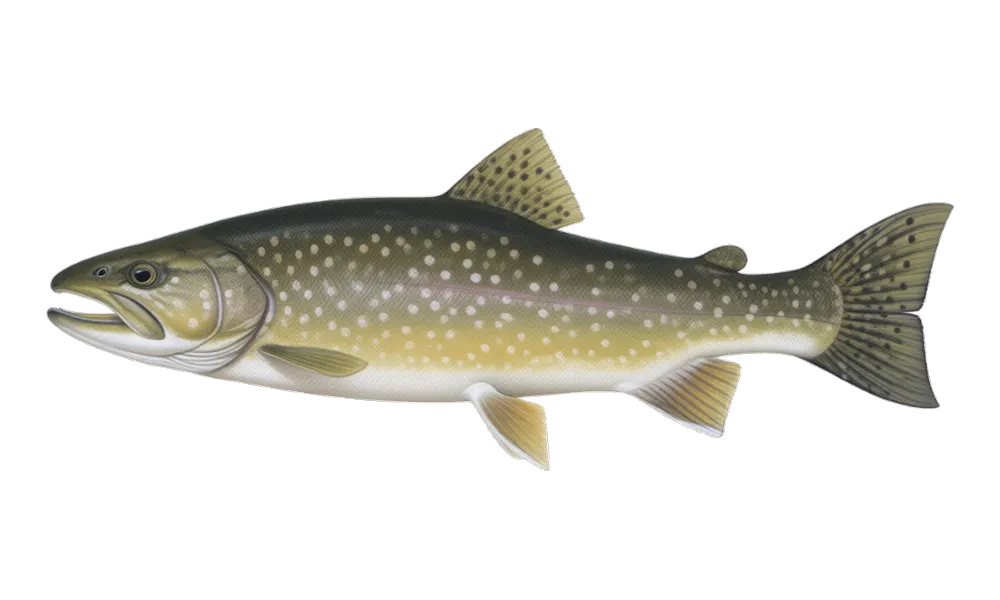
Lake Trout Size, Range & Diet
| Typical size | 24–32 in, 5–15 lb |
|---|---|
| Maximum | about 50 in and 72 lb on rod and reel; netted fish have topped 100 lb |
| Lifespan | Up to about 50 years, and 70 in some far-north lakes |
| Range | All five Great Lakes, plus deep cold inland lakes across the northern US, Alaska and Canada. |
| Habitat | Deep cold water, usually below 50 ft and often past 200 ft, tight to rocky reefs, humps and bottom in the 40–55°F band. |
| Diet | Alewife, smelt, chubs and sculpin taken near bottom — spoons, dodger-and-fly rigs and jigged tubes all produce. |
Sizes are typical rod-and-reel and documented maximum figures, not size limits — see the regulations links below for the rules where you fish.
How to Identify a Lake Trout
- Dark gray to gray-green body covered in pale cream spots
- Deeply forked tail (deepest fork of the region's salmonids)
- Pale spots without halos extend onto the forked tail
- White leading edge on the lower (pelvic, pectoral, anal) fins
- No pink stripe and no dark or red spots
- Spots may extend onto head, dorsal, and adipose
Tell it apart: A deeply forked tail with pale haloless spots on a dark body identifies lake trout; browns and steelhead have squared tails, and brown trout add red/orange haloed spots. (Worm-like vermiculations belong to brook trout, NOT lake trout.)
Easily confused with: Brown Trout, Steelhead
Side by side: Lake Trout vs Brown Trout, Lake Trout vs Steelhead
How to Catch Lake Trout
Gear links open Amazon searches. As an Amazon Associate, The Fishing Report earns from qualifying purchases — at no extra cost to you. Using these links helps keep the site ad-free.
- Catchable spring through fall, peaking April-May and October; troll spoons and flashers on downriggers or dipsy divers, jigging deep structure in summer heat.GearTrolling spoonsDipsy diversFlutter jigs
When & Where Lake Trout Are in Season
Peak Good Fair Slow
| Jan | Feb | Mar | Apr | May | Jun | Jul | Aug | Sep | Oct | Nov | Dec | |
|---|---|---|---|---|---|---|---|---|---|---|---|---|
| Great Lakes Nearshore | ||||||||||||
| Great Lakes Offshore |
Lake Trout Regulations
MinnesotaMinnesota Department of Natural Resources (Minnesota DNR)WisconsinWisconsin Department of Natural Resources (DNR)MichiganMichigan Department of Natural Resources (DNR)IllinoisIllinois Department of Natural Resources, Division of Fisheries (iFish Illinois)IndianaIndiana Department of Natural Resources (DNR), Division of Fish & WildlifeOhioOhio Department of Natural Resources (ODNR), Division of WildlifePennsylvaniaPennsylvania Fish and Boat CommissionNew York (Great Lakes / inland)New York State Department of Environmental Conservation (NYSDEC)
Always check local regulations — seasons, size, and bag limits vary by state and species, and change year to year. When in doubt, release.