 The Fishing Report
Milwaukee, WI Fishing — Seasons & Conditions
Wisconsin's big-water salmon port — Chinook and coho off the breakwater gaps through summer, lake trout deep on the reefs, and brown trout tight to the harbor walls when the water is cold.
Part of the Great Lakes region.
What’s Biting at Milwaukee, WI in October 2026
Biting right now — 10 species are worth targeting in October here, and the 6 marked Peak are at their best right now.
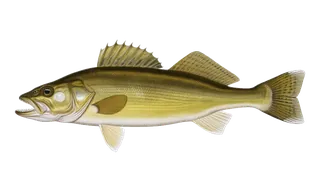 WalleyePeak
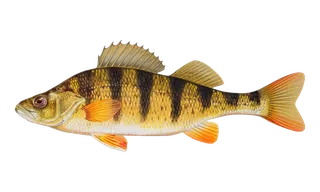 Yellow PerchPeak
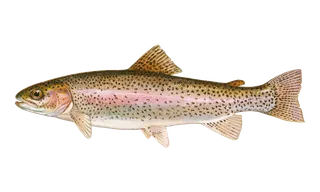 SteelheadPeak
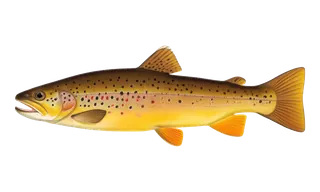 Brown TroutPeak
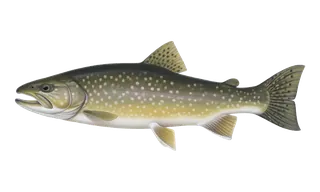 Lake TroutPeak
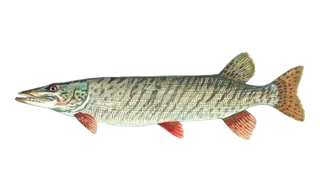 MuskiePeak
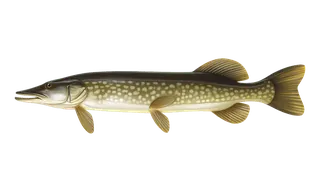 Northern Pike
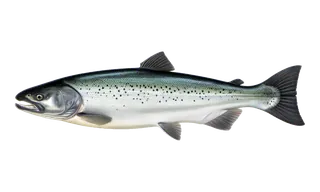 Coho Salmon
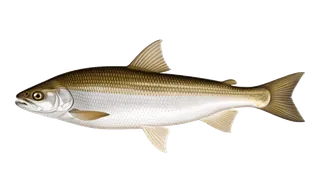 Whitefish
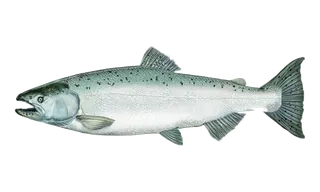 Chinook Salmon
Tap any species for how to identify it, when it runs and what to throw. This is when the fish are active here — check the regulations below before you keep anything.
Fishing Milwaukee, WI: The Local Water
The Inlet & Bar
Milwaukee Harbor is at the mouth of the Milwaukee River, in Milwaukee Bay on the west side of the lake about 80 miles north of Chicago Harbor. The outer harbor is protected by a series of breakwaters generally paralleling the shore, and the main entrance is a dredged channel from deep water between them across to the river mouth; the breakwater ends at the main entrance and the gaps at the north and south ends are all marked by lights.
Local Waters
The 18 miles of shore running up from Wind Point to the south are bluff. Shoals reach about 0.6 mile offshore over the first 7 miles of that stretch, and from there north to Milwaukee the shoal border is irregular and extends as much as 1.5 miles from shore.
Reefs, Structure & Marks
Milwaukee Breakwater Light stands 61 feet above the water where the north breakwater ends at the main entrance channel. Prominent from offshore are lighted television towers 4.5 miles north of the river mouth, the U.S. Bank Center just under a mile north-northwest of it, a stack 0.4 mile southwest, and the Allen-Bradley clock and temperature towers a mile southwest.
Harbors, Launches & Access
A dredged anchorage basin extends south from the entrance channel between the breakwater and the deep-draft piers along the shore. Fish nets in the north outer harbor are a hazard, and a sewage-plant water intake on the south side of the Milwaukee River about 800 feet west of the Interstate 794 bridge can at times set up hazardous crosscurrents for small vessels.
Milwaukee, WI Season Calendar October — current month highlighted
Harbors, Bays & Tributaries
| Jan | Feb | Mar | Apr | May | Jun | Jul | Aug | Sep | Oct | Nov | Dec | |
|---|---|---|---|---|---|---|---|---|---|---|---|---|
| Walleye | ||||||||||||
| Yellow Perch | ||||||||||||
| Smallmouth Bass | ||||||||||||
| Northern Pike | ||||||||||||
| Steelhead | ||||||||||||
| Brown Trout |
Nearshore & Reefs
| Jan | Feb | Mar | Apr | May | Jun | Jul | Aug | Sep | Oct | Nov | Dec | |
|---|---|---|---|---|---|---|---|---|---|---|---|---|
| Walleye | ||||||||||||
| Smallmouth Bass | ||||||||||||
| Lake Trout | ||||||||||||
| Coho Salmon | ||||||||||||
| Muskie | ||||||||||||
| Whitefish |
Open Lake / Offshore
| Jan | Feb | Mar | Apr | May | Jun | Jul | Aug | Sep | Oct | Nov | Dec | |
|---|---|---|---|---|---|---|---|---|---|---|---|---|
| Chinook Salmon | ||||||||||||
| Coho Salmon | ||||||||||||
| Lake Trout | ||||||||||||
| Walleye | ||||||||||||
| Yellow Perch | ||||||||||||
| Steelhead |
What to Target & How
Gear links open Amazon searches. As an Amazon Associate, The Fishing Report earns from qualifying purchases — at no extra cost to you. Using these links helps keep the site ad-free.
Inshore
- Walleye — Peaks April-May and again in October as fish stage shallow; troll crawler harnesses and crankbaits over open water in summer, jig vertically through winter ice.GearCrawler harnessesDeep-diving crankbaitsJigging rod combo
How to ID
- Olive-gold flanks with brassy mottling
- Glassy, light-reflecting eye (silvery tapetum)
- Two separate dorsal fins, first spiny
- White tip on the lower lobe of the tail
- Large canine teeth in the jaws
- Dark blotch at the rear base of the spiny dorsal
Typical: 15–25 in, 1–5 lb
Tell it apart: The milky light-reflecting eye, large canine teeth, and white-tipped lower tail lobe separate a walleye from a yellow perch, which has a normal dark eye and no canines.
Easily confused with: Yellow Perch
- Yellow Perch — Best September-November as schools fatten up; drop small jigs and minnow-tipped spreader rigs near bottom, then chase the same fish on ice in midwinter.GearPerch spreader rigsSmall jig headsLight spinning combo
How to ID
- Golden-yellow body with 6-8 dark vertical bars
- Two separate dorsal fins, first spiny
- Orange-tinted pelvic and anal fins (esp. spawning males)
- Slightly humped back, blunt snout
- No canine teeth, only small rasp-like teeth
- Dark, non-reflective eye
Typical: 7–11 in, 0.3–0.8 lb
Tell it apart: Bold dark vertical bars over a yellow body, orange-tinted lower fins, a normal dark eye, and no canine teeth mark it as a perch, not a walleye.
Easily confused with: Walleye
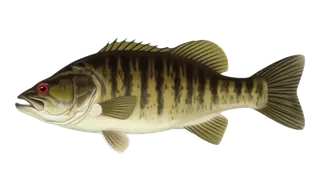 Smallmouth Bass — Prime June-August in warm water; work tubes and drop-shot rigs on rocky structure, switching to jerkbaits in cooler pre-spawn spring conditions.GearTube baitsDrop-shot hooksSuspending jerkbaits
How to ID
- Bronze-brown body with dark vertical bars
- Red to red-orange eye
- Upper jaw ends at or before the rear of the eye
- Single dorsal, shallowly notched, not fully split
- Dark radiating bars across the cheek and gill cover
- Forked tail tricolored in young (orange/black/white)
Typical: 12–18 in, 1–4 lb
Tell it apart: A bronze body with vertical bars, a red eye, and an upper jaw ending no farther back than the rear of the eye confirms smallmouth (largemouth's jaw extends well past the eye and it shows a horizontal stripe, not bars).
- Northern Pike — Strongest in April around weedy spawning bays; cast large spinnerbaits and spoons on wire leader, slowing presentations through cold-water periods.GearLarge spinnerbaitsWire leadersCasting spoons
How to ID
- Long torpedo body, green to olive
- Light bean-shaped spots on a darker background
- Single soft dorsal set far back near the tail
- Duck-bill snout with large teeth
- Cheek fully scaled, gill cover scaled on upper half only
- 5 or fewer sensory pores per side of the lower jaw
Typical: 20–30 in, 2–8 lb
Tell it apart: Pike show LIGHT spots on a DARK background, a fully scaled cheek, and 5 or fewer jaw pores; muskie reverse it (dark marks on a light body, scaleless lower cheek) with 6-9 pores per side.
Easily confused with: Muskie
- Steelhead — Runs peak April-May and October-November; drift float rigs with spawn sacs and beads in tributary rivers, troll spoons in the open lake when fish are dispersed.GearFloat rigsSpawn sac meshSteelhead drift rod
How to ID
- Bright chrome-silver sides, white belly
- Small black spots scattered over the back, dorsal, and entire tail (both lobes)
- Squared tail; 8-12 anal fin rays (fewer than salmon)
- Faint pink-red lateral band (bright on resident/mature fish)
- White mouth and white gums inside
- Small head relative to a same-size Chinook
Typical: 24–30 in, 5–10 lb
Tell it apart: A white mouth AND white gums with spots radiating across the whole tail separate a steelhead from coho (dark mouth, white gums, spots on the upper tail lobe only) and chinook (black mouth and black gums).
Easily confused with: Brown Trout, Coho Salmon, Chinook Salmon
- Brown Trout — Best October-November near shore as fish stage to spawn; troll stickbaits and spoons on planer boards, then cast hardware along piers and river mouths.GearTrolling stickbaitsPlaner boardsCasting spoons
How to ID
- Buttery-brown to golden body
- Both black AND red/orange spots, many ringed with pale halos
- Few or no spots on the squared tail
- Adipose fin often tinged orange
- Sparse spotting below the lateral line
- Thick, blunt head
Typical: 16–26 in, 2–10 lb
Tell it apart: Red-orange spots with pale halos and a nearly spotless tail mark a brown trout; steelhead and the salmon carry black-only spots and a clearly spotted tail.
Easily confused with: Steelhead, Coho Salmon, Chinook Salmon
Nearshore
- Lake Trout — Catchable spring through fall, peaking April-May and October; troll spoons and flashers on downriggers or dipsy divers, jigging deep structure in summer heat.GearTrolling spoonsDipsy diversFlutter jigs
How to ID
- Dark gray to gray-green body covered in pale cream spots
- Deeply forked tail (deepest fork of the region's salmonids)
- Pale spots without halos extend onto the forked tail
- White leading edge on the lower (pelvic, pectoral, anal) fins
- No pink stripe and no dark or red spots
- Spots may extend onto head, dorsal, and adipose
Typical: 24–32 in, 5–15 lb
Tell it apart: A deeply forked tail with pale haloless spots on a dark body identifies lake trout; browns and steelhead have squared tails, and brown trout add red/orange haloed spots. (Worm-like vermiculations belong to brook trout, NOT lake trout.)
Easily confused with: Brown Trout, Steelhead
- Coho Salmon — Prime June-September in warming water; troll small spoons and flashers behind downriggers and on planer boards, working surface temperature breaks.GearTrolling spoonsFlasher and flyDownrigger weights
How to ID
- Chrome silver with a metallic blue-green back
- Black spots on the back and the UPPER lobe of the tail only
- Dark/gray mouth interior but a WHITE gum line at the tooth bases
- 12-15 anal fin rays
- Broad, only slightly forked tail
- Typically smaller and slimmer than a Chinook
Typical: 20–26 in, 4–8 lb
Tell it apart: Coho has a WHITE gum line (the reliable tell) with tail spots on the upper lobe only; Chinook has a black mouth WITH black gums and spots on both tail lobes; steelhead has a fully white mouth and gums.
Easily confused with: Chinook Salmon, Steelhead
- Muskie — Best July-October as water warms; cast oversized bucktails and glide baits or troll big crankbaits over weed edges, finishing every cast with a figure-eight.GearBucktail spinnersHeavy fluoro leaderMuskie casting rod
How to ID
- Long body, light silver-green to olive with dark markings
- Dark bars or spots on a LIGHT background (or nearly clear)
- Pointed, sharply tapered tail lobes
- Lower half of cheek and gill cover scaleless
- 6-9 sensory pores per side of the lower jaw
- Duck-bill snout with large teeth
Typical: 34–46 in, 12–30 lb
Tell it apart: Muskie show DARK markings on a LIGHT body, a scaleless lower cheek/gill cover, pointed tail tips, and 6-9 jaw pores per side, the reverse of pike (light spots on dark, scaled cheek, 5 or fewer pores, rounded tail tips).
Easily confused with: Northern Pike
- Whitefish — Best in cold months December-March, largely an ice fishery; jig small spoons and tipped jigs tight to bottom, also caught open-water in early spring.GearSmall jigging spoonsIce fishing jigsLight ice combo
How to ID
- Silvery body with an olive-brown back
- Small head with a blunt, overhanging snout
- Small, subterminal, nearly toothless mouth
- Deeply forked tail with large, smooth (unspotted) scales
- Adipose fin present (member of the trout/salmon family)
- Double skin flap between each pair of nostrils
Typical: 12–26 in, 2–4 lb
Tell it apart: A small downward-set toothless mouth under a blunt overhanging snout, large unspotted silvery scales, a deeply forked tail, and an adipose fin identify lake whitefish; the lack of teeth and spots rules out the trout and salmon.
Offshore
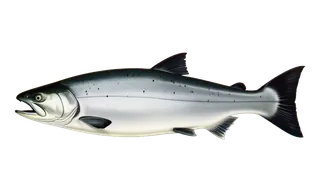 Chinook Salmon — Peaks June-September in cold offshore water; troll meat rigs, spoons and flashers deep on downriggers, following thermoclines as summer heat pushes fish down.GearMagnum trolling spoonsFlasher meat rigsTrolling rod combo
How to ID
- Chrome silver with a blue-gray back
- Black spots on the back, dorsal, and BOTH tail lobes
- Black mouth AND a black gum line
- Large, robust body (the region's largest salmon)
- 15-17 anal fin rays
- Silver tail bearing spots on both lobes
Typical: 28–36 in, 15–25 lb
Tell it apart: An entirely black mouth INCLUDING the gum line, plus spots on both tail lobes, separates Chinook (king) from the white-gummed coho and the fully white-mouthed steelhead.
Easily confused with: Coho Salmon, Steelhead
Fishing Regulations
Tides & Timing
Read the Tide
The Great Lakes have no tides — plan around water temperature (the single biggest bite trigger), solunar windows, and wind direction; early morning and evening low-light windows consistently outperform midday regardless of season.
Other towns in the Great Lakes
Alpena, MI · Bay City, MI · Bayfield, WI · Buffalo, NY · Chicago, IL · Cleveland, OH · Detroit, MI · Duluth, MN · Erie, PA · Frankfort, MI · Grand Haven, MI · Grand Marais, MN · Holland, MI · Kenosha, WI · Ludington, MI · Manistee, MI · Marquette, MI · Michigan City, IN · Muskegon, MI · Oswego, NY · Port Huron, MI · Portage, IN · Sandusky, OH · Sheboygan, WI · Sturgeon Bay, WI · Toledo, OH · Traverse City, MI · Two Harbors, MN · Waukegan, IL