 The Fishing Report
Anacortes, WA Fishing — Seasons & Conditions
San Juan Islands gateway on Fidalgo Island — winter blackmouth and summer Chinook in Rosario Strait, big lingcod on the rockpiles, year-round pink shrimp and Dungeness, and excellent crab in Padilla Bay.
Part of the Pacific Northwest region.
What’s Biting at Anacortes, WA in October 2026
Biting right now — 11 species are worth targeting in October here, and the 2 marked Peak are at their best right now.
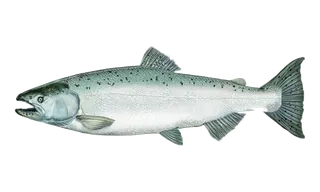 Chinook Salmon (fall river)Peak
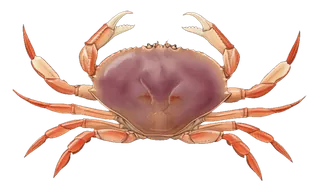 Dungeness Crab*Peak
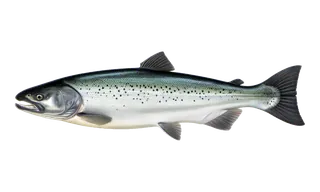 Coho Salmon (ocean/bay)
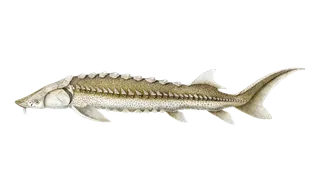 White Sturgeon
 Redtail Surfperch
 Black Rockfish
 Cabezon
 Albacore Tuna
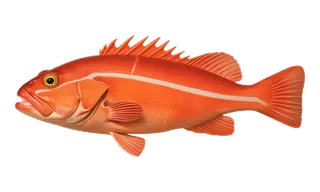 Yelloweye Rockfish
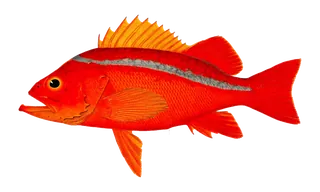 Canary / Vermilion Rock
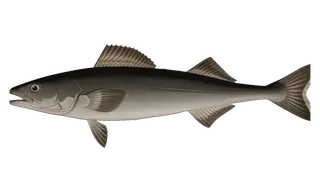 Sablefish (Black Cod)
Tap any species for how to identify it, when it runs and what to throw. This is when the fish are active here — check the regulations below before you keep anything.
Fishing Anacortes, WA: The Local Water
The Inlet & Bar
Anacortes sits on the south shore of Guemes Channel, and the way in is Cap Sante Waterway — a dredged channel to a boat basin on the east side of town, sheltered by breakwaters lit on their outer ends. The good water lies at least 40 feet off the south breakwater.
Local Waters
Rosario Strait is the working water and the current runs hard, 3 to 7 knots through Thatcher and Obstruction Passes. On the ebb of a big tide a south wind sets up tide rips off the pass entrances that are dangerous to small craft.
Reefs, Structure & Marks
Northwest of Belle Rock the ebb pouring out of Guemes Channel puts a strong set to the west. City of Seattle Rock, covered a fathom and a half, lies 200 yards off the south side of the channel two miles east of Shannon Point.
Harbors, Launches & Access
Cap Sante is the town's small-craft basin, and a second dredged channel runs about 0.7 mile southwest from its entrance to the Anacortes industrial waterfront.
Anacortes, WA Season Calendar October — current month highlighted
Inshore — Bays, Rivers & Surf
| Jan | Feb | Mar | Apr | May | Jun | Jul | Aug | Sep | Oct | Nov | Dec | |
|---|---|---|---|---|---|---|---|---|---|---|---|---|
| Chinook Salmon (fall river) | ||||||||||||
| Coho Salmon (ocean/bay) | ||||||||||||
| White Sturgeon | ||||||||||||
| Shad | ||||||||||||
| Redtail Surfperch | ||||||||||||
| Dungeness Crab* |
Nearshore — Reefs & Beaches (3–20 mi)
| Jan | Feb | Mar | Apr | May | Jun | Jul | Aug | Sep | Oct | Nov | Dec | |
|---|---|---|---|---|---|---|---|---|---|---|---|---|
| Chinook Salmon (ocean) | ||||||||||||
| Coho Salmon (ocean) | ||||||||||||
| Pacific Halibut | ||||||||||||
| Lingcod | ||||||||||||
| Black Rockfish | ||||||||||||
| Cabezon |
Offshore — Deep Reefs & Albacore (20+ mi)
| Jan | Feb | Mar | Apr | May | Jun | Jul | Aug | Sep | Oct | Nov | Dec | |
|---|---|---|---|---|---|---|---|---|---|---|---|---|
| Albacore Tuna | ||||||||||||
| Yelloweye Rockfish | ||||||||||||
| Canary / Vermilion Rock | ||||||||||||
| Sablefish (Black Cod) | ||||||||||||
| Widow / Shortbelly Rock |
What to Target & How
Gear links open Amazon searches. As an Amazon Associate, The Fishing Report earns from qualifying purchases — at no extra cost to you. Using these links helps keep the site ad-free.
Inshore
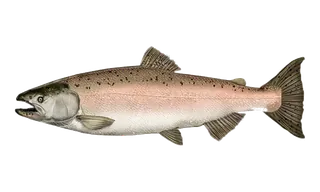 Chinook Salmon (fall river) — Peaks August through October on the fall river run — drift cured roe, back-bounce or back-troll plugs and spinners through holding water.GearSalmon drift roe rigsKwikfish-style plugsSpinner blade lures
How to ID
- Black gum line at the base of the teeth AND a black mouth/tongue (all-dark mouth)
- Black spots on BOTH lobes of the tail
- Darkening body, often coppery/olive-maroon spawning color
- Heavy, deep body; typically the largest Pacific salmon
- 15-19 anal fin rays (more than Coho)
Typical: 28–38 in, 12–25 lb
Tell it apart: A black gum line at the base of the teeth plus spots on BOTH tail lobes confirms Chinook, versus Coho's white/gray gum line at the tooth base and spots on the upper tail lobe only.
Easily confused with: Coho Salmon (ocean/bay), Coho Salmon (ocean)
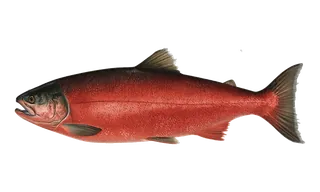 Coho Salmon (ocean/bay) — Best August and September as fish stage in bays — troll spinners and small herring near the surface, or cast spinners to schools rolling on the tide.GearSalmon trolling spinnersHerring bait rigsCasting spoons
How to ID
- White/gray gum line at the base of the teeth (mouth/tongue still dark)
- Black spots on the upper tail lobe only
- Bright silver sides, blue-green back
- 12-15 anal fin rays (fewer than Chinook)
- Spawners turn brick-red on the sides with a darker head
Typical: 22–30 in, 6–12 lb
Tell it apart: A white/gray gum line at the base of the teeth and spots only on the upper tail lobe separate Coho from the black gum line and fully-spotted tail of Chinook.
Easily confused with: Chinook Salmon (fall river), Chinook Salmon (ocean)
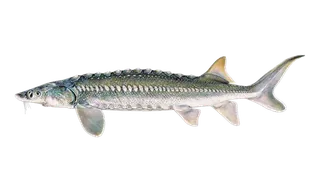 White Sturgeon — Best late fall into winter, November through January — anchor and soak smelt, sand shrimp, or roe on a heavy sliding bottom rig in deep holes.GearSturgeon sliding rigBarbless circle hooksHeavy sturgeon rod
How to ID
- 5 rows of bony scutes (plates) along the body
- Shark-like, sharply forked heterocercal tail
- 4 barbels set closer to the MOUTH than to the snout tip
- Toothless protrusible suckermouth under the snout
- Gray to olive; naked skin (no scales) between scutes
Tell it apart: Barbels positioned closer to the mouth than to the snout tip, plus a gray body, distinguish White Sturgeon from the protected Green Sturgeon, whose barbels sit closer to the snout tip and whose body is olive-green with a dark midline stripe. Mistaking them risks taking a no-retention fish.
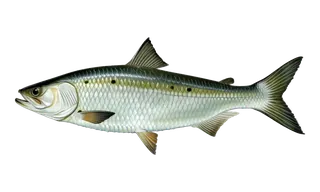 Shad — A brief spring run, May and June only — drift tiny weighted darts and shad spoons through current seams below river riffles and dams.GearShad dartsSmall shad spoonsLight spinning combo
How to ID
- Bright silver, deep slab-sided, laterally compressed body
- Single dark shoulder spot behind the gill, often followed by a row of fainter spots
- Sharp saw-toothed scutes forming a sawtooth keel along the belly
- Deeply forked tail, no adipose fin
- Lower jaw fits into a notch in the upper jaw
Typical: 18–24 in, 2–5 lb
Tell it apart: The serrated 'cutting-edge' scutes along the belly keel plus the dark shoulder spot ID an American Shad among silvery PNW fish.
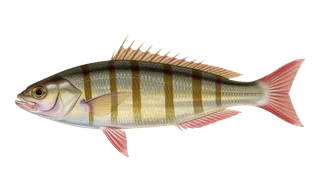
- Redtail Surfperch — Best late winter into spring spawn, February through May — fish sand shrimp or clam strips on a two-hook surf rig in the sandy breaker troughs.GearTwo-hook surf rigPyramid sinkersSurf spinning combo
How to ID
- Deep, compressed silvery oval body
- Reddish to pink-orange vertical bars on the sides
- Distinctly red/orange tail and ventral fins
- Spiny portion of the dorsal taller than the soft-rayed portion, deepest at the front
- Small mouth, no barbels; gives birth to live young
Typical: 8–14 in, 1–2 lb
Tell it apart: A reddish tail combined with the spiny front dorsal being clearly taller than the soft-rayed rear separates Redtail Surfperch from other surfperch.
- Dungeness Crab* — Best fall and winter, September through January, plus an early-year window — drop baited crab pots and rings on sandy bottom near bay mouths.GearFolding crab potsCrab ringsBait cages + buoys
How to ID
- Wide fan-shaped purple-brown carapace, cream/orange underside
- 10 spines (teeth) along the front edge on each side of the eyes; carapace widest at the last (10th) spine
- Serrated, sawtooth edges on the pincers
- White-tipped claws
- Carapace noticeably wider than long
Typical: 6–7 in across the shell, 1.5–2.5 lb
Tell it apart: Count the marginal carapace teeth: Dungeness is widest at the 10th (last) tooth behind the eye, whereas rock crabs are widest earlier and have black-tipped claws.
Nearshore
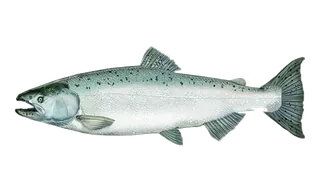 Chinook Salmon (ocean) — Best June through August — troll a whole or plug-cut herring behind a flasher off the downrigger, working the bait close to bottom.GearTrolling flashersHerring teaser rigsDownrigger trolling combo
How to ID
- Black gum line at the base of the teeth AND a dark mouth/tongue (all-dark mouth)
- Black spots on the back and on BOTH tail lobes
- Bright silver, blue-green back, large heavy body
- 15-19 anal fin rays (more than Coho)
- Numerous small black spots over the back
Typical: 24–34 in, 10–25 lb
Tell it apart: Open the mouth: a black gum line at the tooth base plus spots on BOTH tail lobes is Chinook, versus Coho's white/gray gum line and upper-lobe-only tail spots.
Easily confused with: Coho Salmon (ocean), Coho Salmon (ocean/bay)
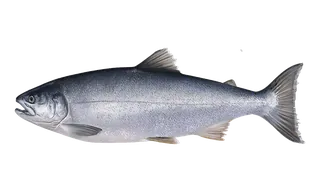 Coho Salmon (ocean) — Best July and August — troll fast with green hoochies or herring behind a flasher near the surface, where aggressive coho slash at the bait.GearSalmon hoochie squidsTrolling flashersHerring bait rigs
How to ID
- White/gray gum line at the base of the teeth (mouth/tongue still dark)
- Black spots on the back and on the UPPER tail lobe only
- Bright chrome silver, metallic blue back
- 12-15 anal fin rays (fewer than Chinook)
- Slimmer-bodied than a same-length Chinook
Typical: 22–28 in, 6–12 lb
Tell it apart: A white/gray gum line at the base of the teeth and spots confined to the upper tail lobe distinguish ocean Coho from the black-gummed, fully-spotted-tail Chinook.
Easily confused with: Chinook Salmon (ocean), Chinook Salmon (fall river)
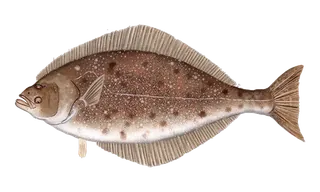 Pacific Halibut — A short, regulated season peaking May through July — drop large herring or scampi-skirted jigs and bounce them slowly along deep gravel.GearHeavy halibut jigsSpreader bar rigsCircle hooks
How to ID
- Both eyes on the right (dark, upper) side; flatfish
- Diamond/elongate body, eyes on the darker brown side
- Lateral line strongly arched over the pectoral fin
- Forked or crescent (lunate) tail
- Large mouth reaching to about the front of the lower eye
Typical: 30–45 in, 12–40 lb
Tell it apart: A high arch in the lateral line over the pectoral fin plus a forked/lunate tail separate Pacific Halibut from other right-eyed flatfish, which have straighter lateral lines and rounded tails.
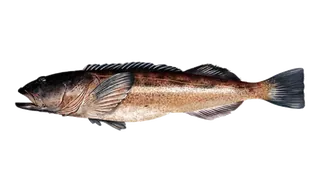 Lingcod — Best late winter and again in summer, February through March and June through August — drop heavy swimbaits and pipe jigs onto rock pinnacles.GearHeavy lingcod swimbaitsPipe jigsHeavy jigging combo
How to ID
- Long body, huge mouth with 18+ large sharp canine-like teeth
- Single long dorsal fin notched between the spiny and soft portions
- Mottled brown/gray/copper; flesh sometimes blue-green
- A single cirrus (small flap) above each eye
- Broad, slightly rounded tail
Typical: 24–36 in, 5–20 lb
Tell it apart: Lingcod has prominent large canine teeth and a single long notched dorsal fin, whereas the similarly-mottled Cabezon has a toothless crushing mouth and a broad fleshy cirrus on the snout.
Easily confused with: Cabezon
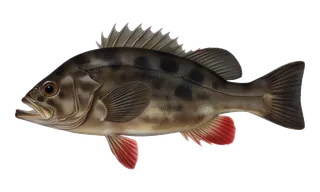
- Black Rockfish — Available year-round, best June through September — cast leadhead swimbaits and shrimp flies over shallow reef and kelp, working midwater schools.GearLeadhead swimbaitsShrimp fly rigsMedium jigging rod
How to ID
- Gray-black to bluish, with a lighter mottled belly
- Black spotting/blotches on the membrane of the spiny dorsal fin
- Rounded snout, jaws roughly even (slight or no underbite)
- Weak, smooth head spines
- Anal fin with a rounded/slanted rear margin; not bright red
Typical: 12–18 in, 1–3 lb
Tell it apart: Black blotches on the spiny dorsal-fin membrane plus a rounded/slanted anal-fin margin ID Black Rockfish, versus Widow's clear fin membranes and straighter anal-fin margin.
Easily confused with: Widow / Shortbelly Rock
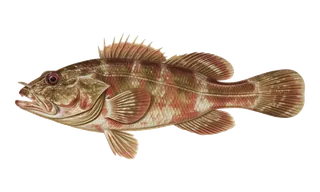
- Cabezon — Available year-round, best in the cold months around January and December — drop crab, shrimp, or squid baits tight to rocky structure.GearRock-fishing dropper rigOctopus bait hooksSoft-plastic swimbaits
How to ID
- Broad, flattened, scaleless body with a large head
- A prominent fleshy cirrus on the snout and one above each eye
- Wide toothless mouth (smooth crushing jaws)
- Mottled brown, green, or reddish (varies by sex/habitat)
- Single long dorsal with a deep notch; large fan-shaped pectorals
Typical: 14–22 in, 2–8 lb
Tell it apart: A toothless crushing mouth plus a prominent fleshy flap on the snout marks Cabezon, separating it from the large-toothed Lingcod it shares mottled reefs with.
Easily confused with: Lingcod
Offshore
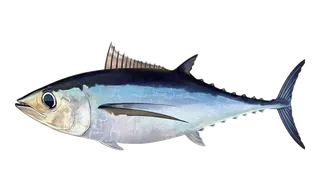
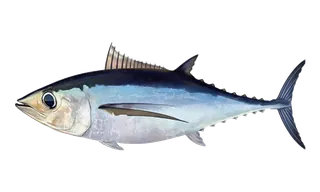 Albacore Tuna — A short warm-water run, August and September when the blue water moves in — troll feathers and cedar plugs, then bait-fish the stopped school.GearTuna feather jigsCedar plug luresLive-bait hooks
How to ID
- Extremely long pectoral fins reaching past the front of the anal fin
- Metallic dark blue back, white belly, no stripes or spots
- A row of small finlets before the tail on top and bottom
- Stout torpedo body, crescent tail, keel on the tail base
- White trailing edge on the tail fin
Typical: 21–30 in, 8–20 lb
Tell it apart: Pectoral fins reaching well past the start of the anal fin (longer than any other tuna's) positively ID Albacore.
- Yelloweye Rockfish — Available May through October but tightly regulated — when legal, drop bait rigs onto deep rock; otherwise release fish with a descending device.GearDeep-drop bait rigsDescending release deviceHeavy bottom combo
How to ID
- Bright orange-red to orange-yellow body
- Vivid yellow/orange eye (iris)
- Rough, raspy ridges over the eyes; strong head spines
- Juveniles show 2 light/white horizontal stripes that fade with age
- Blackish edges on some fins
Typical: 20–28 in, 5–12 lb
Tell it apart: The bright yellow eye plus rough raspy ridges above the eye separate the protected Yelloweye from the dark-eyed, smoother-browed Canary and Vermilion rockfish, which Yelloweye is easily mistaken for.
Easily confused with: Canary / Vermilion Rock
- Canary / Vermilion Rock — Best summer into fall, June through September — drop multi-hook shrimp fly rigs onto deeper offshore reef and shelf structure with heavy weight.GearShrimp fly rigsHeavy bank sinkersDeep-water bait rig
How to ID
- Bright orange to red body; Canary is gray-mottled, Vermilion is more uniformly red
- Canary: 3 orange bars radiating across the head; lateral line runs in a clear gray zone
- Vermilion: black-edged fins, gray mottling on the back, rough scales
- Canary: fins all orange, anal fin slanting rearward
- Both have normal dark eyes (NOT the bright yellow of Yelloweye)
Typical: 14–24 in, 2–6 lb
Tell it apart: Run a finger along the lateral line: Canary shows a clear light-gray stripe right at the lateral line with 3 orange head bars, while Vermilion is more uniformly red with black fin edges; neither has Yelloweye's yellow eye or raspy eye ridges.
Easily confused with: Yelloweye Rockfish
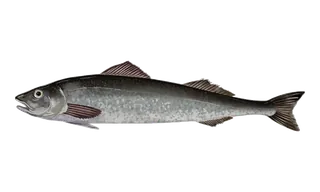 Sablefish (Black Cod) — Available year-round on the deep slope — deep-drop a squid-baited gangion rig to 1000-plus feet, usually on an electric reel for the depth.GearDeep-drop gangion rigHeavy deep-drop weightsElectric deep-drop combo
How to ID
- Slate-black to greenish-gray, with a lighter belly
- Slender elongate body, slightly forked tail
- TWO well-separated dorsal fins
- Small mouth, no large canine teeth
- Soft skin; faint stripes on the back when fresh
Typical: 24–32 in, 4–10 lb
Tell it apart: Two clearly separated dorsal fins on a slim black body distinguish Sablefish from rockfish (single dorsal) and the toothy Lingcod.
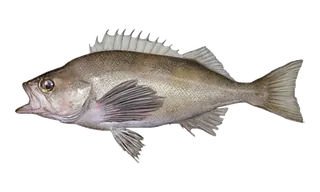 Widow / Shortbelly Rock — Best June through August when schools stack up — jig small shrimp flies and metal jigs through midwater over deeper offshore reef.GearShrimp fly rigsDiamond jigsMedium jigging combo
How to ID
- Brassy to dusky brown-gray, sometimes a light bluish sheen
- Clean/clear fin membranes (no black blotches on the spiny dorsal)
- Large eye; small mouth, jaws roughly even (no strong underbite)
- Weak head spines, smooth-feeling head
- Anal fin with a straight/vertical rear edge
Typical: 12–20 in, 1–4 lb (widow rockfish; shortbelly run much smaller)
Tell it apart: Clear, unspotted dorsal-fin membranes and a straight-edged anal fin separate Widow Rockfish from the very similar Black Rockfish, which has black blotches on the spiny dorsal.
Easily confused with: Black Rockfish
Fishing Regulations
Tides & Timing
Read the Tide
Tidal stage drives everything in Oregon and Washington — salmon stack and move on tide changes in the lower Columbia and coastal bays, halibut bite best during tidal current over sand-to-rock transitions, and surfperch key the incoming tide in the shore break.
Other towns in the Pacific Northwest
Astoria, OR · Brookings, OR · Coos Bay, OR · Ilwaco, WA · La Push, WA · Neah Bay, WA · Newport, OR · Sekiu, WA · Tillamook, OR · Westport, WA