 The Fishing Report
Sausalito, CA Fishing — Seasons & Conditions
Inside-the-Gate base for the San Francisco party fleet — striped bass and halibut on the bay flats spring through fall, salmon trolling off the Marin Headlands, and Potato Patch sturgeon in winter.
Part of the Northern California region.
What’s Biting at Sausalito, CA in October 2026
Biting right now — 8 species are worth targeting in October here, and the one marked Peak is at its best right now.
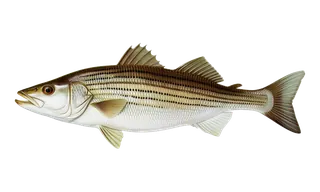 Striped BassPeak
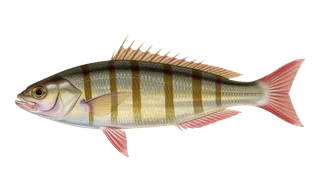 Redtail Surfperch
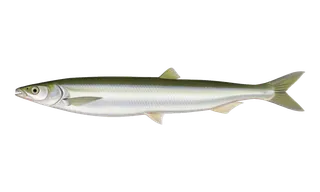 Jacksmelt / Perch
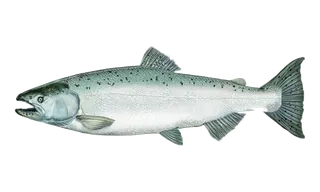 King Salmon
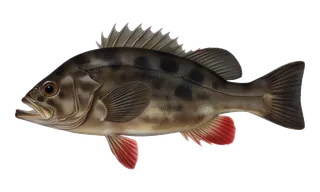 Nearshore Rockfish
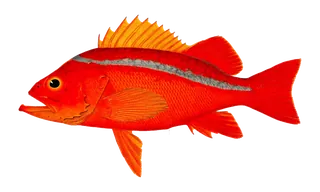 Canary / Widow Rockfish
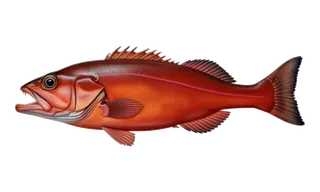 Shelf Rockfish
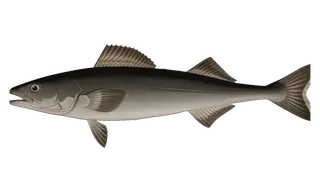 Sablefish (Black Cod)
Tap any species for how to identify it, when it runs and what to throw. This is when the fish are active here — check the regulations below before you keep anything.
Fishing Sausalito, CA: The Local Water
The Inlet & Bar
Bonita Channel, between Four Fathom Bank and the Marin shore, is the inside route past the San Francisco Bar, and Coast Pilot warns it too can become very dangerous when a large swell is running.
Local Waters
Richardson Bay is shoal apart from the southern part fronting the town, with a marked channel running northwest to the Sausalito waterfront and a no-wake limit through all of it. A rock covered 5 feet sits about 100 yards east-southeast of Yellow Bluff.
Reefs, Structure & Marks
Raccoon Strait, north of Angel Island, takes the flood swirling through and is the deep slot on this side of the bay; the tide rips off Alcatraz are a short run southeast, over shoals covered 33 to 41 feet.
Harbors, Launches & Access
Sausalito keeps some commercial fishing boats and a great many pleasure craft, with several boatbuilding and repair yards along the waterfront and the channel in marked by lights and daybeacons.
Sausalito, CA Season Calendar October — current month highlighted
Inshore — Bays, Delta & Surf
| Jan | Feb | Mar | Apr | May | Jun | Jul | Aug | Sep | Oct | Nov | Dec | |
|---|---|---|---|---|---|---|---|---|---|---|---|---|
| Striped Bass | ||||||||||||
| Sturgeon | ||||||||||||
| Leopard Shark | ||||||||||||
| Redtail Surfperch | ||||||||||||
| Jacksmelt / Perch | ||||||||||||
| Dungeness Crab* |
Nearshore — Reefs, Beaches & Bays (~1–20 mi)
| Jan | Feb | Mar | Apr | May | Jun | Jul | Aug | Sep | Oct | Nov | Dec | |
|---|---|---|---|---|---|---|---|---|---|---|---|---|
| King Salmon | ||||||||||||
| Pacific Halibut | ||||||||||||
| Lingcod | ||||||||||||
| Cabezon | ||||||||||||
| Nearshore Rockfish | ||||||||||||
| Albacore |
Offshore — Shelf & Slope (20+ mi)
| Jan | Feb | Mar | Apr | May | Jun | Jul | Aug | Sep | Oct | Nov | Dec | |
|---|---|---|---|---|---|---|---|---|---|---|---|---|
| Canary / Widow Rockfish | ||||||||||||
| Shelf Rockfish | ||||||||||||
| Sablefish (Black Cod) | ||||||||||||
| Pacific Whiting | ||||||||||||
| Yelloweye Rockfish |
What to Target & How
Gear links open Amazon searches. As an Amazon Associate, The Fishing Report earns from qualifying purchases — at no extra cost to you. Using these links helps keep the site ad-free.
Inshore
- Striped Bass — Best in the spring run, April and May, and again in fall — troll deep-diving plugs and cast swimbaits, switching to bait soaking in cold water.GearDiving trolling plugsBucktail swimbaitsSliding bait rig
How to ID
- Silvery body, white belly, brassy-olive back
- 7-8 dark horizontal stripes along the sides (often broken/offset, not perfectly continuous)
- Two clearly separate dorsal fins (spiny front, soft rear)
- Streamlined, slightly elongated body
- Forked tail; projecting lower jaw
Typical: 20–36 in, 4–20 lb
Tell it apart: The combination of several dark horizontal stripes plus two fully separate dorsal fins is the giveaway in NorCal surf and bays; don't expect every stripe to run unbroken, real fish often show broken or offset stripes.
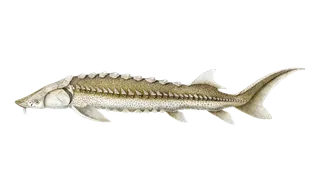 Sturgeon — A winter fishery, peaking December through February on the high muddy tides — anchor and soak ghost shrimp or roe on a heavy sliding bottom rig.GearSturgeon sliding rigBarbless circle hooksHeavy sturgeon rod
How to ID
- 5 rows of bony plates (scutes) running the length of the body
- Shark-like upturned (heterocercal) tail; no scales, leathery skin
- 4 barbels in a row ahead of a toothless, protrusible tube mouth underneath
- White sturgeon: barbels nearer the SNOUT TIP; ~38-48 lateral scutes; no scute behind the dorsal fin
- Green sturgeon: barbels nearer the MOUTH; ~23-30 lateral scutes; one large scute behind the dorsal fin
Tell it apart: Tell the two apart carefully: WHITE sturgeon barbels sit closer to the snout tip and there is NO scute behind the dorsal fin; GREEN sturgeon barbels sit closer to the mouth with a scute behind the dorsal fin and far fewer lateral scutes, and greens are a federally protected species.
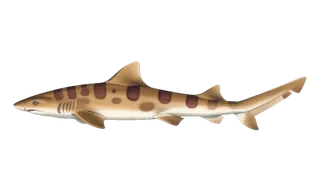 Leopard Shark — Best May through August in warm bays — soak fresh midshipman or squid on a sliding-sinker rig over mud and eelgrass flats near channels.GearSliding-sinker bait rigCircle hooksHeavy bay rod
How to ID
- Gray body with bold black saddle-shaped crossbars and dark spots down the back
- Slender shark shape with two dorsal fins (first set well forward of the pelvics)
- Short, rounded snout; small mouth
- Crescent (heterocercal) tail with a notched upper lobe
- Saddles break into rows of spots toward the tail; underside plain white
Typical: 36–54 in, 6–20 lb
Tell it apart: The bold black saddle crossbars over a gray back, breaking into rows of spots toward the tail, are diagnostic among NorCal nearshore sharks, no other local shark carries that saddle-and-spot pattern.
- Redtail Surfperch — Best late winter into spring spawn, February through April — work the sandy suds with sand-shrimp or clam strips on a two-hook surf rig.GearTwo-hook surf rigPyramid sinkersSurf spinning combo
How to ID
- Deep, strongly compressed silvery oval body
- Reddish to pink-tinged tail and fins (especially the tail and pelvics)
- 8-11 narrow olive/brassy vertical bars on the sides
- Small mouth; spiny and soft dorsal continuous as one fin
- Gives birth to live young (livebearer), unlike the egg-laying smelts
Typical: 8–14 in, 1–2 lb
Tell it apart: Among surf-zone fish, the rosy-red tail and fins on a deep, slab-sided body separate redtail surfperch cleanly from the slim, cigar-shaped, silver Jacksmelt.
Easily confused with: Jacksmelt / Perch
- Jacksmelt / Perch — Best April and May along piers and rocks — drift small baited multi-hook rigs under a float, tipping hooks with pile worm or shrimp.GearMulti-hook bait rigsCasting bobber floatsLight pier rod
How to ID
- Long, slender, nearly cylindrical silvery body (not deep-bodied)
- Bright silver lateral band running the length of the side
- Two small, widely separated dorsal fins
- Small mouth with tiny forked teeth on the jaws
- Greenish back, fine smooth scales; an egg-layer (not a livebearer like the surfperches)
Typical: 8–15 in, 0.4–2 lb
Tell it apart: Jacksmelt are pencil-thin and silvery with two separated dorsal fins; the deep-bodied, colorful surfperches never share that elongated cigar shape, and surfperch bear live young while smelt lay eggs.
Easily confused with: Redtail Surfperch
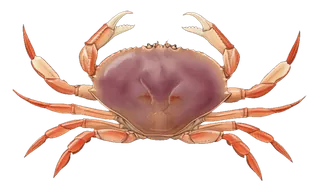 Dungeness Crab* — Best in the cold months, November through February, after the season opens — drop baited crab pots, snares, or rings on sand near rocky structure.GearFolding crab potsCrab snaresBait cages + buoys
How to ID
- Wide purplish-brown to orange carapace, roughly hand-width across
- Carapace edge bears a row of marginal teeth; widest at the LAST (rearmost, 10th) tooth
- Cream/white-tipped claws
- Sawtooth front edge with several spines between the eyes
- Four pairs of walking legs plus one pair of pincers
Typical: 6–7 in across the shell, 1.5–2.5 lb
Tell it apart: The widest point of the shell falls at the last (rearmost) marginal tooth, and the white-tipped claws separate Dungeness from the smaller, redder rock crabs whose shell is widest farther forward.
Nearshore
- King Salmon — Peaks May through July offshore — troll anchovies or hoochies behind a flasher off a downrigger, or mooch a whole herring on the drift.GearTrolling flashersSalmon hoochie squidsMooching leader rig
How to ID
- Black gum line at the base of the teeth ("blackmouth"), inside of mouth dark
- Black spots on the back AND on BOTH lobes of the tail
- Silver body with greenish-blue back, small scales, silver retained on the tail
- Robust, deep body with a broad, firm tail that holds its shape when gripped
- Anal fin shorter-based than a trout's; large sharp teeth
Typical: 24–36 in, 10–25 lb
Tell it apart: Spots across BOTH tail lobes plus a solid black gum line (the "blackmouth") confirm King/Chinook over Coho, which shares a dark mouth but has WHITE gums and spots only on the upper tail lobe. (An adipose fin alone proves nothing, every salmonid has one.)
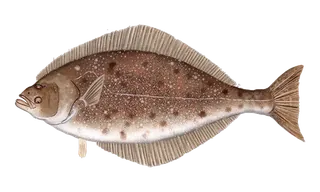 Pacific Halibut — A short summer season, April through July — drop large herring or scampi-tipped jigs to the bottom and bounce them in deep gravel.GearHeavy halibut jigsSpreader bar rigsCircle hooks
How to ID
- Both eyes on one (usually right/dark) side; flat, large-bodied flatfish
- Diamond/elongated-oval shape; large mouth, but upper jaw reaches only to the FRONT of the lower eye
- Dark mottled gray-brown on the eyed side, white underneath
- Strongly lunate (crescent/forked) tail
- Smooth, slippery skin with embedded scales
Typical: 30–45 in, 12–40 lb
Tell it apart: Diagnostic vs the look-alike California halibut: Pacific halibut has a lunate (forked) tail and an upper jaw that stops at the FRONT of the eye, whereas California halibut has a less-forked tail and a jaw reaching to the REAR of the eye. Note: BOTH species have an arched lateral line over the pectoral, so the arch alone does NOT separate them.
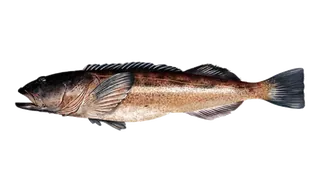 Lingcod — Best in winter and early summer, January and June through August — drop heavy swimbaits and pipe jigs onto rock pinnacles and reef edges.GearHeavy lingcod swimbaitsPipe jigsHeavy jigging combo
How to ID
- Long, mottled body; color ranges gray-brown to blue-green or copper
- Very large mouth with 18+ big sharp canine teeth
- Single long dorsal fin with a notch between the spiny and soft sections
- Cirrus (small flap) over each eye; head largely scaleless
- Flesh sometimes tinted blue-green
Typical: 24–36 in, 5–20 lb
Tell it apart: Big fanged canine teeth, an elongate body, and a long notched dorsal separate lingcod from the toothless-jawed, broad-headed cabezon.
Easily confused with: Cabezon
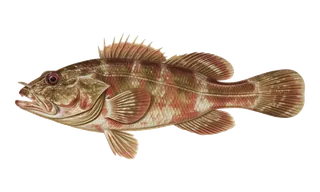 Cabezon — Best in the cold months, December through March — fish shrimp, squid, or crab baits tight to rocky structure on a short dropper rig.GearRock-fishing dropper rigOctopus bait hooksSoft-plastic swimbaits
How to ID
- Broad, flattened, scaleless head
- A single fleshy flap (cirrus) on the snout plus a branched cirrus over each eye
- About 11 stout dorsal spines; jaws lack the large canine teeth lingcod have
- Mottled red, brown, or green blotchy body
- Broad pectoral fins; body completely scaleless
Typical: 14–22 in, 2–8 lb
Tell it apart: The single fleshy flap on the snout, a fully scaleless body, and the absence of big canine teeth distinguish cabezon from the toothy lingcod and from the smaller sculpins.
Easily confused with: Lingcod
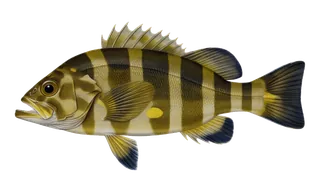 Nearshore Rockfish — Best May through September after the season opens — drop shrimp flies and bait rigs onto shallow reef, or work leadhead swimbaits over hard bottom.GearShrimp fly rigsLeadhead swimbaitsRockfish rod combo
How to ID
- Stocky body with a large head and bony cheek/gill-cover spines
- Single dorsal fin with strong sharp spines up front
- Often banded or blotchy (gopher, China, grass, black-and-yellow, kelp)
- Large eyes and mouth; stay relatively small
- Color keys to species: olive (grass), yellow blotches (gopher/black-and-yellow), blue-black with a yellow stripe (China)
Typical: 10–16 in, 1–3 lb
Tell it apart: These are the small, residential, shallow-reef rockfish (gopher, China, grass, black-and-yellow, kelp); note the blotch color and their small size versus the larger, deeper shelf and slope rockfish and the protected Yelloweye.
Easily confused with: Shelf Rockfish, Yelloweye Rockfish, Canary / Widow Rockfish
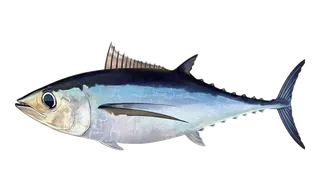 Albacore — A narrow late-summer run, August through September when warm water pushes in — troll feathers and cedar plugs, then bait-fish a stopped school.GearTuna feather jigsCedar plug luresLive-bait hooks
How to ID
- Extremely long, sabre-like pectoral fins reaching past the start of the anal fin
- Dark metallic blue back grading to silvery-white below
- Row of small finlets behind both the dorsal and anal fins
- Slender torpedo (tuna) body; deeply forked tail
- White trailing edge on the tail fin
Typical: 26–34 in, 15–30 lb
Tell it apart: The exceptionally long pectoral fins reaching well past the front of the anal fin, plus the white trailing edge on the tail, separate albacore from every other tuna.
Offshore
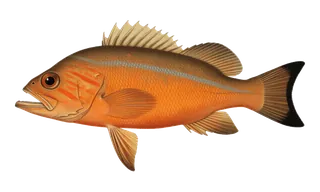 Canary / Widow Rockfish — Best summer into fall, July through September — drop multi-hook shrimp fly rigs onto deeper offshore reef and shelf structure with heavy weight.GearShrimp fly rigsHeavy bank sinkersDeep-water bait rig
How to ID
- Canary: bright orange-yellow mottling over gray, with 3 orange bars radiating across the head
- Canary: broad GRAY lateral-line stripe; anal-fin trailing edge SLANTED/diagonal (not vertical)
- Widow: smoky brown to dusky, often a faint yellow tinge; dark fin-tip edges
- Widow: smaller mouth, smoother and less spiny than canary
- Both deep-bodied with a single spiny dorsal
Typical: 14–22 in, 2–5 lb
Tell it apart: Canary shows a broad GRAY lateral-line stripe and a SLANTED (diagonal) anal-fin trailing edge, whereas the similarly red vermilion (a shelf rockfish) has a VERTICAL/rounded anal-fin edge and a rough scaly jaw; the protected Yelloweye is told apart by its bright yellow iris and rough raspy ridges over the eyes.
Easily confused with: Yelloweye Rockfish, Shelf Rockfish, Nearshore Rockfish
- Shelf Rockfish — Best June through September — drop weighted shrimp flies or shrimp-baited dropper rigs onto 200-400 foot shelf reef and rock piles.GearShrimp fly rigsHeavy cannonball sinkersHeavy bottom combo
How to ID
- Larger mid-depth reds: vermilion, bocaccio, chilipepper, yellowtail
- Bocaccio: very long jaw reaching past the eye; brownish-pink
- Vermilion: deep red with black mottling, black fin edges, rough scaly lower jaw
- Chilipepper: pinkish with a distinct pink lateral-line streak and a longer jaw
- All have one dorsal with strong front spines and a large head
Typical: 12–20 in, 1–5 lb
Tell it apart: These are the larger continental-shelf rockfish; key the very long protruding jaw to bocaccio, the pink lateral stripe to chilipepper, and rough red-with-black mottling plus a scaly jaw to vermilion (vermilion's vertical anal-fin edge and gray-less lateral line separate it from canary).
Easily confused with: Canary / Widow Rockfish, Nearshore Rockfish, Yelloweye Rockfish
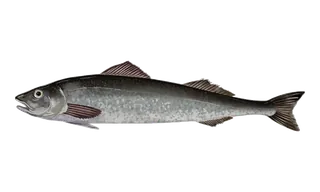 Sablefish (Black Cod) — Available year-round on the deep slope — deep-drop a squid-baited gangion rig to 1000-plus feet, often on an electric reel for the depth.GearDeep-drop gangion rigHeavy deep-drop weightsElectric deep-drop combo
How to ID
- Slate-gray to blackish overall, slightly paler belly
- Two well-separated dorsal fins (not one spiny dorsal like rockfish)
- Slender, slightly elongate, soft body with small scales
- Forked tail; fairly small mouth
- Faint vertical bands on juveniles
Typical: 24–32 in, 4–10 lb
Tell it apart: Two clearly separated dorsal fins on a uniformly dark, soft-bodied deep-water fish identify sablefish, distinct from any single-spiny-dorsal rockfish (and not a true cod despite the name).
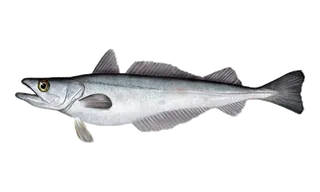 Pacific Whiting — Best June through August when schools move in — drop small shrimp flies or sabiki bait rigs into midwater and jig steadily through the school.GearSabiki bait rigsSmall shrimp fliesLight bottom rod
How to ID
- Slender silvery body, dusky/sooty back, black lining inside the mouth
- Two dorsal fins, the second long and deeply notched
- Large mouth with two rows of sharp teeth; lower jaw projects
- No chin barbel; pointed snout
- Soft, flabby flesh; easily shed scales
Typical: 14–24 in, 1–3 lb
Tell it apart: A slender silvery hake with a black-lined mouth, sharp teeth, NO chin barbel, and a long notched second dorsal is Pacific whiting (hake), the lack of a chin barbel rules out the true cods.
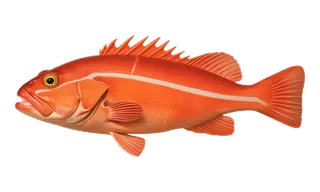 Yelloweye Rockfish — Best summer, June through September, but tightly regulated — when legal, drop bait rigs onto deep rock; otherwise expect to release them.GearDeep-drop bait rigsDescending release deviceHeavy bottom combo
How to ID
- Bright orange-red to yellow-orange body
- Brilliant YELLOW eye (iris)
- Rough, raspy bony ridges over and between the eyes
- Adults often show a pale lateral stripe; juveniles have two white stripes
- Large, deep body with a single strongly spined dorsal
Typical: 20–28 in, 5–12 lb
Tell it apart: The glowing yellow iris plus rough raspy bony ridges above the eyes confirm the protected Yelloweye (release required) over the similarly red canary (gray lateral stripe, smooth head) and vermilion (red iris, black-mottled body).
Easily confused with: Canary / Widow Rockfish, Shelf Rockfish
Fishing Regulations
Tides & Timing
Read the Tide
The bay and delta fisheries are tightly tide-driven — stripers and sturgeon move on tide transitions; on the ocean, incoming swells and current over the reef edge trigger rockfish and lingcod more than pure tide stage.
Other towns in the Northern California
Berkeley, CA · Bodega Bay, CA · Crescent City, CA · Eureka, CA · Fort Bragg, CA · Half Moon Bay, CA · Monterey, CA · Rio Vista, CA · Santa Cruz, CA