 The Fishing Report
Marina del Rey, CA Fishing — Seasons & Conditions
Sportfishing landing on the Santa Monica Bay shelf with summer halibut on the sand, calicos along the Malibu kelp, and a short hop to the Redondo Canyon for sculpin and rockfish.
Part of the Southern California region.
What’s Biting at Marina del Rey, CA in October 2026
Biting right now — 9 species are worth targeting in October here, and the one marked Peak is at its best right now.
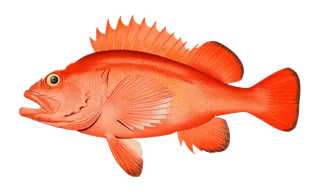 Rockfish / SculpinPeak
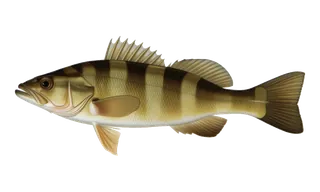 Calico Bass
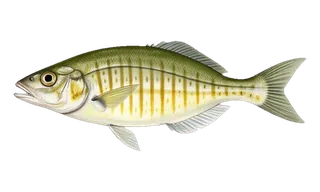 Barred Surfperch
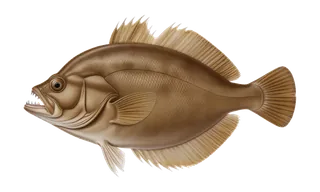 California Halibut
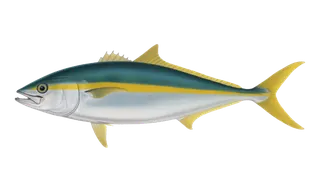 Yellowtail
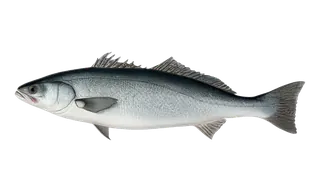 White Seabass
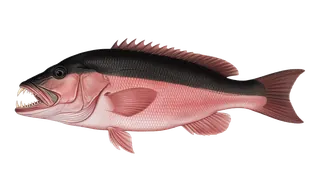 Sheephead
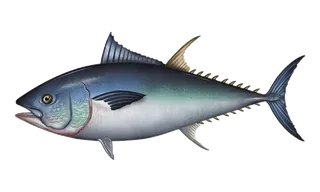 Bluefin Tuna
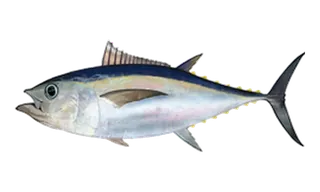 Bigeye Tuna
Tap any species for how to identify it, when it runs and what to throw. This is when the fish are active here — check the regulations below before you keep anything.
Fishing Marina del Rey, CA: The Local Water
The Inlet & Bar
A detached breakwater lies parallel to the shore just seaward of the jetties protecting the entrance channel, with two openings between them — the chart is the best guide to which to use. Lights mark both ends of the detached breakwater and the outer ends of the jetties.
Local Waters
Inside, the dredged entrance channel runs northeast about 0.7 mile and the harbor channel carries on north another 0.6 mile to the head of the marina.
Reefs, Structure & Marks
About 1.5 miles off Redondo Beach, in the deep water of Redondo Canyon, a submarine oil seepage often films the surface with petroleum, and gas bubbles have been reported nearby; a second seepage 3.5 to 4 miles northwest is more noticeable still.
Harbors, Launches & Access
Sport fishing barges usually anchor a mile or two offshore through the summer and want a wide berth. Between King Harbor and Marina del Rey, underwater installations seaward to 9-fathom depths can be a hazard to surface navigation under certain tidal conditions.
Marina del Rey, CA Season Calendar October — current month highlighted
Inshore — Bays, Kelp & Surf
| Jan | Feb | Mar | Apr | May | Jun | Jul | Aug | Sep | Oct | Nov | Dec | |
|---|---|---|---|---|---|---|---|---|---|---|---|---|
| Calico Bass | ||||||||||||
| Sand Bass | ||||||||||||
| Barred Surfperch | ||||||||||||
| California Halibut | ||||||||||||
| Bat Ray / Thornback | ||||||||||||
| Corbina |
Nearshore — Kelp Forests & Islands (~3–30 mi)
| Jan | Feb | Mar | Apr | May | Jun | Jul | Aug | Sep | Oct | Nov | Dec | |
|---|---|---|---|---|---|---|---|---|---|---|---|---|
| Yellowtail | ||||||||||||
| White Seabass | ||||||||||||
| Bonito | ||||||||||||
| Barracuda | ||||||||||||
| Sheephead | ||||||||||||
| Rockfish / Sculpin |
Offshore — Tuna Banks & Deep Water (30+ mi)
| Jan | Feb | Mar | Apr | May | Jun | Jul | Aug | Sep | Oct | Nov | Dec | |
|---|---|---|---|---|---|---|---|---|---|---|---|---|
| Bluefin Tuna | ||||||||||||
| Yellowfin Tuna | ||||||||||||
| Albacore | ||||||||||||
| Dorado (Mahi) | ||||||||||||
| Bigeye Tuna | ||||||||||||
| Swordfish |
What to Target & How
Gear links open Amazon searches. As an Amazon Associate, The Fishing Report earns from qualifying purchases — at no extra cost to you. Using these links helps keep the site ad-free.
Inshore
- Calico Bass — Best April through September over kelp and structure — fan-cast weedless swimbaits and leadhead jigs, throwing surface iron on warm summer mornings.GearWeedless swimbaitsLeadhead jig hooksInshore casting combo
How to ID
- Olive to brown body with cream/yellow blotchy mottling, often pale saddles on the back
- Greatly elongated third dorsal spine that is clearly the tallest of the spiny dorsal
- Deep, laterally compressed body; spiny dorsal deeply notched before the soft dorsal
- Tail squared to slightly forked
- No bold dark vertical bars on the sides
Typical: 12–18 in, 1–4 lb
Tell it apart: Calico (Kelp Bass) has a conspicuously LONG third dorsal spine that stands taller than the spines around it; Sand Bass has even dorsal spines (none elongated) plus dark vertical bars. Note both carry size/bag limits, so check this spine before keeping.
Easily confused with: Sand Bass
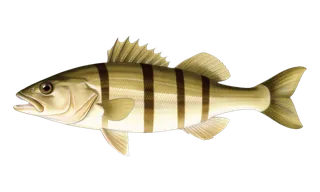 Sand Bass — Peaks May through July on the spawning flats — drag plastics and cut squid on the bottom, fishing dropper-loop rigs in deeper water.GearCurl-tail grubsDropper-loop rigsLeadhead jigheads
How to ID
- Gray-brown with dark blotches and broad dark vertical bars on the sides
- Dorsal spines roughly even in length — NO single elongated third spine
- Dark vermiculations (worm-lines) on the snout and between the eyes
- Rounded to squared tail
- Stout, moderately deep body
Typical: 12–18 in, 1–4 lb
Tell it apart: Barred Sand Bass has even dorsal spines and dark vertical bars; if the third dorsal spine is greatly elongated it is a Calico Bass, not a Sand Bass.
Easily confused with: Calico Bass
- Barred Surfperch — Strongest late winter into spring spawn — work the suds with sand-crab-imitation grubs and bait rigs on high-low leaders near troughs.GearSand-crab grubsHigh-low surf rigsSurf spinning rod
How to ID
- Silvery, deep oval compressed body with olive-green back
- About 8-10 dusky vertical bars on the sides (may be faint)
- Brassy/yellow flecks scattered between the bars
- Single continuous dorsal fin, spiny front grading into soft rear
- Small terminal mouth, no chin barbel
Typical: 9–14 in, 0.5–1.5 lb
Tell it apart: The deep, compressed silvery body with vertical bars and a small barbel-less mouth separates it from the elongated, single-chin-barbel Corbina.
Easily confused with: Corbina
- California Halibut — Best April through August — slow-drag bucktail jigs and swimbaits along sandy edges, or drift live-style swimbaits over channel drop-offs.GearBucktail jigsSwimbaits + jigheadsLive-bait drift rig
How to ID
- Flatfish with both eyes on the same side of the body
- Very large mouth reaching past the eye, armed with sharp teeth
- High arch in the lateral line above the pectoral fin
- Eyed (pigmented) side sandy-gray to mottled brown; blind side white
- Roughly symmetrical diamond outline; can be eyes-left or eyes-right
Typical: 22–34 in, 5–15 lb
Tell it apart: The high arch in the lateral line over the pectoral plus the huge toothy mouth reaching past the eye positively ID a California Halibut among local flatfish.
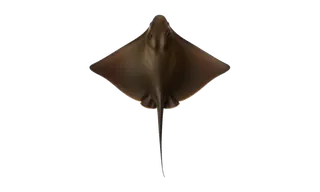 Bat Ray / Thornback — Best May through August in warm bays — soak squid or mackerel chunks on a heavy sliding-sinker bottom rig and wait out the long fight.GearHeavy sliding-sinker rigOctopus circle hooksHeavy bay rod
How to ID
- Bat Ray: thick raised (elevated) head distinct from the disc, broad diamond pectoral wings
- Bat Ray: smooth dark-brown to near-black disc, long whip-like tail with one or more venomous spines near the base
- Thornback: rows of large hook-like thorns down the midline of the back and tail
- Thornback: flatter, more rounded/heart-shaped disc, slender tail, NO venomous stinging spine
- Both: eyes and spiracles on top, mouth and gill slits underneath
Typical: Bat ray 2–3 ft across, 10–40 lb; thornback 15–24 in
Tell it apart: A row of big curved thorns down the back means Thornback (no sting); a smooth dark disc with a raised head and a venomous spine at the tail base means Bat Ray — handle a Bat Ray tail with care.
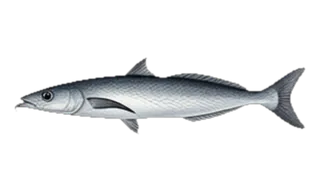 Corbina — A summer suds fishery, June through August — sight-cast mole-crab baits or small soft plastics to fish feeding in the inches-deep wash.GearMole-crab Carolina rigSmall circle hooksLight surf rod
How to ID
- Elongated, slightly rounded silvery-gray body, darker on the back
- Single short fleshy barbel under the tip of the lower jaw
- Faint wavy/diagonal markings, no strong vertical bars
- Underslung (subterminal) mouth for bottom feeding
- Long low first dorsal and small head
Typical: 14–22 in, 1–4 lb
Tell it apart: The single chin barbel under the lower jaw plus the elongated body separate California Corbina from the deeper-bodied, barbel-less Barred Surfperch.
Easily confused with: Barred Surfperch
Nearshore
- Yellowtail — Peaks April through September — yo-yo iron deep over hard structure, throw surface iron on boils, or fly-line a live bait when they are up.GearYo-yo iron jigsSurface iron jigsFluorocarbon leader
How to ID
- Iron-blue to green back, silver sides, solid yellow tail
- Brassy-yellow horizontal stripe running along the side from eye to tail
- Streamlined torpedo body with a deeply forked yellow tail
- NO separate finlets between the dorsal/anal fins and the tail
- Pointed snout; small, terminal mouth
Typical: 20–32 in, 4–15 lb
Tell it apart: Yellowtail (an amberjack, not a tuna) has a single solid yellow forked tail and a yellow side-stripe but NO finlets, unlike the tuna-like Bonito which has a row of small finlets.
Easily confused with: Bonito
- White Seabass — Best spring, April and May, on squid spawns — fly-line a bait or slow-yo a heavy iron near kelp at grey light and dusk.GearHeavy yo-yo ironLive-bait hooksGlow squid jigs
How to ID
- Elongated silvery body, bluish to dark gray back
- Raised fleshy ridge running lengthwise down the belly midline
- Several dark vertical bars on juveniles that fade with age
- Dark blotch on the inner base of the pectoral fin
- Large mouth, no chin barbel
Typical: 30–48 in, 10–40 lb
Tell it apart: A raised fleshy ridge along the belly midline plus the dark spot at the pectoral base positively ID a White Seabass (the largest local croaker, not a true bass).
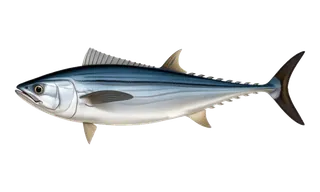 Bonito — A warm-water visitor peaking May through August — burn small chrome jigs and feathers fast, or fly-line anchovies behind a chum line.GearChrome casting jigsFeather jig fliesLight wire leader
How to ID
- Steel-blue back marked with dark oblique stripes that slant up onto the BACK
- Silvery sides and belly without stripes
- Row of small separate finlets behind both the dorsal and anal fins
- Slender torpedo body, deeply forked tail with keels at the base
- Mouth with small but distinct conical teeth
Typical: 16–26 in, 2–8 lb
Tell it apart: Bonito's slanting dark stripes run along the BACK (not the belly) and it has finlets, separating it from the stripeless, finlet-less Yellowtail.
Easily confused with: Yellowtail
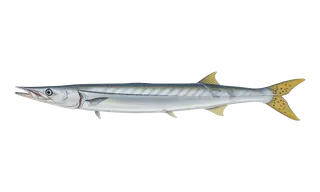 Barracuda — Best May through August in warm water — cast and rip chrome spoons or tube jigs fast across the surface, adding a short wire bite tippet.GearChrome spoonsTube jig luresWire bite leader
How to ID
- Long, slender, pencil-shaped silvery body
- Large jaw set with prominent canine, fang-like teeth
- Lower jaw juts forward (underbite); pointed head
- Two small dorsal fins set widely apart
- Yellowish forked tail; faint dark spots/lines along the back
Typical: 24–36 in, 3–6 lb
Tell it apart: The elongated pencil body with a fanged jutting lower jaw and two far-spaced dorsal fins is unmistakable for a California (Pacific) Barracuda.
Adapted from Darren Baker · CC BY 3.0 · via Wikimedia Commons
- Sheephead — Available year-round, best April through September — drop shrimp or whole crab on a dropper-loop rig tight to rocky reef and kelp roots.GearDropper-loop rigsLive-bait hooksRock-fishing rod
How to ID
- Males: black head and tail, broad red/pink midbody, white lower jaw (chin)
- Females and juveniles: uniform dull pink to rosy-red
- Large protruding dog-like canine teeth at the front of the jaws
- Thick fleshy lips and a blunt forehead (fatty bump on big males)
- Deep, robust body with a long-based dorsal fin
Typical: 14–22 in, 3–8 lb
Tell it apart: Protruding canine teeth plus the white chin and, in males, the black-red-black color blocks make California Sheephead unmistakable.
- Rockfish / Sculpin — Best in the cool months, October through March — drop shrimp flies or squid-baited rigs straight down onto hard bottom and reef edges.GearShrimp fly rigsBait dropper rigsConventional bottom combo
How to ID
- Rockfish: stocky body, large head and eyes, strong spines on the dorsal and gill cover
- Rockfish: color varies by species — red, orange, brown, olive, or banded
- Sculpin (California Scorpionfish): mottled red-brown with fleshy skin flaps (cirri) on the head
- Sculpin: VENOMOUS spines on the dorsal, anal, and pelvic fins
- Both: large fan-like pectoral fins and a bottom-hugging shape
Typical: 10–18 in, 1–4 lb across the group
Tell it apart: Loose skin flaps on the head plus a mottled red camouflage pattern mean a venomous Sculpin (California Scorpionfish) — handle the spines with extreme care even when dead.
Offshore
- Bluefin Tuna — Best May through September — match the bite with sinker-rig sardines, flat-fall jigs worked deep, or surface poppers on schools busting bait.GearFlat-fall jigsSinker-rig hooksHeavy stand-up combo
How to ID
- Football-shaped deep body, metallic dark-blue to black back
- Very short pectoral fins (do not reach back to the second dorsal)
- Finlets yellow with dark/gray edging
- First dorsal yellowish-blue; second dorsal short and dark
- Lateral keels plus small keels at the tail base
Typical: 40–73 in, 50–300 lb
Tell it apart: Bluefin's pectoral fins are distinctly SHORT (ending well before the second dorsal), versus the very long pectorals of Albacore and the longer, moderate pectorals of Yellowfin and Bigeye.
Easily confused with: Yellowfin Tuna, Albacore, Bigeye Tuna
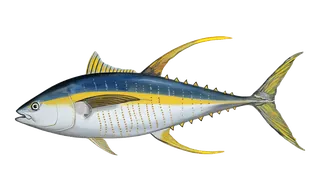 Yellowfin Tuna — A late-summer offshore target, July through August — fly-line sardines under kelp paddies, troll cedar plugs, or chunk-fish a stopped school.GearCedar plug trollingRinged live-bait hooksFluorocarbon leader
How to ID
- Dark metallic-blue back, golden-yellow lateral band, silver belly
- Bright yellow finlets narrowly edged with black
- Very long, sickle-shaped second dorsal and anal fins on adults
- Moderately long pectoral fin (reaching about the start of the second dorsal)
- Lower flanks/belly marked with broken pale vertical lines and spots
Typical: 36–50 in, 30–80 lb
Tell it apart: Adult Yellowfin grow very elongated bright-yellow second dorsal and anal fin sickles, which similarly sized Bluefin and Bigeye never develop.
Easily confused with: Bluefin Tuna, Bigeye Tuna, Albacore
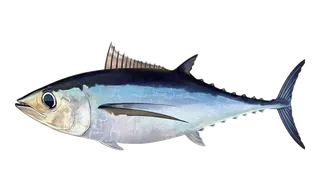 Albacore — A narrow late-summer run, July and August — troll feathers and clones at trolling speed, then stop and fly-line bait when the jigs go off.GearTuna feather jigsTrolling clone luresLive-bait hooks
How to ID
- Steel-blue back grading to dusky silver sides
- Extremely long pectoral fins reaching past the anal fin origin
- White trailing edge on the tail (caudal) fin
- Rounded football body with a relatively small second dorsal
- Finlets dusky/dark, not bright yellow
Typical: 26–34 in, 15–30 lb
Tell it apart: Albacore's pectoral fins are exceptionally long (reaching past the second dorsal and anal fins) and the tail has a clean white trailing margin — both unique among the local tunas.
Easily confused with: Bluefin Tuna, Yellowfin Tuna, Bigeye Tuna
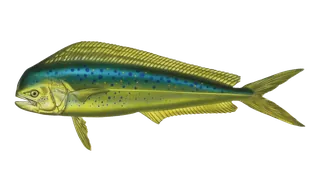 Dorado (Mahi) — A warm-water summer visitor, June through August — pitch fly-lined baits and small swimbaits to fish holding under kelp paddies and floating debris.GearCasting swimbaitsLive-bait hooksFluorocarbon leader
How to ID
- Brilliant green-gold-blue body that flashes vividly when fresh
- Scattered blue and gold spots/speckling on the sides
- Single long dorsal fin running from just behind the head nearly to the tail
- Males (bulls): tall blunt vertical forehead; females: rounded forehead
- Deeply forked tail; slender, laterally compressed body
Typical: 24–40 in, 5–20 lb
Tell it apart: A single long dorsal fin running from the head almost to the tail plus electric green-gold-blue color makes Dorado unmistakable; bull males also show a steep blunt forehead.
- Bigeye Tuna — A rare late-summer prize, August and September — troll deep diving plugs and skirted lures down the canyons, often working low light early and late.GearDeep trolling luresHeavy trolling leaderHeavy trolling combo
How to ID
- Robust, deep body with a conspicuously large eye
- Dark metallic-blue back, whitish belly
- Yellow finlets edged with black
- Long pectoral fin (longer than adult Yellowfin's, but shorter than Albacore's)
- Second dorsal and anal fins stay short — never form long sickles
Typical: 40–60 in, 60–150 lb
Tell it apart: Bigeye has a notably larger eye and keeps short (non-sickle) second dorsal/anal fins, separating it from same-size Yellowfin, which grow long yellow sickles.
Easily confused with: Yellowfin Tuna, Bluefin Tuna, Albacore
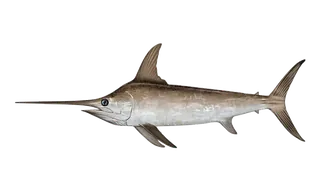 Swordfish — A deep-drop fishery best June through August — drop a weighted squid bait to 1200-1800 feet by day, or work surface baits on warm summer nights.GearDeep-drop swordfish rigStrobe + glow lightsElectric deep-drop combo
How to ID
- Long, flat, broad sword-like bill (flattened, not round in cross-section)
- Very large eye; NO pelvic fins
- Single tall, rigid first dorsal fin that does not fold into a groove
- Smooth scaleless body in adults; adults have no teeth
- Dark purplish-bronze back fading to dull silver-white below
Typical: 50–200 lb
Tell it apart: The broad flattened bill plus the complete absence of pelvic fins separate Swordfish from any marlin (marlins have a rounded spear-like bill and retain pelvic fins).
Fishing Regulations
Tides & Timing
Read the Tide
Tides matter most for halibut flats and surfperch; incoming water pushes bait and ambush fish activate — for kelp-bed species, current over the reef edge is the key trigger.
Other towns in the Southern California
Dana Point, CA · Long Beach, CA · Mission Bay, CA · Newport Beach, CA · Oceanside, CA · Oxnard, CA · San Diego, CA · San Pedro, CA · Santa Barbara, CA · Ventura, CA