 The Fishing Report
Freeport, TX Fishing — Seasons & Conditions
Jettied deepwater entrance 40 miles down the coast from Galveston — the shortest run to blue water on the upper Texas coast, with trout and reds in the Brazos backwaters behind it.
Part of the Gulf of Mexico region.
What’s Biting at Freeport, TX in October 2026
Biting right now — 14 species are worth targeting in October here, and the 6 marked Peak are at their best right now.
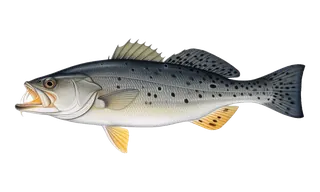 Speckled TroutPeak
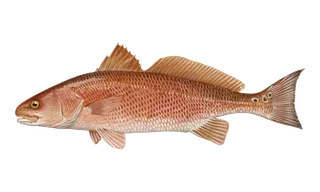 RedfishPeak
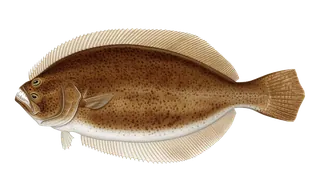 FlounderPeak
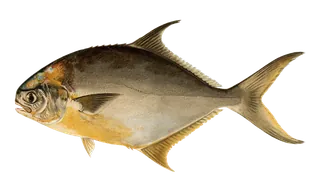 PompanoPeak
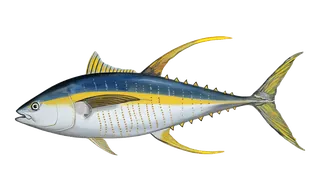 Yellowfin TunaPeak
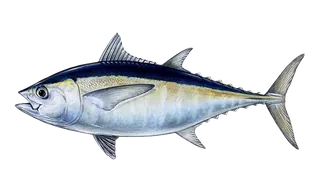 Blackfin TunaPeak
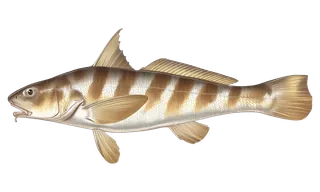 Whiting (Kingfish)
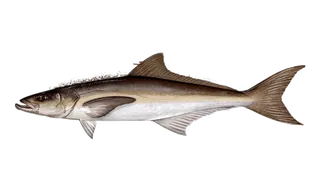 Cobia
Cobia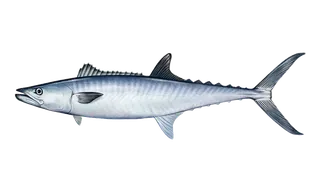 King Mackerel
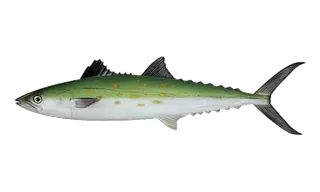 Spanish Mackerel
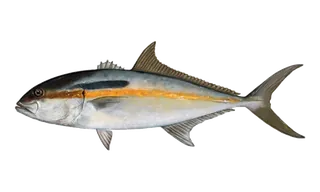 Amberjack
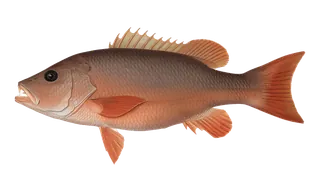 Mangrove Snapper
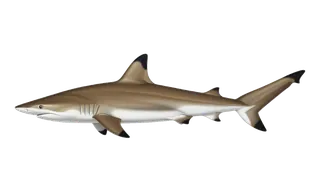 Sharks
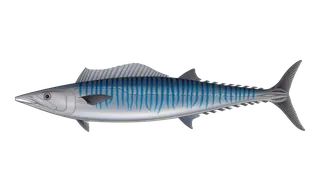 Wahoo
Wahoo
Tap any species for how to identify it, when it runs and what to throw. This is when the fish are active here — check the regulations below before you keep anything.
Fishing Freeport, TX: The Local Water
The Inlet & Bar
Freeport Harbor lies 40 miles southwest of the Galveston entrance and is the harbor for the town of Freeport, the area known locally as Brazosport. The ship channel has been improved with jetties on either side of the entrance, and the Intracoastal Waterway crosses the Old Brazos River about a mile above the jettied entrance.
Local Waters
The current off the entrance generally sets to the west with a countercurrent near the beach, largely governed by the wind, and the bar is rough with an east breeze. The coast here has fairly uniform depths and few outlying dangers, so a vessel drawing 40 feet can approach within 6 miles of the shore except near the passes and river mouths.
Reefs, Structure & Marks
About 6 miles southwest of the harbor entrance the Brazos River has thrown a shoal that reaches about three-quarters of a mile into the Gulf off its mouth. That area is foul and is given a wide berth — several vessels have stranded there and the depths are reported considerably less than charted, over a soft mud bottom that indicates silting from the river. Oil drilling structures may be erected in the Gulf near the approach.
Harbors, Launches & Access
Federal project depths run 48 feet from deep water in the Gulf to the jetty channel, then 46 feet to the upper turning basin and through the Brazosport turning basin, and 36 feet in the Brazos Harbor approach channel and turning basin. A system of charted shipping safety fairways, kept free of oil-well structures, runs along this coast between San Luis Pass and Brazos Santiago Pass; the fairways are unmarked.
Freeport, TX Season Calendar October — current month highlighted
Inshore — Bays, Marshes, Grass Flats
| Jan | Feb | Mar | Apr | May | Jun | Jul | Aug | Sep | Oct | Nov | Dec | |
|---|---|---|---|---|---|---|---|---|---|---|---|---|
| Speckled Trout | ||||||||||||
| Redfish | ||||||||||||
| Flounder | ||||||||||||
| Sheepshead | ||||||||||||
| Black Drum | ||||||||||||
| Whiting (Kingfish) | ||||||||||||
| Pompano | ||||||||||||
| Tripletail |
Nearshore — Passes, Rigs, ~5–30 mi
| Jan | Feb | Mar | Apr | May | Jun | Jul | Aug | Sep | Oct | Nov | Dec | |
|---|---|---|---|---|---|---|---|---|---|---|---|---|
| Cobia | ||||||||||||
| King Mackerel | ||||||||||||
| Spanish Mackerel | ||||||||||||
| Amberjack | ||||||||||||
| Mangrove Snapper | ||||||||||||
| Sharks |
Offshore — Rigs, Ledges, Blue Water
| Jan | Feb | Mar | Apr | May | Jun | Jul | Aug | Sep | Oct | Nov | Dec | |
|---|---|---|---|---|---|---|---|---|---|---|---|---|
| Yellowfin Tuna | ||||||||||||
| Blackfin Tuna | ||||||||||||
| Wahoo | ||||||||||||
| Mahi (Dolphin) | ||||||||||||
| Red Snapper* | ||||||||||||
| Greater Amberjack |
What to Target & How
Gear links open Amazon searches. As an Amazon Associate, The Fishing Report earns from qualifying purchases — at no extra cost to you. Using these links helps keep the site ad-free.
Inshore
- Speckled Trout — Peaks in spring and fall; throw topwater and soft plastics over grass flats, then fish deeper holes and slow jigs in cold winter.GearSoft-plastic shrimp1/4 oz jigheadsPopping cork rigs
How to ID
- Silvery body, dark gray/blue back, distinct black spots scattered over upper body, tail, and second dorsal fin
- One or two large canine fangs at the tip of the upper jaw
- Black spots extend onto the soft dorsal and caudal (tail) fins, but NOT onto the spiny first dorsal
- Elongate, somewhat compressed body; no chin barbels
- Yellow-orange inside the mouth
Typical: 14–22 in, 1–3 lb
Tell it apart: The pair of prominent canine fangs at the front of the upper jaw plus loose black spots that run onto the soft dorsal and tail (never on the spiny first dorsal) confirm a spotted seatrout; the spots are discrete black dots, not the rosette pattern of a redfish.
- Redfish — Best in the fall as bull reds school nearshore; sight-cast gold spoons and paddletails on the flats, slowing presentations in winter.GearGold weedless spoonsPaddletails + jigheadsFish-finder rigs
How to ID
- Coppery-bronze to reddish back fading to a white belly
- One (sometimes several) black ocellated eyespot at the base of the tail
- Blunt, downturned (inferior/subterminal) mouth
- No chin barbels and no canine teeth
- Copper-colored tail with little or no fork (nearly square)
Typical: 18–30 in, 3–10 lb; bulls run well over 40 in
Tell it apart: The black eyespot(s) at the tail base plus a coppery body and barbel-free chin separate redfish from black drum, which is gray, deep-bodied, has chin barbels, and bears vertical bars (in juveniles) but no tail spot.
Easily confused with: Black Drum
- Flounder — Best in the fall run as fish stage near passes leaving the bays; drag soft plastics or finger mullet slowly along sandy bottom.GearCurl-tail soft plastics1/4 oz jigheadsCarolina rigs
How to ID
- Flat, oval, laterally compressed body that lies and swims on one side
- Both eyes on the left side (Gulf/Southern flounder are left-eyed); that eyed side is the pigmented upper surface
- Mottled brown upper side (Gulf flounder shows 3 dark ocellated spots in a triangle; Southern flounder lacks them); blind underside white
- Large oblique mouth with sharp canine teeth
- Long continuous dorsal and anal fins fringing nearly the whole body
Typical: 12–20 in, 1–3 lb
Tell it apart: A fish that lies flat on its side with both eyes on the upper (left) side is a flounder; no other Gulf food fish is laterally flattened with both eyes on one side.
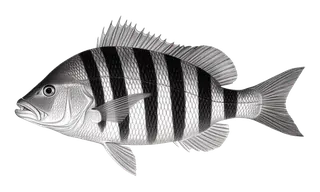 Sheepshead — Best in the cold winter and early spring as fish gather on pilings and reefs; drop fiddler crabs or shrimp on a small sharp hook.Gear1/0 sheepshead hooksKnocker rigsSensitive inshore rod
How to ID
- Silver-gray body with 5-7 bold black vertical bars (bars stay sharp into adulthood)
- Protruding, human-like incisor teeth at the front of the mouth
- Heavy rounded molars set behind the incisors for crushing shellfish
- Sharp, stout spines on the dorsal and anal fins
- Steep forehead, small terminal mouth, no chin barbels
Typical: 14–18 in, 2–5 lb
Tell it apart: Protruding human-like front teeth plus persistent bold black bars and NO chin barbels confirm sheepshead; juvenile black drum also has vertical bars but has chin barbels, a rubbery toothless mouth, and loses its bars with age.
Easily confused with: Black Drum
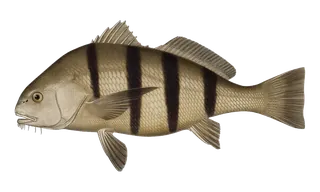 Black Drum — Best late winter through spring as big drum school to spawn near passes; fish fresh crab or shrimp on a bottom rig.Gear6/0 circle hooksFish-finder rigsMedium-heavy surf rod
How to ID
- Deep, high-arched gray to silvery (often coppery-black) body; juveniles show 4-5 dark vertical bars
- Several short barbels (whiskers) on the underside of the chin
- Blunt, downturned mouth; no canine teeth and no incisors
- No black spot at the base of the tail
- Powerful pavement-like pharyngeal (throat) teeth for crushing shellfish
Typical: 14–30 in, 2–15 lb
Tell it apart: Chin barbels are the giveaway — neither sheepshead nor redfish has them; black drum's bars fade with age while the barbels remain, and unlike redfish it has no eyespot on the tail.
Easily confused with: Sheepshead, Redfish
- Whiting (Kingfish) — On the Gulf beaches, a year-round surf fish that peaks in the cool months — small chunks of fresh dead shrimp on a #4–#1 hook, fished on a Carolina or two-hook bottom rig in the first gut.GearTwo-hook surf bottom rigsCarolina rig kitsPyramid sinkers
How to ID
- Long, round-bodied silver fish with a flat belly and a small underslung mouth
- ONE short stiff barbel under the tip of the lower jaw
- Grayish-brown to bronze back fading to silvery sides and a white belly
- Southern kingfish: 7–8 soft-edged dark diagonal blotches along the side, parallel — never meeting in a V
- Gulf kingfish: plain silver with no bars and a blackish tip on the tail
- Northern kingfish: bold oblique bars, two of them forming a V behind the head, and a long trailing spine on the first dorsal fin
Typical: 10–14 in, 0.5–1.5 lb
Tell it apart: One short barbel under the tip of the lower jaw on a long, round-bodied silver fish is a whiting — a young black drum carries several barbels under a much deeper, high-backed body.
Easily confused with: Black Drum
- Pompano — Peaks in spring and again early fall; fish sand fleas or Fishbites on a pompano rig in the surf and around passes.GearPompano rigsBanana jigsSurf casting combo
How to ID
- Deep, compressed, silvery body with a yellow-tinged belly and fins
- Small mouth, blunt rounded snout, no prominent teeth
- Deeply forked tail
- Short-based, similarly-shaped soft dorsal and anal fins (no elongated filaments)
- No dark spot on the body or pectoral fin (vs the dark-shouldered permit/lookdown)
Typical: 12–17 in, 1–3 lb
Tell it apart: A small, deep, silvery fish with a deeply forked tail, yellow belly, blunt face, and no body spots or trailing fin filaments is a Florida pompano; a permit grows much larger, deeper, and shows a dark patch on the side/pectoral.
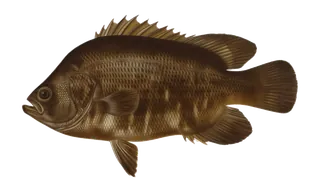 Tripletail — A summer fishery as fish drift under crab-trap buoys and floating debris; sight-cast a live-bait imitation or jig past them.GearSoft-plastic shrimp2/0 live-bait hooks30 lb fluorocarbon leader
How to ID
- Mottled brown-to-yellow, blotchy body that mimics floating debris
- Rounded soft dorsal and anal fins set far back near the tail, giving a three-lobed (three-tailed) silhouette
- Large head with a sloped, concave forehead and a fairly large mouth
- Dark bar/blotch on the gill cover and through the eye
- Rounded (not forked) caudal fin
Typical: 18–26 in, 5–15 lb
Tell it apart: Rounded soft dorsal and anal fins reaching back beside the tail to mimic three tails are diagnostic, especially when the fish is seen drifting on its side near buoys, weed lines, or other structure.
Nearshore
- Cobia — Spring is prime as fish migrate the beachfront; sight-cast heavy bucktail jigs or eels to cruising fish near buoys and rays.GearHeavy bucktail jigsSoft-plastic eelsMedium-heavy casting rod
How to ID
- Long, dark brown, torpedo-shaped body with a white belly
- Broad, flattened head with a projecting lower jaw
- Dark brown lateral stripe bordered above and below by paler bands (vivid in juveniles)
- Row of 7-9 short, stout, isolated free spines just ahead of the soft dorsal fin
- Broad pectoral fins; overall shark-like or remora-like profile
Typical: 30–45 in, 15–40 lb
Tell it apart: The row of short, isolated spines in front of the soft dorsal plus a normal forked (homocercal) bony-fish tail and a gill cover separate cobia from a shark (which has gill slits and an uneven heterocercal tail) and from the much smaller, sucker-disk-headed remora.
Easily confused with: Sharks
- King Mackerel — Peaks through summer as schools work the nearshore reefs and rigs; slow-troll live baits or ribbonfish on wire stinger rigs.GearWire stinger rigsDrone spoonsSingle-strand wire leader
How to ID
- Elongate, unspotted silvery body (faint yellow spots only on small juveniles, fading with age)
- Lateral line drops abruptly in a steep dip below the second dorsal fin
- First (spiny) dorsal fin uniformly gray, NOT black up front
- Sharp, flattened triangular cutting teeth
- Deeply forked tail with finlets behind the dorsal and anal fins
Typical: 24–40 in, 8–20 lb
Tell it apart: Adults lack yellow spots and the lateral line takes a sharp steep dip under the second dorsal, separating king from the smaller, persistently-spotted Spanish mackerel, which has a gently sloping lateral line and a black blotch on its first dorsal fin.
Easily confused with: Spanish Mackerel
- Spanish Mackerel — Best spring through summer when fish blitz bait near beaches and passes; cast small flashy spoons or troll Clarkspoons fast.GearClarkspoon trolling spoonsCasting jigsLight wire leader
How to ID
- Silver body with three or so rows of round-to-oval golden-yellow spots that persist on adults
- Prominent black blotch on the front of the spiny (first) dorsal fin
- Lateral line slopes gradually toward the tail with no abrupt dip
- Sharp, flattened cutting teeth
- Deeply forked tail with finlets
Typical: 14–22 in, 1–3 lb
Tell it apart: Persistent golden-yellow spots, a black blotch on the front of the first dorsal fin, and a smoothly sloping lateral line mark Spanish mackerel versus the larger, adult-unspotted king, whose lateral line dips sharply under the second dorsal and whose first dorsal is plain gray.
Easily confused with: King Mackerel
- Amberjack — Available year-round on deep wrecks, reefs and rigs; drop live baits or speed-jig vertical jigs to hard-fighting schools.GearVertical speed jigs8/0 circle hooksHeavy jigging combo
How to ID
- Brownish-amber back and silvery sides with an amber/bronze stripe running along the flank
- Dark olive-brown diagonal nuchal bar running from the eye to the front of the first dorsal fin
- Forked tail; no bony scutes on the lateral line
- Long-based soft dorsal fin, much longer than the short spiny first dorsal
- Stout, deep body
Typical: 30–45 in, 15–40 lb
Tell it apart: "Amberjack" here means greater amberjack: the dark nuchal bar angling from the eye to the first dorsal and the amber midline stripe are the field marks; check soft-dorsal ray counts (typically 29-35) and that there are no scutes to separate it from lesser amberjack and banded rudderfish.
- Mangrove Snapper — Peaks in summer when fish school to spawn on nearshore reefs and rigs; freeline shrimp or small baits on light fluorocarbon.Gear1/0 live-bait hooksKnocker rigs20 lb fluorocarbon leader
How to ID
- Gray to reddish-brown body, often with a coppery or reddish tinge
- Dark band running through the eye and a faint blue line of spots below the eye (strongest in smaller fish)
- Two enlarged canine teeth at the front of the upper jaw
- Pointed snout; no dark spot on the side; rounded anal fin
- Reddish-orange eye is possible, but body stays gray, never solid red
Typical: 12–18 in, 1–4 lb
Tell it apart: A grayish snapper with prominent front canine teeth, a dark eye-bar, and a rounded anal fin is a mangrove (gray) snapper; it never shows the solid brick-red body and pointed anal fin of a red snapper.
Easily confused with: Red Snapper*
- Sharks — Best in the warm months as fish move nearshore; soak large cut or whole baits on a heavy wire bottom rig from beach or boat.GearHeavy circle hooksCable shark rigsHeavy surf combo
How to ID
- Cartilaginous skeleton; 5-7 exposed external gill slits (no bony gill cover)
- Asymmetrical (heterocercal) tail with the upper lobe longer than the lower
- Rough, sandpaper-like skin from dermal denticles
- Underslung mouth with multiple rows of continuously-replaced teeth
- Stiff pectoral fins; rigid dorsal fins with no true bony fin spines
Typical: 2.5–6 ft, 10–90 lb
Tell it apart: Exposed gill slits, sandpaper skin, and an uneven tail with a longer upper lobe identify any shark; nose shape, fin markings, and teeth then separate common Gulf species (blacktip's black-tipped fins, bonnethead/hammerhead's flattened head, bull shark's stout blunt snout).
Easily confused with: Cobia
Offshore
- Yellowfin Tuna — Strong spring through fall around the deepwater rigs; chunk and live-bait at the floaters, or troll skirts along bluewater rips.GearSkirted trolling lures7/0 circle hooksHeavy stand-up combo
How to ID
- Dark metallic blue back, silvery-white belly, and a golden-yellow stripe down the side
- Greatly elongated, sickle-shaped (falcate) second dorsal and anal fins on larger adults
- Bright yellow finlets edged with a narrow black margin
- Lower flanks/belly often marked with alternating pale lines and rows of dots
- Pectoral fin moderately long, reaching to about the second dorsal origin (not past the anal fin as in bigeye)
Typical: 36–50 in, 30–80 lb
Tell it apart: Long, bright-yellow sickle-shaped dorsal and anal fins plus yellow black-edged finlets distinguish yellowfin from the much smaller blackfin, which keeps short fins and dark, dusky finlets.
Easily confused with: Blackfin Tuna
- Blackfin Tuna — Best in fall around rigs and humps; troll small feathers and skirts, or vertical-jig and chunk over bait schools.GearSmall trolling feathersVertical jigsFluorocarbon leader
How to ID
- Dark blue-black back, silver sides; short dorsal and anal fins (never elongated/sickle-shaped)
- Dusky/dark finlets with little or no yellow (at most a faint yellow tinge, never bright yellow with black edges)
- Bronze or yellowish band along the side
- Short pectoral fins reaching only to about the second dorsal origin
- Smallest Gulf tuna (rarely over ~30-40 lb)
Typical: 20–28 in, 5–20 lb
Tell it apart: Dark, dusky finlets with no bright-yellow black-edged margins and short (non-sickle) dorsal/anal fins separate the small blackfin from yellowfin tuna.
Easily confused with: Yellowfin Tuna
- Wahoo — Best in late winter; high-speed troll 12-18 kt with weighted Ilander or jet heads on wire leader near deepwater rigs.GearIlander-style trolling luresSingle-strand wire leaderOffshore trolling combo
How to ID
- Long, slender, torpedo-shaped body with an iridescent blue back
- About 25-30 cobalt-blue vertical (tiger-stripe) bars down the sides, often forked at the lower ends
- Long, beak-like snout with a movable jaw and razor-sharp triangular cutting teeth
- Long, low first dorsal fin running most of the back (no black blotch)
- Deeply forked tail with finlets behind the dorsal and anal fins
Typical: 40–60 in, 20–50 lb
Tell it apart: Bright cobalt tiger-stripe bars, an elongated beak-like jaw, and a long, low first dorsal fin separate wahoo from the adult-spotless king mackerel, whose lateral line dips sharply and which lacks vertical bars.
Easily confused with: King Mackerel
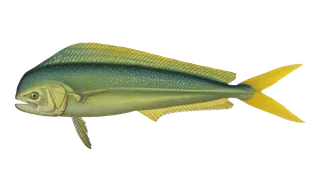 Mahi (Dolphin) — Peaks late spring through summer; troll ballyhoo and skirts along weedlines and rig lines, then pitch baits to the school.GearSkirted trolling luresBallyhoo rigging kitOffshore trolling combo
How to ID
- Brilliant green-gold-blue body with scattered blue and black spots/dots
- Single long dorsal fin running from just behind the head nearly to the tail
- Bulls (males) develop a tall, blunt, near-vertical forehead; cows (females) have a rounded forehead
- Bright yellow-gold flanks and a deeply forked tail
- Color fades quickly to gray-yellow once out of the water
Typical: 24–40 in, 5–25 lb
Tell it apart: The single full-length dorsal fin, blunt steep forehead, and electric green-gold-blue color with scattered spots are unmistakable and shared by no other Gulf pelagic; bulls have a far steeper forehead than cows.
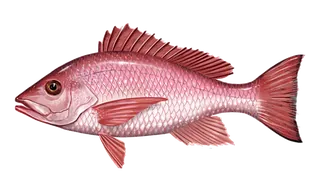 Red Snapper* — Targeted during the short summer open season; drop cut bait or large jigs to reefs and rigs on a heavy knocker or Carolina rig.Gear7/0 circle hooksSnapper bottom rigsHeavy bottom-fishing combo
How to ID
- Body solidly brick-red to pinkish-red, paler on the belly
- Red iris (red eye)
- Sharply pointed, lance-shaped (angular) anal fin
- Enlarged canine teeth in the jaws
- Juveniles show a dark spot high on the side near the lateral line that fades with age
Typical: 16–28 in, 3–12 lb
Tell it apart: A solid red body with a red eye and a pointed (not rounded) anal fin confirms American red snapper; the gray mangrove snapper never turns solid red, keeps a dark (not red) eye, and has a rounded anal fin.
Easily confused with: Mangrove Snapper
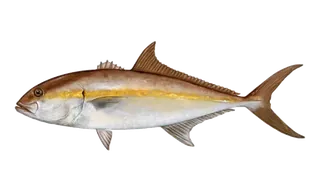 Greater Amberjack — Available year-round on deep wrecks and rigs when season allows; drop big live baits or heavy jigs to brutal-pulling schools.GearHeavy vertical jigs9/0 circle hooksHeavy jigging combo
How to ID
- Brownish-amber back fading to a silvery-white belly
- Amber/yellow stripe running along the midline of the body (brightens when feeding)
- Dark olive-brown nuchal bar running diagonally from the eye to the front of the first dorsal fin
- No bony scutes on the lateral line; deeply forked tail
- Long soft-dorsal base, much longer than the short spiny first dorsal
Typical: 30–50 in, 20–40 lb
Tell it apart: The dark nuchal bar through the eye to the dorsal origin plus the amber midbody stripe and the lack of lateral-line scutes ID greater amberjack; soft-dorsal ray count (typically 29-35) separates it from the smaller lesser amberjack and banded rudderfish.
Fishing Regulations
Tides & Timing
Read the Tide
Falling tide drains the marsh and creeks, piling redfish and trout at the mouths; incoming tide is the money move for pompano in the surf, sheepshead on structure, and cobia cruising the nearshore rigs.
Other towns in the Gulf of Mexico
Biloxi, MS · Cameron, LA · Clearwater, FL · Cocodrie, LA · Crystal River, FL · Dauphin Island, AL · Destin, FL · Galveston, TX · Grand Isle, LA · Hopedale, LA · Orange Beach, AL · Panama City Beach, FL · Pensacola, FL · Port Aransas, TX · Port O'Connor, TX · Rockport, TX · South Padre Island, TX · St. Petersburg, FL · Tarpon Springs, FL · Venice, LA