 The Fishing Report
Westbrook, CT Fishing — Seasons & Conditions
Boulder-strewn stretch of shoreline west of the Connecticut River, with Duck Island Roads as the refuge — striped bass and blues over the reefs, blackfish on the boulders, and fluke on the sand between them.
Part of the Northeast region.
What’s Biting at Westbrook, CT in October 2026
Biting right now — 13 species are worth targeting in October here, and the 6 marked Peak are at their best right now.
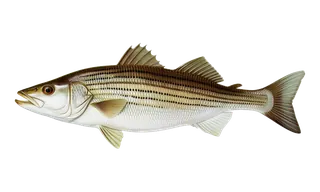 Striped BassPeak
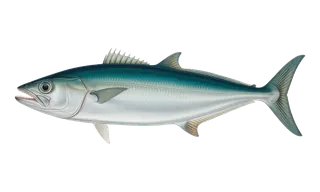 BluefishPeak
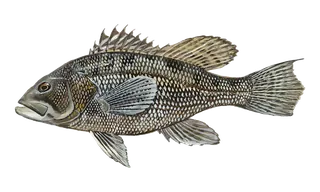 Black Sea BassPeak
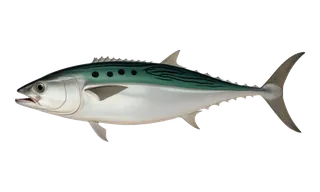 False AlbacorePeak
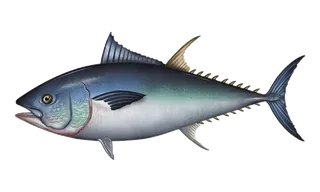 Bluefin TunaPeak
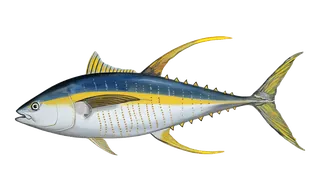 Yellowfin TunaPeak
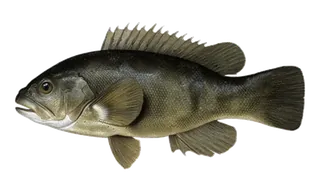 Tautog (Blackfish)
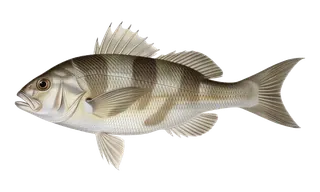 Scup / Porgy
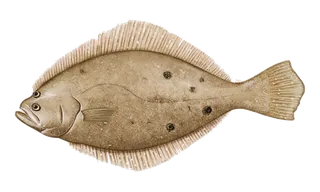 Summer Flounder
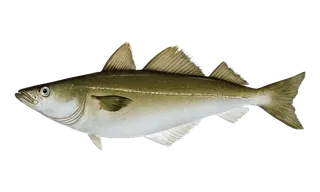 Pollock
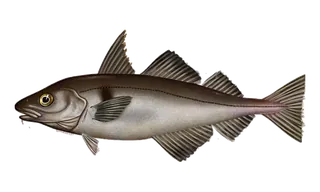 Haddock
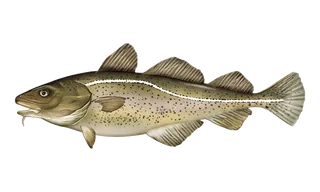 Atlantic Cod
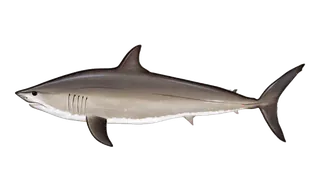 Shark (mako/thresher)
Tap any species for how to identify it, when it runs and what to throw. This is when the fish are active here — check the regulations below before you keep anything.
Fishing Westbrook, CT: The Local Water
The Inlet & Bar
The Patchogue River, used chiefly by fishing and recreational craft, empties into Duck Island Roads just west of Menunketesuck Island. A dredged channel leads north from the Roads into the river to just below the first fixed highway bridge about 0.6 mile above the mouth, with an anchorage basin along the east channel limit between Daybeacons 8 and 10; a light stands on the outer end of the breakwater on the west side of the river mouth.
Local Waters
Westbrook Harbor is the western part of the open bight between Cornfield Point and Menunketesuck Island. It holds many unmarked submerged rocks and is seldom used as an anchorage — the bight is characterized by boulders, and Duck Island Roads to the west is the better shelter.
Reefs, Structure & Marks
Menunketesuck Island is the outermost of several low narrow islands connected to the mainland at low water, with boulders at its south end and a boulder reef running nearly 0.5 mile south-southeast from the point to the 18-foot curve; tide rips frequently occur on that reef. Another boulder reef extends 0.5 mile south from Duck Island to the 18-foot curve, buoyed, with a rock carrying 1 foot about 300 yards south of the island. Between Menunketesuck Island and Hammonasset Point, 4 miles west, broken ground reaches about 1.5 miles offshore.
Harbors, Launches & Access
Duck Island Roads, between Menunketesuck Island and Kelsey Point, is a harbor of refuge protected by breakwaters running 1,100 feet north and nearly 0.5 mile west from Duck Island, with the added shelter of Kelsey Point Breakwater on Stone Island Reef; both Duck Island breakwaters are lit, and a stone chimney on the island is a prominent landmark. The dredged anchorage inside is subject to shoaling, with general depths of 3 to 8 feet and 4 to 16 feet at the western end. During strong flood currents and a southwest wind, tide rips extend from the shoal water southwest of Duck Island out to Southwest Reef over a mile away.
Westbrook, CT Season Calendar October — current month highlighted
Inshore — Sound, estuaries, surf
| Jan | Feb | Mar | Apr | May | Jun | Jul | Aug | Sep | Oct | Nov | Dec | |
|---|---|---|---|---|---|---|---|---|---|---|---|---|
| Striped Bass | ||||||||||||
| Bluefish | ||||||||||||
| Tautog (Blackfish) | ||||||||||||
| Scup / Porgy | ||||||||||||
| Black Sea Bass | ||||||||||||
| Weakfish |
Nearshore — Rips, reefs, bays to 20 mi
| Jan | Feb | Mar | Apr | May | Jun | Jul | Aug | Sep | Oct | Nov | Dec | |
|---|---|---|---|---|---|---|---|---|---|---|---|---|
| False Albacore | ||||||||||||
| Bonito / Atlantic | ||||||||||||
| Spanish Mackerel | ||||||||||||
| Summer Flounder | ||||||||||||
| Winter Flounder | ||||||||||||
| Pollock |
Offshore — Stellwagen, canyons, Georges Bank
| Jan | Feb | Mar | Apr | May | Jun | Jul | Aug | Sep | Oct | Nov | Dec | |
|---|---|---|---|---|---|---|---|---|---|---|---|---|
| Bluefin Tuna | ||||||||||||
| Yellowfin Tuna | ||||||||||||
| Mahi (Dolphin) | ||||||||||||
| Haddock | ||||||||||||
| Atlantic Cod | ||||||||||||
| Shark (mako/thresher) |
What to Target & How
Gear links open Amazon searches. As an Amazon Associate, The Fishing Report earns from qualifying purchases — at no extra cost to you. Using these links helps keep the site ad-free.
Inshore
- Striped Bass — The marquee fish, best May through October - work swimming plugs, bucktails and soft plastics in the rips, or live-line eels and bunker at night.GearSwimming plugsSoft-plastic baitsSurf casting rod
How to ID
- 7-8 sharp, unbroken dark horizontal stripes the length of silver sides
- two clearly separated dorsal fins (spiny + soft)
- stout, elongated silvery body, white belly, olive-to-blue back
- two distinct tooth patches on the back of the tongue
- stripes straight and continuous (not broken or wavy)
Typical: 20–36 in, 4–20 lb
Tell it apart: Continuous, well-defined horizontal stripes running the full length, two fully separated dorsal fins, and twin tongue tooth-patches separate it from weakfish, which is spotted (not striped) and has fang teeth.
Easily confused with: Weakfish
- Bluefish — Strong June through October - cast poppers and metal into surface blitzes or troll spoons, always with a short wire or heavy bite leader.GearSurface poppersDiamond jigsWire leader rigs
How to ID
- blue-green back fading to silver sides
- large mouth with a single row of sharp, prominent triangular teeth
- dark blotch at base of pectoral fin
- broad, moderately forked tail
- projecting lower jaw, soft fleshy first dorsal that folds into a groove
Typical: 14–26 in, 1–7 lb
Tell it apart: The mouthful of obvious razor-sharp triangular teeth plus a soft body and lack of finlets is unmistakable; the tuna-like false albacore and bonito have rigid tuna bodies, finlets, and small or no visible teeth.
Easily confused with: False Albacore, Bonito / Atlantic
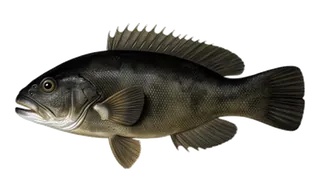 Tautog (Blackfish) — Peaks April-May and again October-November - anchor over wrecks and rockpiles and drop green crab on a tog jig or rig tight to structure.GearTog jigsBlackfish rigsConventional jigging rod
How to ID
- stocky, blunt-headed dark gray-to-black body
- thick rubbery lips
- white chin/throat patch on larger fish
- mottled, blotchy sides with no distinct stripes or spots
- few stout conical canine teeth at front of jaw plus crushing pharyngeal teeth
Typical: 14–20 in, 2–5 lb
Tell it apart: The blunt rubbery-lipped head with a white chin patch and a single low, continuous dorsal separate it from black sea bass, which has a notched dorsal, pale spotting/lines, and a trailing top-tail filament.
Easily confused with: Black Sea Bass
- Scup / Porgy — Peaks June-September - anchor over rocky and mussel bottom, fishing small hooks baited with clam or squid on a two-hook bottom rig.GearPorgy hooksTwo-hook bottom rigsBank sinkers
How to ID
- deep, strongly compressed oval silvery body
- fine faint vertical bars or dusky mottling
- small mouth with incisor-like front teeth and a row of molars
- single long dorsal fin with stiff sharp spines
- forked silvery tail
Typical: 8–14 in, 0.5–2 lb
Tell it apart: A compressed, near-round silvery disk-shaped body with a tiny incisor-toothed mouth marks the scup; black sea bass is darker, more elongated, with a heavier head and a tail filament.
Easily confused with: Black Sea Bass
- Black Sea Bass — Best May through October - drop squid and clam on a high-low rig over wrecks, or jig with a teaser dropper once water warms.GearDiamond jigsHigh-low rigsBottom fishing rod
How to ID
- stout dark gray-to-blue-black body
- pale spots/lines forming a mottled pattern on the sides and dorsal fin
- single long continuous dorsal fin (notched, not split)
- rounded tail, often with a trailing top-ray streamer/filament
- fleshy nape hump on big males (blue 'humpback')
Typical: 11–17 in, 1–3 lb
Tell it apart: The trailing filament off the top of the tail (plus blue nape hump on males) separates it from tautog (no filament, rubbery lips, white chin) and from the deep-bodied silvery porgy.
Easily confused with: Tautog (Blackfish), Scup / Porgy
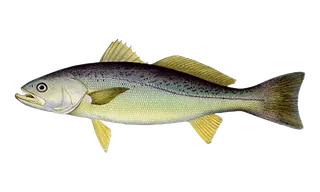 Weakfish — A short window, best May-July in back bays and channels - work soft-plastic shads slowly or drift bloodworm rigs at dawn and dusk.GearSoft-plastic shadLead jigheadsBloodworm rigs
How to ID
- iridescent purple-green back with golden-bronze sheen
- dark spots scattered in oblique rows on upper sides (no horizontal stripes)
- yellow-tinged fins, especially anal and pelvic
- two prominent canine 'fang' teeth at tip of upper jaw
- soft, easily-torn mouth tissue, no chin barbels
Typical: 12–20 in, 1–4 lb
Tell it apart: The pair of large canine fang teeth at the front of the mouth, spots arranged in oblique rows (not horizontal stripes), and yellow fins separate weakfish from striped bass.
Easily confused with: Striped Bass
Nearshore
- False Albacore — The prized fall run, September-October - cast and fast-retrieve epoxy jigs and small metals to busting fish on light fluorocarbon leader.GearEpoxy jigsSmall metal luresFluorocarbon leader
How to ID
- wavy, worm-like dark green-blue scribbles on the upper back only
- 3-7 dark round spots below and behind the pectoral fin
- lower sides and belly silvery and unmarked (no stripes)
- rigid tuna body with finlets before the tail; lacks scaly corselet markings of bonito
- small, inconspicuous teeth; deeply forked tail
Typical: 20–28 in, 5–12 lb
Tell it apart: Worm-like scribbles confined to the back plus a few dark belly spots and a smooth UNMARKED lower body separate the albie from bonito, which carries straight slanted dark stripes onto its sides and has visible teeth.
Easily confused with: Bonito / Atlantic, Bluefish
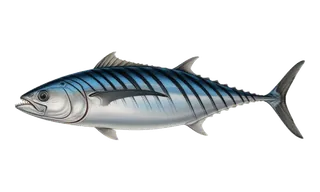 Bonito / Atlantic — Best July-August - cast small epoxy jigs and slim metals to schooling fish on light spinning gear with a fluorocarbon leader.GearEpoxy jigsSlim casting metalsLight spinning combo
How to ID
- straight, slanting dark oblique stripes along the back, angling down onto the upper sides
- stripes are linear and well-defined (not wavy scribbles)
- small but visible conical teeth in the jaws
- compact tuna-shaped body with finlets and a slim keeled tail base
- metallic blue back, bright silver sides
Typical: 16–24 in, 2–8 lb
Tell it apart: Straight slanted dark stripes on the back plus small visible teeth distinguish bonito from the toothless, scribble-backed, belly-spotted false albacore; bonito is striped where Spanish mackerel is spotted.
Easily confused with: False Albacore, Spanish Mackerel
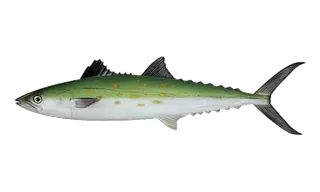 Spanish Mackerel — Best July-August - troll or cast small fast Clark spoons and metal jigs through diving birds on light wire or long fluoro leader.GearClark spoonsCasting metal jigsFluorocarbon leader
How to ID
- rows of round-to-oval yellow/bronze spots on silver sides
- prominent black blotch on the front lobe of the first dorsal fin
- pectoral fins lack scales (bare); slender, elongate body
- small finlets behind dorsal and anal fins
- lateral line sloping gently and evenly (no abrupt dip under 2nd dorsal)
Typical: 14–22 in, 1–3 lb
Tell it apart: Gold-yellow spots scattered on the flanks plus the black patch on the front of the first dorsal are diagnostic; bonito and tunas show stripes or are unmarked, never round yellow spots.
Easily confused with: Bonito / Atlantic
- Summer Flounder — Peaks June-September - drift sandy channels and inlets bouncing a bucktail tipped with Gulp or a squid-and-minnow rig along the bottom.GearBucktail jigsGulp swimming mulletFlounder rigs
How to ID
- eyes on the LEFT side when the dark side is up
- 5 or more distinct ocellated (eye-like) spots on the body
- large mouth extending well past the eye, with prominent sharp teeth
- thin, broad oval flat body
- can rapidly change brown mottling to match the bottom
Typical: 15–22 in, 1–4 lb
Tell it apart: Left-eyed with a big toothy mouth reaching past the eye and ocellated eye-spots = summer flounder (fluke); winter flounder is right-eyed, spotless, with a tiny mouth.
Easily confused with: Winter Flounder
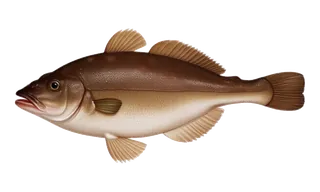 Winter Flounder — Best in the cold months, March-April - anchor over soft mud or sand and fish small hooks with bloodworm or clam on a spreader rig.GearWinter flounder hooksSpreader rigsLight bottom rod
How to ID
- eyes on the RIGHT side when the dark side is up
- small mouth, lips barely reaching the front of the eye
- smooth reddish-to-dark brown upper side with no ocellated spots
- white blind side, often with a rosy tinge
- rounded, almost diamond body outline
Typical: 12–16 in, 1–2 lb
Tell it apart: Right-eyed with a tiny puckered mouth and no eye-spots separates winter flounder ('blackback') from the left-eyed, big-mouthed, spotted fluke.
Easily confused with: Summer Flounder
- Pollock — Best April-May in the cooler season - jig diamond jigs and rubber-tail teasers over deep wrecks and ledges, or drift clam baits.GearDiamond jigsTube teasersJigging rod
How to ID
- olive-green to brownish back, silvery sides
- three dorsal fins and two anal fins
- pale, only slightly curved lateral line
- projecting lower jaw with a tiny or absent chin barbel
- distinctly forked tail (unlike cod's and haddock's squared tail)
Typical: 20–32 in, 4–15 lb
Tell it apart: A greenish back, jutting lower jaw, near-absent chin barbel, and a clearly forked tail separate pollock from the barbeled, square-tailed cod and haddock.
Easily confused with: Atlantic Cod, Haddock
Offshore
- Bluefin Tuna — Best August-October - troll spreader bars and chunk butterfish on inshore lumps; jig sand eel imitations when fish hold tight to bait.GearSpreader barsJigging luresStand-up tuna combo
How to ID
- deep, robust torpedo body, dark metallic blue-black back
- very short pectoral fins (do not reach the second dorsal fin)
- finlets yellow edged with black toward the tail
- silvery lower sides without a bold yellow stripe
- second dorsal and anal fins short (not elongated sickles)
Typical: 40–73 in, 50–300 lb
Tell it apart: Short pectoral fins reaching only to mid-body, short second-dorsal/anal fins, and a deep stocky body distinguish bluefin from the long-finned, yellow-striped yellowfin.
Easily confused with: Yellowfin Tuna
- Yellowfin Tuna — Best August-October at the canyons - troll spreader bars and ballyhoo by day, then chunk butterfish on the anchor through the night.GearSpreader barsBallyhoo rigsOffshore trolling combo
How to ID
- bright yellow finlets and a bright yellow lateral stripe down the flank
- long, sickle-shaped second dorsal and anal fins on adults
- long pectoral fins reaching past the start of the second dorsal
- dark blue-black back, silver belly with broken vertical lines/dots
- metallic gold band along the side
Typical: 36–50 in, 30–80 lb
Tell it apart: Long pectoral fins, elongated yellow sickle-shaped second dorsal/anal fins, and the bold yellow side-stripe separate yellowfin from the short-finned, short-finletted, stockier bluefin.
Easily confused with: Bluefin Tuna
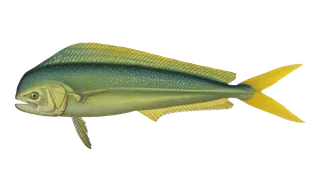 Mahi (Dolphin) — Best July-August - troll skirted ballyhoo near lobster pot lines and weedlines, then pitch bucktails or cut bait to the schools.GearSkirted trolling luresBallyhoo rigsCasting bucktails
How to ID
- brilliant blue-green-gold body with scattered small dark spots
- blunt, vertical forehead, very steep and high on males (bulls)
- single long dorsal fin running from nape nearly to the tail
- deeply forked tail, slender tapering body
- colors flash and fade rapidly out of the water
Typical: 24–40 in, 5–25 lb
Tell it apart: The neon green-gold color, single dorsal running the whole back, and blunt forehead are unmistakable, with no Northeast look-alike on this list.
- Haddock — Best April-May on offshore banks - drop clam baits on a high-low rig over gravel and sand bottom, with a teaser jig above.GearHaddock rigsJig-and-teaser combosBottom fishing rod
How to ID
- dark gray back, silver sides, dark (black) lateral line
- prominent black 'thumbprint' blotch above the pectoral fin
- three dorsal fins, the first tall and pointed
- small chin barbel present
- slightly forked-to-square tail; no overhang/spotting like cod
Typical: 16–24 in, 2–5 lb
Tell it apart: The dark lateral line plus the black 'devil's thumbprint' over the pectoral fin instantly separate haddock from cod (pale/white lateral line, overhanging upper jaw) and from green forked-tailed pollock.
Easily confused with: Atlantic Cod, Pollock
- Atlantic Cod — Best in the cold months, October-April - drift wrecks and ledges with clam-baited rigs or work heavy diamond jigs near the bottom.GearCod diamond jigsClam-bait rigsConventional jigging rod
How to ID
- heavy body, color variable (greenish to reddish-brown) with many small spots
- pale, gently curved (arched) white lateral line
- prominent single chin barbel
- three dorsal fins and two anal fins
- squared-off tail; upper jaw overhangs the lower
Typical: 22–34 in, 4–15 lb
Tell it apart: A pale curved white lateral line plus a clear chin barbel and overhanging upper jaw separate cod from the dark-lined, thumbprint-marked haddock and the jutting-jawed, forked-tailed pollock.
- Shark (mako/thresher) — Best July-September - set a steady chum slick offshore and drift oily mackerel or bluefish baits on cable leaders at staggered depths.GearHeavy circle hooksCable leader rigsStand-up shark combo
How to ID
- mako: deep indigo-blue back, sharply pointed snout, long curved dagger-like teeth visible even when mouth is closed
- mako: nearly symmetrical crescent (lunate) tail with a strong caudal keel
- thresher: enormously long, scythe-like upper tail lobe, nearly as long as the body
- thresher: small mouth, short snout, smooth gray-brown back, small teeth
- both have 5 gill slits and a stout, fast torpedo-shaped body
Typical: 5–9 ft, 60–300 lb across both species
Tell it apart: A tail lobe nearly as long as the body = thresher; a stocky blue body with exposed needle-like teeth and an even crescent tail = mako.
Fishing Regulations
Tides & Timing
Read the Tide
In New England, the race-through-the-rips rule applies everywhere: stripers, albies, pollock, and tautog all feed hardest on moving water — find the rip, time the peak current, and position uptide.
Other towns in the Northeast
Bar Harbor, ME · Block Island, RI · Boothbay Harbor, ME · Gloucester, MA · Hyannis, MA · Mystic, CT · New Bedford, MA · Newport, RI · Niantic, CT · Norwalk, CT · Portland, ME · Portsmouth, NH · Provincetown, MA · Rockland, ME